'Keeping special judicial police shows it wasn't the president's wish'
'Candidate opposed to prosecution reform should think twice about heading new agency'
'Cheong Wa Dae's political affairs line also appears to have been kept in the dark'
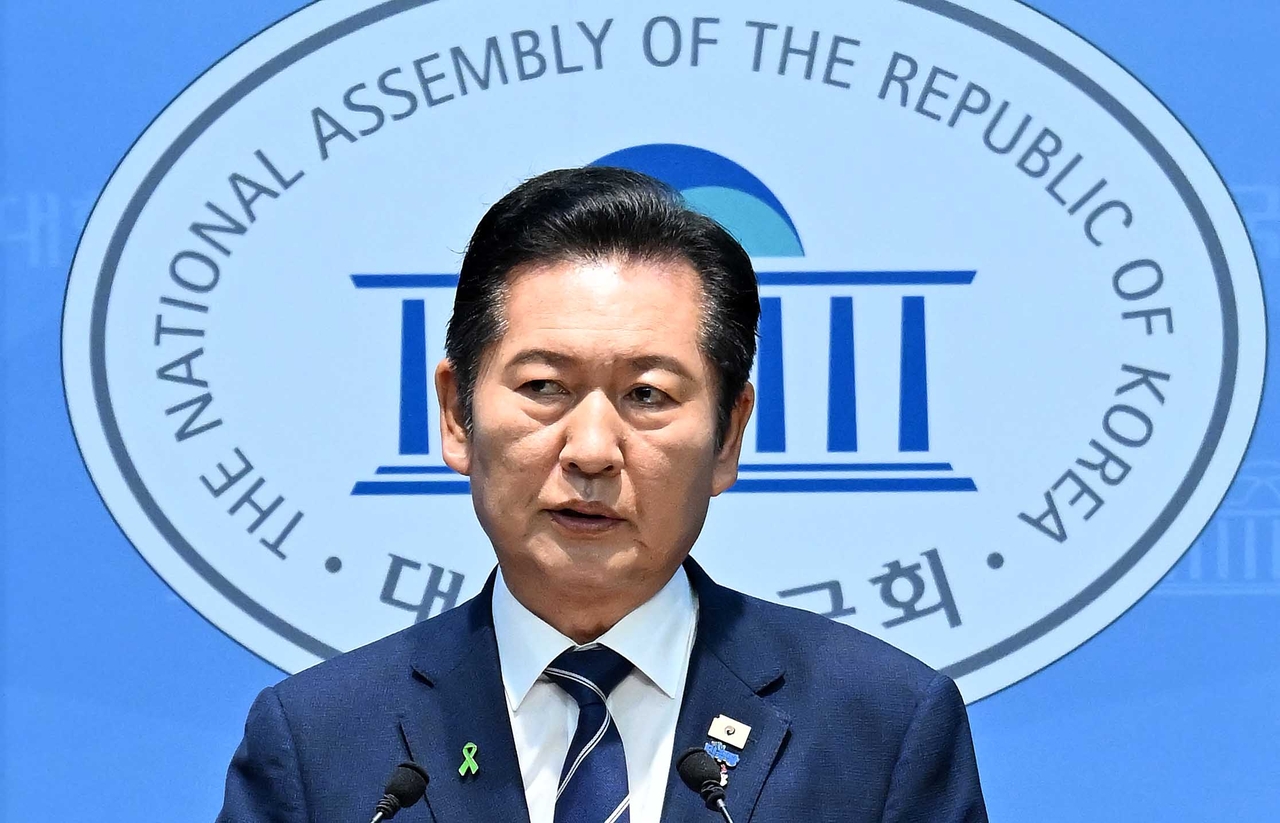
Democratic Party of Korea lawmaker Jung Chung-rae said Monday that the government's proposed organizational structure for the new Prosecution Office was not what President Lee Jae Myung had intended, suggesting Lee had been "blindsided" by prosecutors seeking to preserve their institutional power.
Speaking on the YouTube program "Kim Eojun's Humility Is Hard News Factory," Jung said he had confirmed through multiple channels that the restructuring plan did not reflect the president's wishes. Jung, who as Democratic Party leader coordinated with Cheong Wa Dae on legislation establishing the Prosecution Office and the Serious Crimes Investigation Agency, called for sweeping revisions to provisions relating to a proposed judicial oversight division, special judicial police functions and the possibility of joint investigations.
Jung described how the plan came together, saying the Ministry of Interior and Safety handled the Serious Crimes Investigation Agency while the Ministry of Justice handled the Prosecution Office, and that coordination between the two ministries had reportedly been managed through the presidential civil affairs secretariat. "The president was told everything had been properly coordinated and left on his overseas trip believing that," Jung said. "But after he saw my Facebook posts and looked into it again, he said, 'This is not what I wanted,' and ordered revisions. Looking at Sunday's news reports, it appears revision work is now under way."
Jung pointed particularly to the inclusion of special judicial police functions in the restructuring plan as evidence that it did not reflect the president's wishes. Recalling discussions during the drafting of the legislation, he said there are about 18,000 special judicial police officers and that the original draft had envisioned prosecutors supporting and overseeing them. "The president ordered all of that removed," Jung said.
"Yet the current Prosecution Office organizational plan keeps the special judicial police functions intact," he said. "That alone is one example showing this was not the president's intention."
"I think the president has reason to feel wronged," Jung said. "The current organizational plan is not what he wanted. I believe he was blindsided by prosecutors who have been biding their time to hold on to their vested interests." He added that he hoped the plan would be substantially revised to align with the principle of separating investigation from indictment across the Prosecution Office and the Serious Crimes Investigation Agency, "so that it turns out the way we hoped."
Jung also criticized the plan's specifics point by point. He said the name of the proposed judicial oversight division made no sense from the outset. "It is audacious for prosecutors — who should themselves be subject to judicial oversight — to use the name 'judicial oversight division,'" he said.
He then said the special judicial police provisions would in effect allow the office to perform criminal intelligence functions using investigative information flowing in from various ministries. "The criminal intelligence collection and forensic investigation functions that remain at the Supreme Prosecutors' Office must all be eliminated," he said. He also called for removing any provision that would allow prosecutors to intervene in investigations under the guise of joint investigations.
On the selection of the first head of the Serious Crimes Investigation Agency, Jung said, "We need to think very carefully about whether it is appropriate for someone who opposed the separation of investigation and indictment and opposed prosecution reform to lead the agency."
Jung also claimed that Cheong Wa Dae's political affairs line had not been properly informed about the restructuring plan as it was being drawn up.
"The Prosecution Office and the Serious Crimes Investigation Agency fall under the civil affairs secretariat, not the political affairs secretariat," he said. "Normally, given the political dimensions involved, the political affairs secretary should have been consulted — but that apparently did not happen."
"Based on what I confirmed, the political affairs line was unaware of this," Jung said. "Just as the president apparently did not know the details and did not expect things to turn out this way, the political affairs side also seems to have been kept in the dark."
thanks@heraldcorp.com