Opening remarks at National Assembly confirmation hearing, Monday
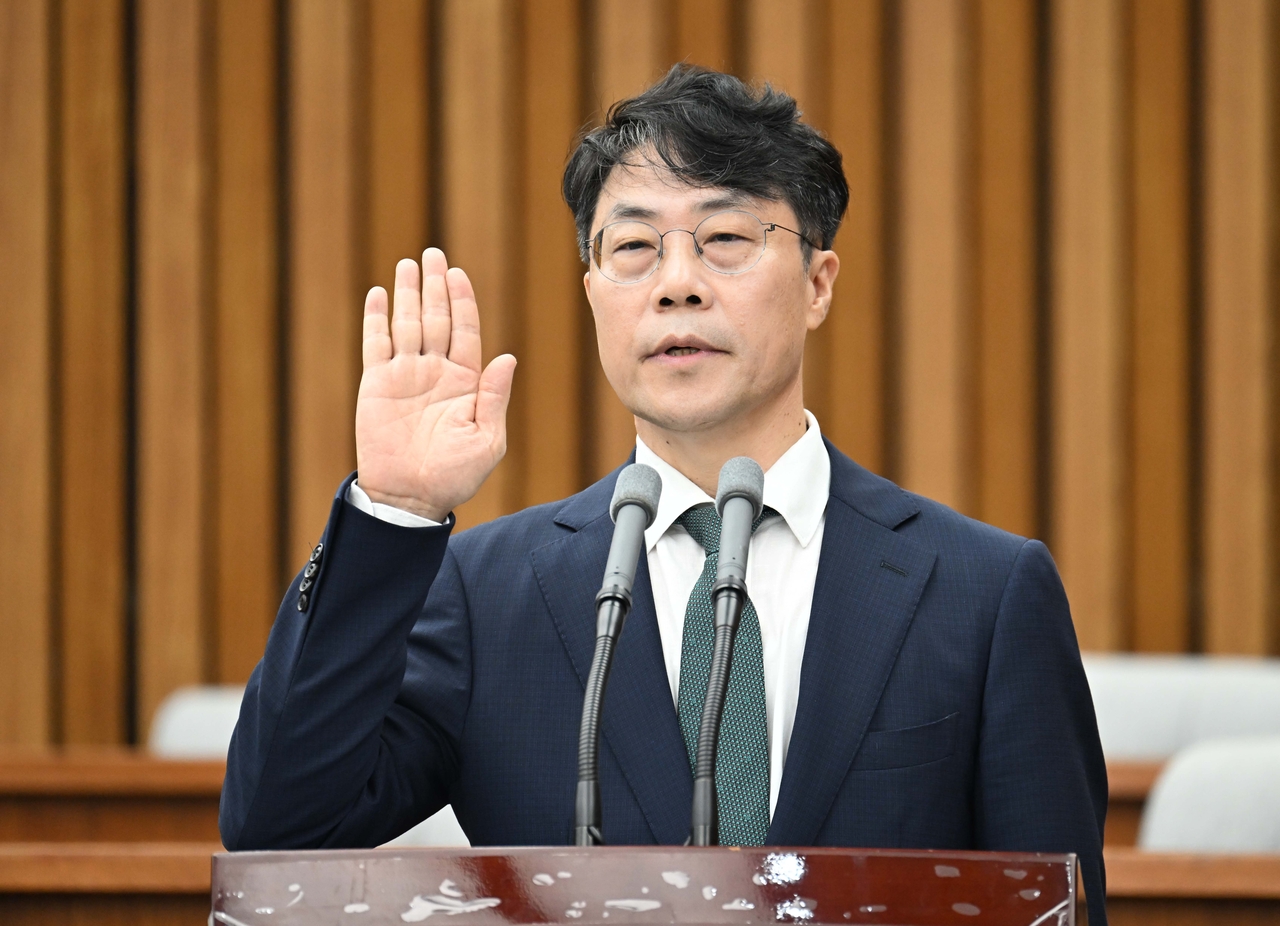
Supreme Court Justice nominee Kim Sung-su opened his National Assembly confirmation hearing Monday by pledging to examine cases "with an impartial mind, guided solely by the Constitution, the law and my conscience as a judge."
Speaking in his opening remarks at the hearing in Yeouido, Seoul, Kim said the judiciary must keep pace with a rapidly changing society. "Our society is changing fast, and I do not think the judiciary — which must protect the rights of the people — can afford to fall behind," he said. "If I am appointed to the Supreme Court with the consent of the National Assembly, I will do my modest part to help the judiciary move in step with the times."
Kim said he felt both deeply honored and acutely aware of the weight of responsibility before him. "I find myself standing here as a nominee at a critical juncture, and while it is a great personal honor, I also feel an immense sense of responsibility," he said. He also apologized for causing concern before the hearing had even begun. "I am sorry for the worry I have caused the committee members and the public through my own carelessness," he said. He added that preparing for the hearing had prompted him to look back over his entire life. "I will take this as an opportunity to examine my own conduct and words with a more objective eye and to proceed with greater care going forward," he said.
Kim spoke briefly about his background, saying he was born and raised in a rural village, attended school there through middle school, and then moved to a city for high school. "My father passed away when I was in my first year of high school, and I went through deep grief and despair," he said. "But with the warm care of my grandmother and mother, and the close bond I shared with my siblings, we leaned on one another and I was able to complete my studies."
He said he was appointed as a judge in 1998 and has found meaning in the work ever since. "Not a single case entrusted to me was easy, but I was always able to work with pride and a sense of fulfillment, knowing I was contributing to the resolution of disputes and the realization of justice," he said.
Kim also noted that growing up in a rural area and serving for extended periods at courts covering farming and fishing communities — including the Haenam Branch of the Gwangju District Court and the Jeju District Court — gave him direct and indirect exposure to the lives and hardships of people outside major cities. "That experience of understanding a wide range of life circumstances has helped me look beyond a simple legal yardstick, to consider more deeply the lives of the parties behind each case and to grasp the true nature of the matter at hand," he said.
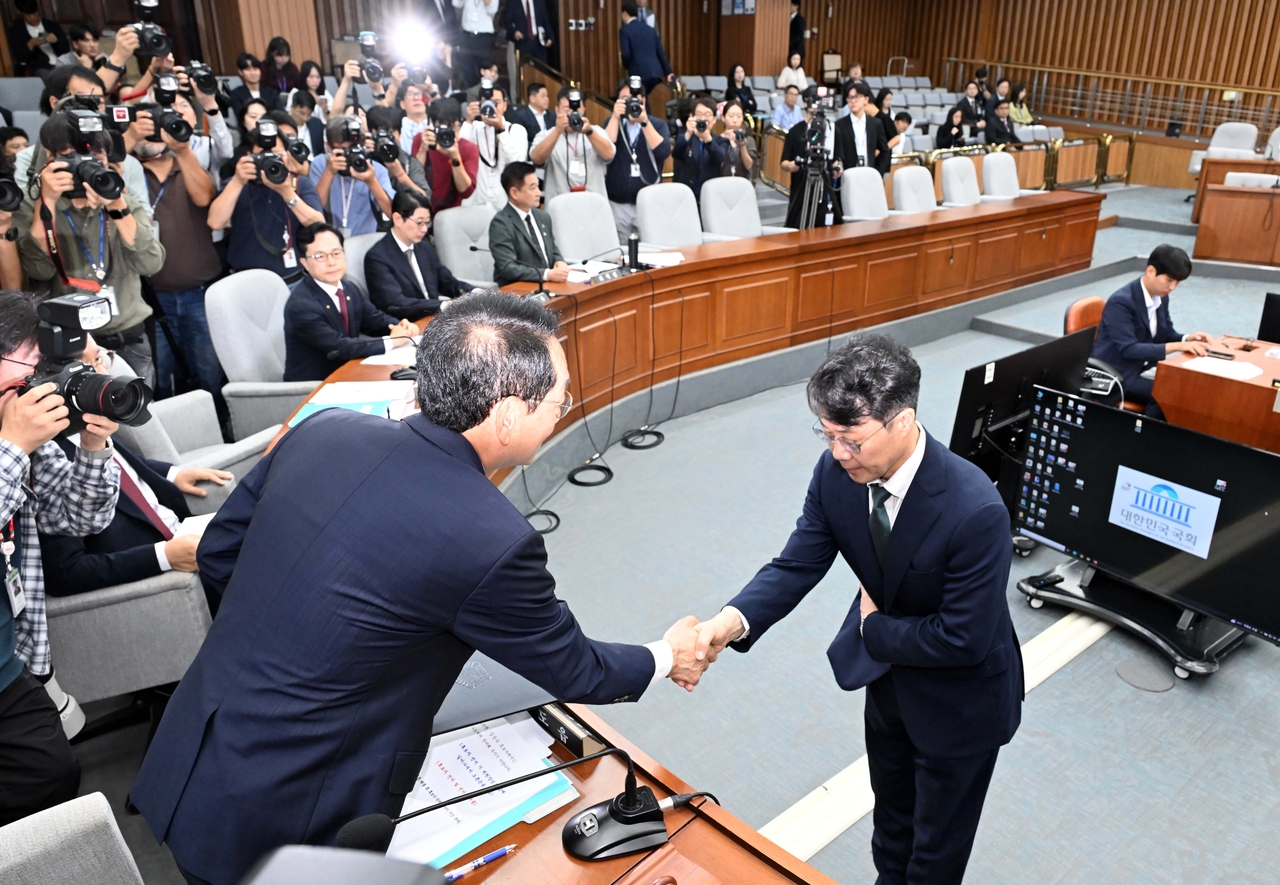
Kim recalled several cases that left a lasting impression on him during his time on the bench. Among them, he described a retrial case involving farmers who had received land under post-liberation land reform, only to have it taken away after being convicted in criminal proceedings that followed coercive investigations. "They filed a request for a retrial of their retrial ruling, and I was able to accept that request and restore their property rights after decades," he said.
He also recalled a case in which a victim died after being confined by the defendant and left to suffer from hunger and cold. "Even though the victim's family reached a settlement with the defendant while the appeal was ongoing, I imposed a heavier sentence than the original ruling, taking into account the gravity of the human rights violation and the irreversible nature of the harm," he said. "I wanted to make clear the need for strict punishment of serious crimes that undermine human dignity and worth."
"Through these rulings, I sought to make clear that the role and duty entrusted to the courts is to guarantee the constitutional freedoms and rights of all people — including marginalized neighbors who find it difficult to speak up for themselves," he said.
Kim said he looks in the mirror before entering the courtroom each time to collect himself. "I remind myself that the outcome of every case has an enormous impact on the parties involved, on society and on the nation," he said. He said he quietly recites two phrases: one meaning "always be careful, and careful again," and another conveying his commitment to listen and communicate by considering the perspectives of not only the litigants, the defendant and the lawyers, but also the victims.
yg@heraldcorp.com