Cheong Wa Dae says reflection must come first, with systemic reforms to follow after second-round Cabinet reshuffle
![Yong Hye-in, nominee for minister of the Ministry of Gender Equality and Family, answers reporters' questions as she arrives at her confirmation hearing preparation office at the Korea Youth Activity Promotion Agency in Seodaemun-gu, Seoul, on Tuesday. [Photo by Lim Se-jun]](https://wimg.heraldcorp.com/news/cms/2026/09/14/9/news-p.v1.20260902.4480aa0ca81f4754ac4b9240d4c7db5d_P1.jpg)
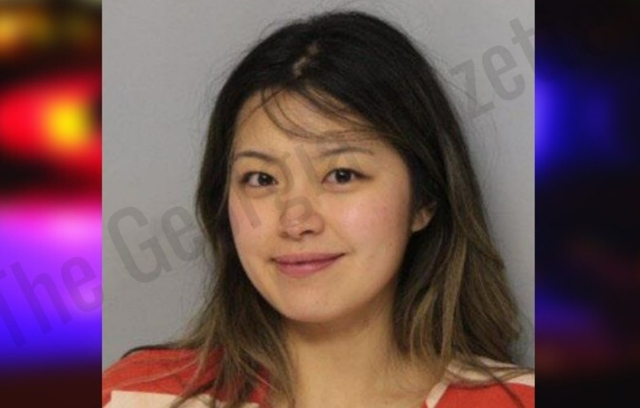
The withdrawal of Yong Hye-in as nominee for minister of the Ministry of Gender Equality and Family has intensified calls to overhaul the Lee Jae Myung government's personnel vetting system from the ground up.
The administration had already restructured its appointments process last year — creating a dedicated personnel secretariat after former Ministry of Gender Equality and Family minister nominee Kang Sun-woo withdrew — but the latest dropout has renewed criticism that the vetting system is still not functioning as intended.
With Yong's withdrawal, the number of Cabinet nominees who have failed to reach confirmation since the Lee government took office has risen to four.
A Cheong Wa Dae official said Monday that "reflection on having put forward a nominee who did not meet the public's expectations must come first," adding that "discussions on systemic reforms following that reflection will take place after the second-round Cabinet reshuffle is complete."
President Lee Jae Myung is also expected to address his concerns over personnel decisions and share his recent thinking at a press briefing believed to be imminent.
In Yong's case, doubts about her suitability for the ministerial post had been widespread inside and outside political circles from the moment of her nomination.
Political insiders were quick to call the pick a misjudgment. Some argued that if the intent was to win back younger voters — particularly those in their 20s and 30s, whose support for President Lee has been slipping — the political calculus itself was flawed, since Yong did not enjoy strong favorability among that demographic.
In fact, polling on whether Yong was fit for the ministerial role showed that "unfit" responses far outnumbered "fit" ones.
The opacity of the nomination process has also drawn criticism. The current arrangement is said to have personnel verification led by figures associated with the so-called Seongnam-Gyeonggi Province network — including Kim Hyun-ji, chief of the presidential first secretariat, and personnel secretary Kim Yong-chae — with Chief of Staff Kang Hoon-sik also taking part.
Critics say that limiting decision-making to a small circle in the name of confidentiality has cut off outside advice and scrutiny, narrowing the range of judgment brought to bear on appointments.
A separate personnel secretariat was established in September last year, and Personnel Secretary Jo Seong-ju has now served for more than a year — yet both Jo, who is supposed to oversee appointments, and Civil Affairs Secretary Han Chan-sik, who is responsible for vetting, are widely seen as having little visible influence on the process.
Observers say each stage of the appointments pipeline — from candidate recommendations and background checks to political judgment calls — needs to be examined to determine whether it is working properly.
"Given President Lee's career path — human rights lawyer, Seongnam mayor, Gyeonggi Province governor, party leader — it is perhaps inevitable that his pool of personnel contacts is not especially wide," one ruling-camp official said. "That is precisely why a system that draws on a broad and diverse talent pool and subjects nominees to rigorous vetting is all the more necessary."
sang@heraldcorp.com