'Private model with fiscal subsidies has reached its limits'
Public forum set for Monday to gather civic input
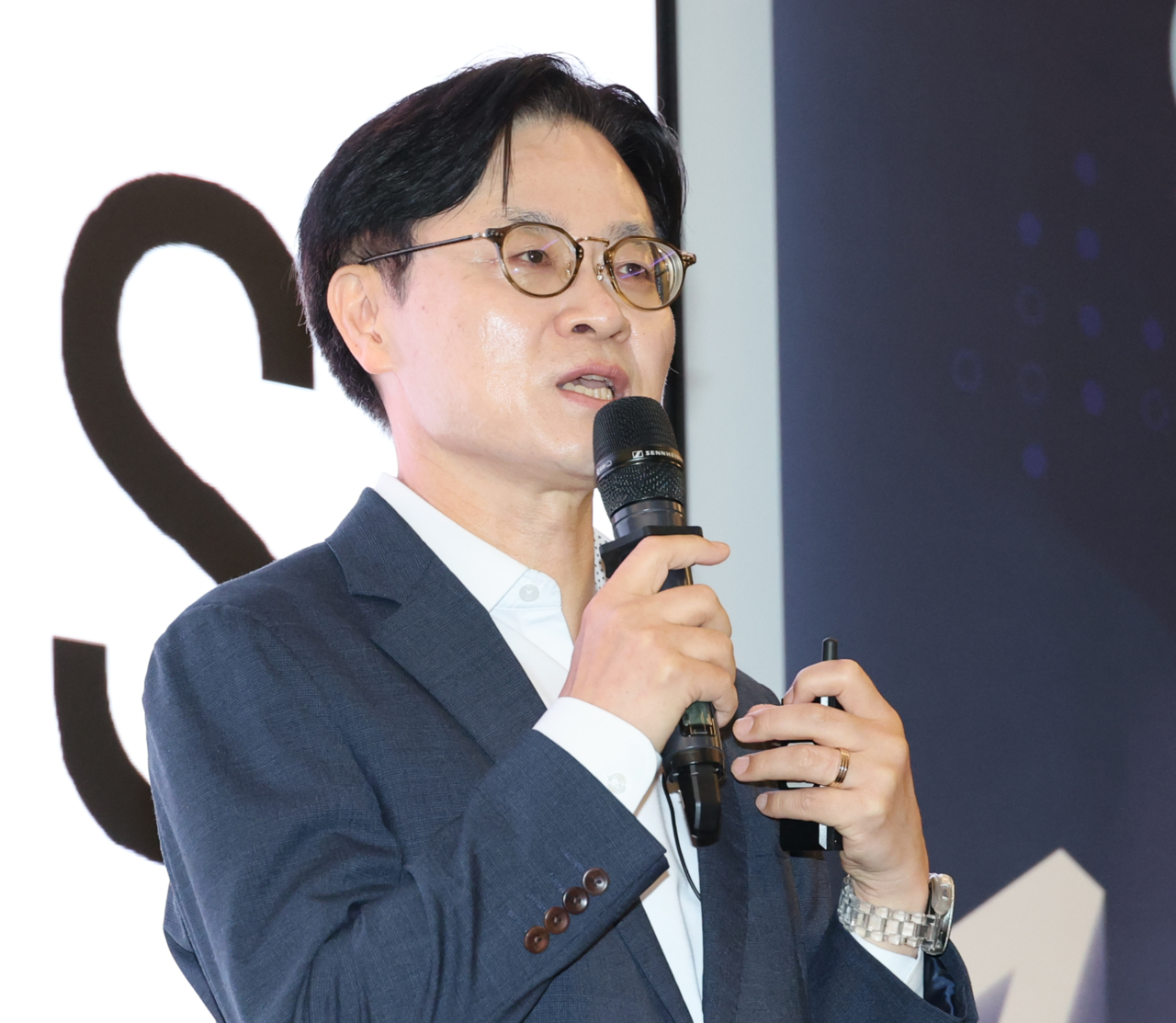
![Kim Chang-hyeon, head of Ulsan's transportation bureau, speaks at a press conference at Ulsan City Hall on Tuesday to announce the city's plan to convert its city bus system to public operation. [Ulsan city government]](https://wimg.heraldcorp.com/news/cms/2026/09/15/news-p.v1.20260915.0ed4e299bfb647d68710b21db752da00_P1.jpg)
Ulsan is moving to develop an optimal plan for converting its city bus system to public operation, aiming to maximize both civic convenience and fiscal efficiency.
Kim Chang-hyeon, head of the city's transportation bureau, said at a press conference at Ulsan City Hall on Tuesday that simply covering private operators' deficits with public funds had proven insufficient to sustain stable public transit service. "The time has come to shift to a publicly operated model that can responsibly guarantee citizens' right to mobility," he said.
Ulsan's city buses currently run under a private-operator model in which the city subsidizes losses. Those subsidies — covering operating deficits and the expansion of eco-friendly vehicles — reached 181.33 billion won ($135 million) last year and are projected to hit 219.32 billion won this year.
Despite that level of fiscal support, the private model leaves the city with limited direct authority over route additions and scheduling adjustments. Deteriorating finances at operators and labor-management disputes have also repeatedly disrupted service.
In response, Ulsan has decided to pursue a transition to public operation in order to secure authority and accountability commensurate with its financial commitment. The city plans to compare the merits and drawbacks of the current private model, a semi-public model and a fully public model before settling on an approach that best serves civic convenience and fiscal efficiency.
By the end of this year, the city will work with the Ulsan Research Institute to establish a concrete direction for the transition. A feasibility study will then comprehensively analyze the financial requirements, organizational structure, staffing, vehicles, depots, assets and other factors involved in converting to public operation.
The city will also launch a public deliberation process beginning with a civic forum on Monday, gathering broad input from residents, experts, bus operators and labor groups.
Ulsan plans to use the Ulsan Urban Corporation to accumulate hands-on experience in public transit management — from obtaining operating licenses to building an organizational structure — on a phased basis. Drawing on the research findings and public input, the city will also consider establishing a separate dedicated transportation authority.
"We will not simply focus on the advantages of public operation," Kim said. "We will rigorously verify whether the transition is the right fit for Ulsan in terms of civic convenience, fiscal efficiency and stable bus service."
cityblue@heraldcorp.com