Korea Railroad Research Institute develops digital twin to boost energy efficiency at rail stations
![The energy digital twin dashboard for Suseo Station. [Korea Railroad Research Institute]](https://wimg.heraldcorp.com/news/cms/2026/09/15/news-p.v1.20260915.0d3fd9295d254e7abbe265e016050fba_P1.png)
A technology that predicts a railway station's electricity consumption within seconds in a virtual environment — and lets operators assess the energy savings of new equipment such as an ESS before installation — has been developed by South Korean researchers. When applied to Suseo Station, the system showed that annual peak electricity demand could be cut by about 20 percent.
The Korea Railroad Research Institute announced Tuesday that it had developed an "energy digital twin" model that replicates the structure and facilities of Suseo high-speed rail station in a virtual space to forecast power consumption.
Under the previous approach, a station's total electricity use was tallied after the fact using Korea Electric Power Corporation meter readings, making it difficult to determine how much energy individual pieces of equipment were consuming.
The newly developed technology recreates a station's physical layout and equipment in a virtual environment and links it to data measured on-site. The model is calibrated using a full year of actual power consumption figures, allowing operators to see how energy use would change under different equipment configurations or operating conditions before committing to any investment.
The institute built digital models of 10 zones at Suseo Station, including the main concourse, transfer corridors and lounges. Three of those zones have been fitted with sensors measuring temperature, humidity, carbon dioxide and fine dust levels, with real-time indoor environment monitoring under way since late May.
The model can also calculate projected annual energy consumption in a matter of seconds whenever equipment or operating conditions are adjusted. A comparison of the model's monthly electricity figures against actual Korea Electric Power Corporation meter readings found the annual margin of error was limited to around 2 percent. The system also meets international standards for building energy model validation.
The model also confirmed tangible energy savings. An analysis of solar power and ESS operation based on a full year of measured power load data at Suseo Station found that deploying a 250-kilowatt-hour ESS could reduce annual peak demand — the benchmark used to calculate the fixed electricity charge — by about 20 percent.
The research also identified a key factor behind the low electrical efficiency of below-ground stations: ventilation fans account for about 46 percent of total electricity consumption. Optimizing ventilation system operations could yield additional energy savings.
The institute is reviewing plans with Korail to systematize the energy efficiency gains achieved at Suseo Station and expand the approach to the Samsung Station multimodal transit hub being built beneath Yeongdong-daero in Seoul. The Samsung Station complex spans about 210,000 square meters, connects five rail lines and is targeted for completion in 2029.
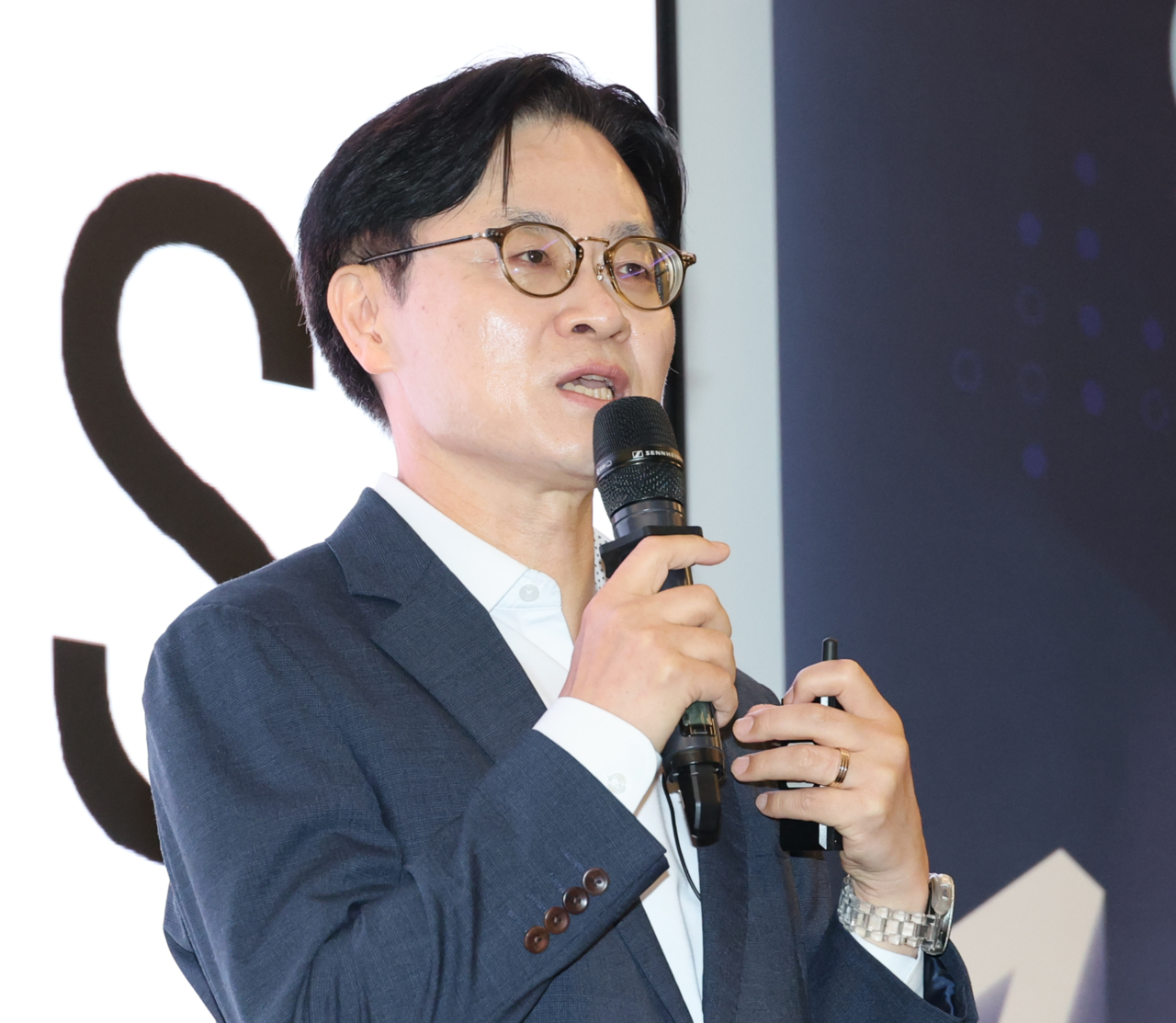
"The key is being able to test equipment investment and operational alternatives in advance using a validated model," said Shin Seung-kwon, a senior researcher at the institute. "We will expand the sensor network and energy model validated at Suseo Station to large-scale transfer stations."
nbgkoo@heraldcorp.com