- University aims to produce industry-ready AI talent by 2030, using real company data in coursework
- Eight new AI-integrated majors, including shipbuilding and semiconductor tracks, to launch in 2027
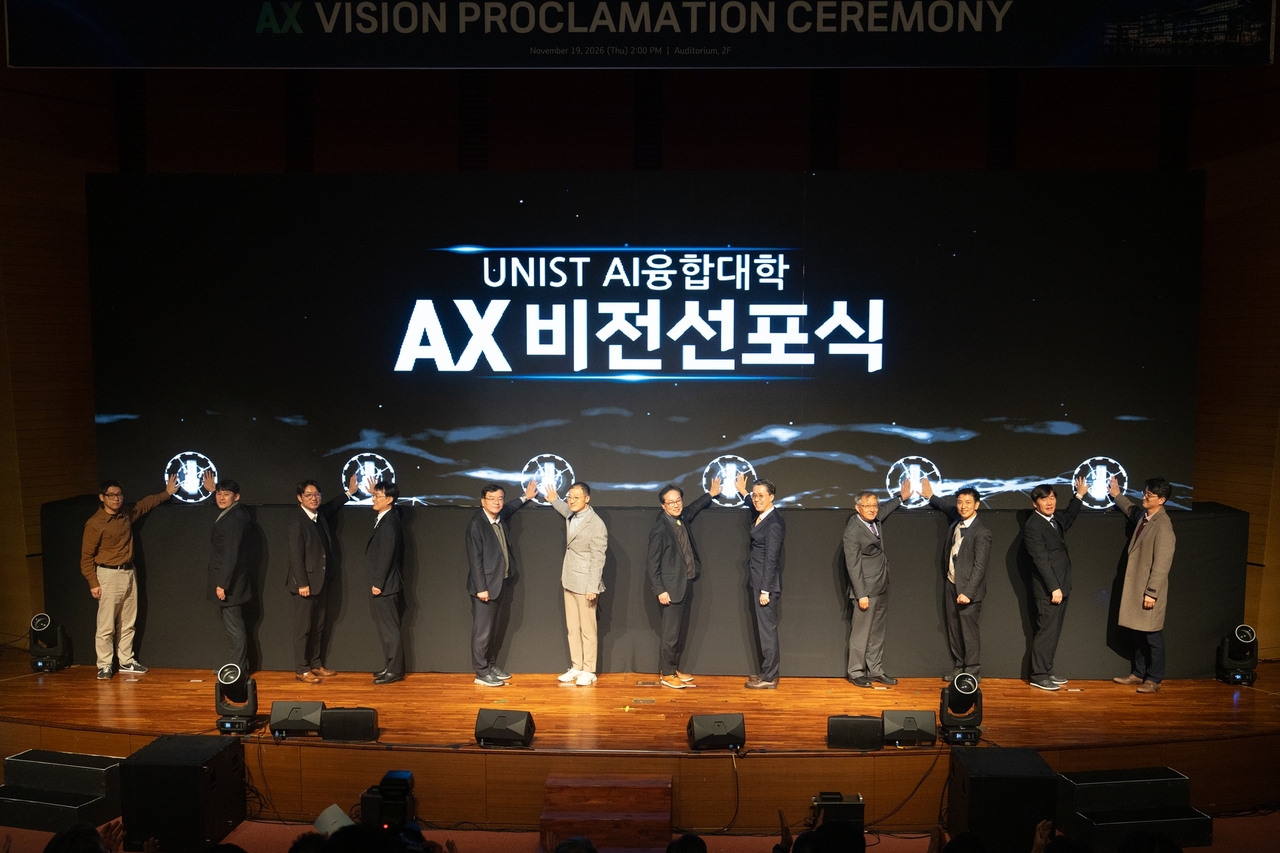
The Ulsan National Institute of Science and Technology (UNIST) has announced plans to train 2,000 AI specialists capable of solving real-world challenges in industries such as shipbuilding, automotive and semiconductors.
UNIST held its College of AI Convergence AX Vision Declaration ceremony Thursday at the main auditorium of its Ulsan campus, setting a target of producing 2,000 industry-ready AI convergence professionals by 2030.
The university plans to overhaul its education and research systems around the College of AI Convergence, which was established in September, to better align with industry demand.
The southeastern region of South Korea is a major industrial hub, home to a concentration of advanced manufacturing sectors including shipbuilding and marine, automotive, petrochemical and aerospace industries. As AI adoption spreads across production processes — from optimizing manufacturing lines and predicting equipment failures to managing quality control — securing talent with both deep industry knowledge and AI capabilities has become an urgent priority.
The centerpiece of UNIST's strategy is what it calls "Industry-Inspired Learning," or IIL. Under this model, companies and research institutions present real industrial problems and data, and students work alongside professors and industry experts to develop solutions.
The approach lets students apply AI technology learned in the classroom directly to industrial settings, and build undergraduate project work into graduate-level research and joint corporate research and development.
The undergraduate curriculum will also undergo significant changes. UNIST will move away from traditional department-based divisions toward a major-centered structure and introduce a dedicated AI major. The redesigned curriculum aims to give students greater flexibility to integrate AI into their own fields of study. The new system will take effect for incoming undergraduates starting in the 2027 academic year.
Eight new AI convergence majors will be created to develop specialists for specific industries: shipbuilding and marine AI, physical AI, materials AI, medical AI, AI security, aerospace and defense AI, semiconductor AI, and AI systems.
Starting in the 2027 academic year, these will be offered as minors and double majors, with plans to expand the lineup to more than 10 convergence majors by 2030.
The strategy focuses particularly on combining AI technology with the southeastern region's key industries — shipbuilding and marine, materials and semiconductors — to boost productivity and drive technological innovation among local companies.
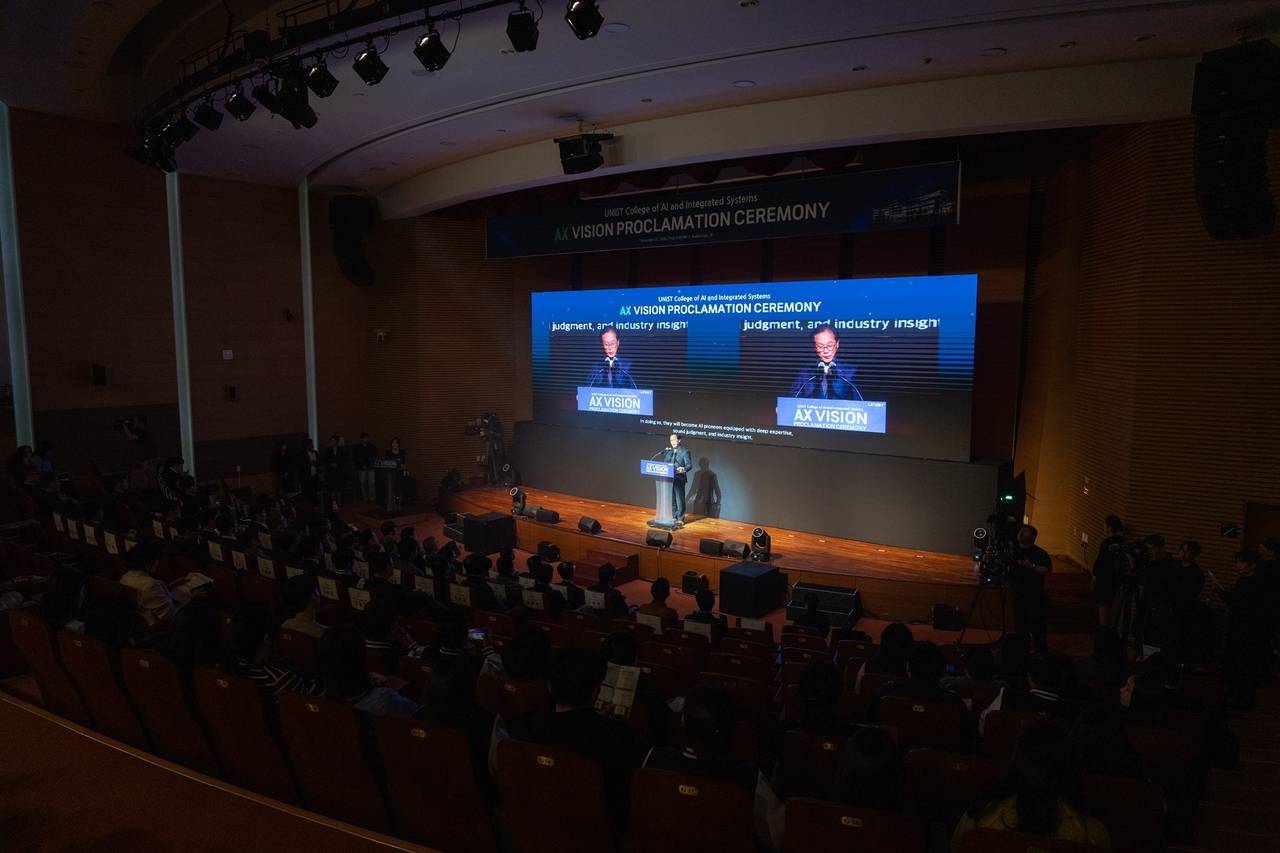
At the ceremony, UNIST unveiled its new vision statement: "Industry-Inspired AX — Designing the Future of Industry with AI." Kim Jae-jun, dean of the College of AI Convergence, presented a detailed action plan covering the introduction of Industry-Inspired Learning, the shift to a major-centered curriculum and the expansion of AX convergence majors.
The event also featured discussions on how university education must evolve for the AI era. A special session with students and industry professionals focused on sharing expectations for future education and the kind of talent companies need. UNIST also proclaimed a "UNIST AI Ethics Code" emphasizing social responsibility in the age of advancing AI technology.
"Talent that understands the industrial environment and finds solutions through AI will lead regional innovation," UNIST President Park Jong-rae said. "We will design an AX education and research system unique to UNIST — one that takes challenges posed by companies, researches them at the university level and applies the results on the ground — to strengthen the competitiveness of the southeastern region's key industries."
nbgkoo@heraldcorp.com