Year-long Kim Byung-kee probe sent back by prosecutors
Police failed on both speed and thoroughness
'We did our best,' officers say, expressing regret
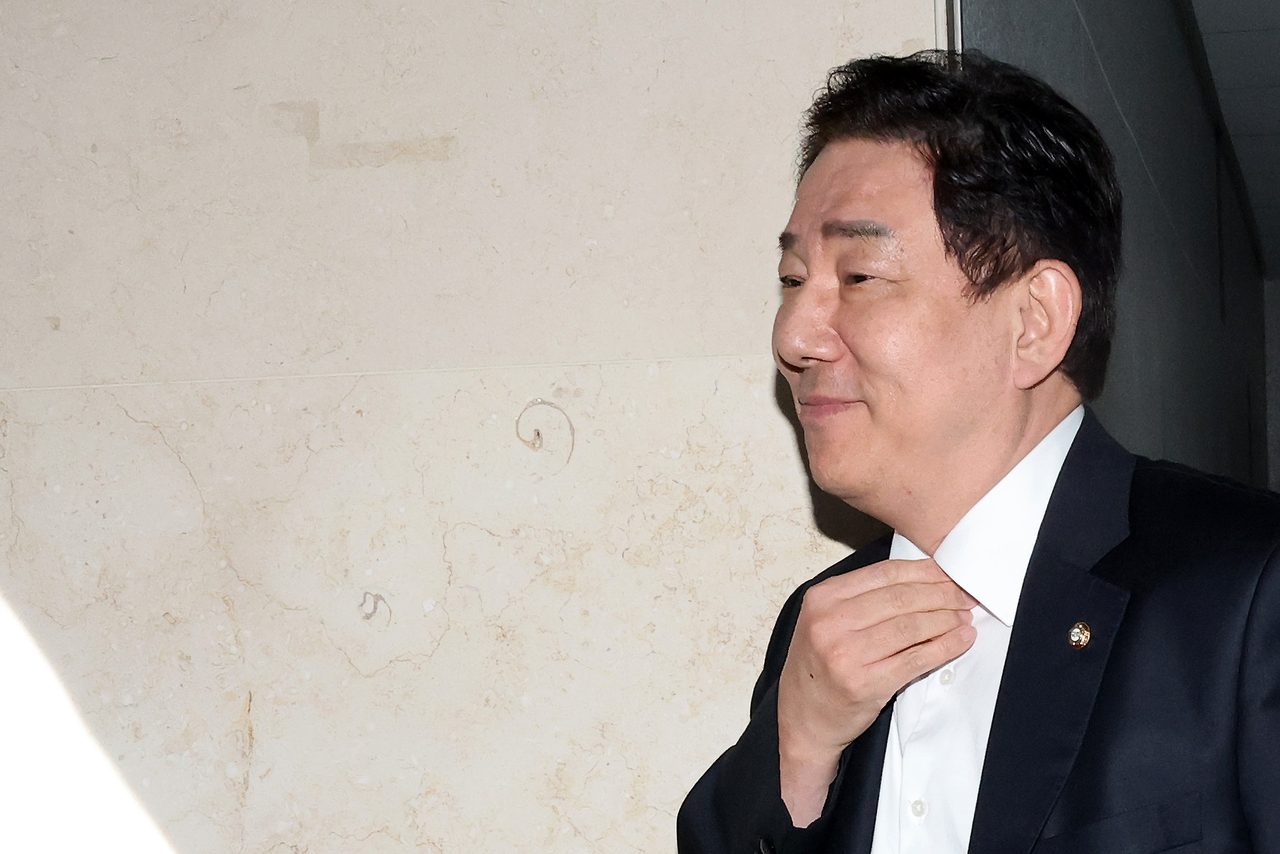
Police are facing criticism for failing on both speed and thoroughness after prosecutors rejected an arrest warrant sought against independent lawmaker Kim Byung-kee, a former floor leader of the Democratic Party of Korea — rendering a full year of investigation seemingly for nothing.
A Korean National Police Agency official said at a regular press briefing Monday that investigators had done their best but expressed regret that prosecutors had declined to seek the warrant. "We plan to carry out supplementary investigation as swiftly and thoroughly as possible," the official said. The Seoul Central District Prosecutors Office on Friday returned the warrant application submitted by the Seoul Metropolitan Police Agency, calling for further investigation.
Asked whether police intended to reapply for an arrest warrant, the official said the word "reapplication" had not been used. "That will be a matter to decide after the supplementary investigation is complete," the official said.
On the possibility of referring Kim to prosecutors without seeking his detention, the official said only that "all options remain open." Police had previously applied multiple times for an arrest warrant against Bang Si-hyuk, chairman of Hybe, only to be turned back by prosecutors each time, and ultimately referred him without seeking detention.
Throughout the prolonged investigation, police had repeatedly explained delays by saying they were strengthening the completeness of the case to avoid having prosecutors send it back for more work. Their argument was that rushing to refer the case and then receiving a supplementary investigation request would invite criticism of their investigative capabilities, so they preferred to shore up the case themselves.
At Monday's briefing, the police agency official defended the slow pace of the warrant application, saying investigators had taken time to conduct a meticulous review of the facts and legal grounds in order to build a more complete case. Police had last summoned Kim for questioning on April 10 and then waited roughly five months before applying for the arrest warrant on Sunday.
Police stressed thoroughness over speed — then got sent back anyway
Rejected warrant puts investigative competence back in the spotlight
Hong Seok-gi, head of the National Investigation Headquarters, said at a press briefing on Aug. 3 that police were scrutinizing even minor details in the Kim case to avoid having prosecutors demand additional work. "If we wrap things up quickly and hand it over, prosecutors can ask for supplementary investigation — we are looking at every small detail to prevent that from happening," he said.
Hong added that since the 2021 redistribution of investigative authority between police and prosecutors, there had been widespread criticism that police investigations were dragging on without timely resolution. "But problems arising from rushing investigations have been coming to light recently," he said, "so we have no choice but to place greater emphasis on thoroughness over speed in how we direct our work."
Hong also said that the more prominent the subject of an investigation, the more it becomes a test of police capability, and that the leadership's position was therefore to pursue rigor and completeness.
Despite all that, police ultimately could not avoid the very outcome they had spent a year trying to prevent. Prosecutors said they had reviewed the progress of the investigation in the roughly five months between police's last questioning of Kim and the warrant application, and concluded that the case for detention had not been sufficiently established.
Even the charges police felt confident about failed to clear prosecutors' bar
A year of work, and more delays now inevitable
Of the roughly 13 alleged irregularities under investigation, police selected only five they felt confident enough to include as grounds for the arrest warrant: the alleged concealment of a 100 million won ($74,300) political donation from lawmaker Kang Sun-woo in exchange for a favorable candidate nomination (obstruction of business); the alleged personal misuse of a corporate card tied to Dongjak-gu council operating funds (breach of fiduciary duty); alleged preferential treatment for Kim's second son in securing employment at Jinwoo Sanjeon and transferring to Soongsil University (bribery under the Act on the Aggravated Punishment of Specific Crimes); alleged provision of hotel hospitality by Korean Air (acceptance of bribe); and alleged lobbying for favorable treatment during a national audit related to Shilla Leisure (acceptance of bribe).
Left out of the warrant were what investigators considered the core allegations — including bribery charges that Kim had asked cryptocurrency exchange Bithumb, which police had raided twice, to hire his second son, and a political funds law violation involving 30 million won that Kim allegedly received through an aide from two Dongjak-gu council members ahead of the 2020 general election and later returned.
Also excluded was a suspected violation of the Communications Secrets Protection Act, under which Kim is accused of leaking Telegram messages belonging to a former aide. The charge had been considered relatively straightforward to prove legally, given that Kim had posted the messages himself on his own social media account, yet police chose not to include it in the warrant.
Even the charges police had carefully selected as their strongest failed to clear the prosecutors' threshold.
A police agency official said it did not appear that prosecutors had concluded there was no need to detain Kim. "Our understanding is that prosecutors found the typical grounds for detention — such as concerns about destruction of evidence or flight risk — to be somewhat insufficient," the official said, and went on to say that police would conduct supplementary investigation in consultation with prosecutors to bolster the charges.
arin@heraldcorp.com