![Lee So-young, nominee for minister of SMEs and Startups, answers lawmakers' questions at her confirmation hearing before the National Assembly's Trade, Industry and SMEs Committee on Tuesday. [Yonhap]](https://wimg.heraldcorp.com/news/cms/2026/09/16/rcv.YNA.20260915.PYH2026091507150001300_P1.jpg)
'I will tackle regulatory issues head-on as if I were minister of deregulation'
Pledges public debate with FSC chief on Kosdaq policy; says she would persuade even the president if their views differ
Confirmation report could be adopted as early as Thursday, depending on ruling-opposition talks
Park Young-sun, the ministry's second minister, cast a bold shadow — Lee says differences are 'healthy, not controversial'
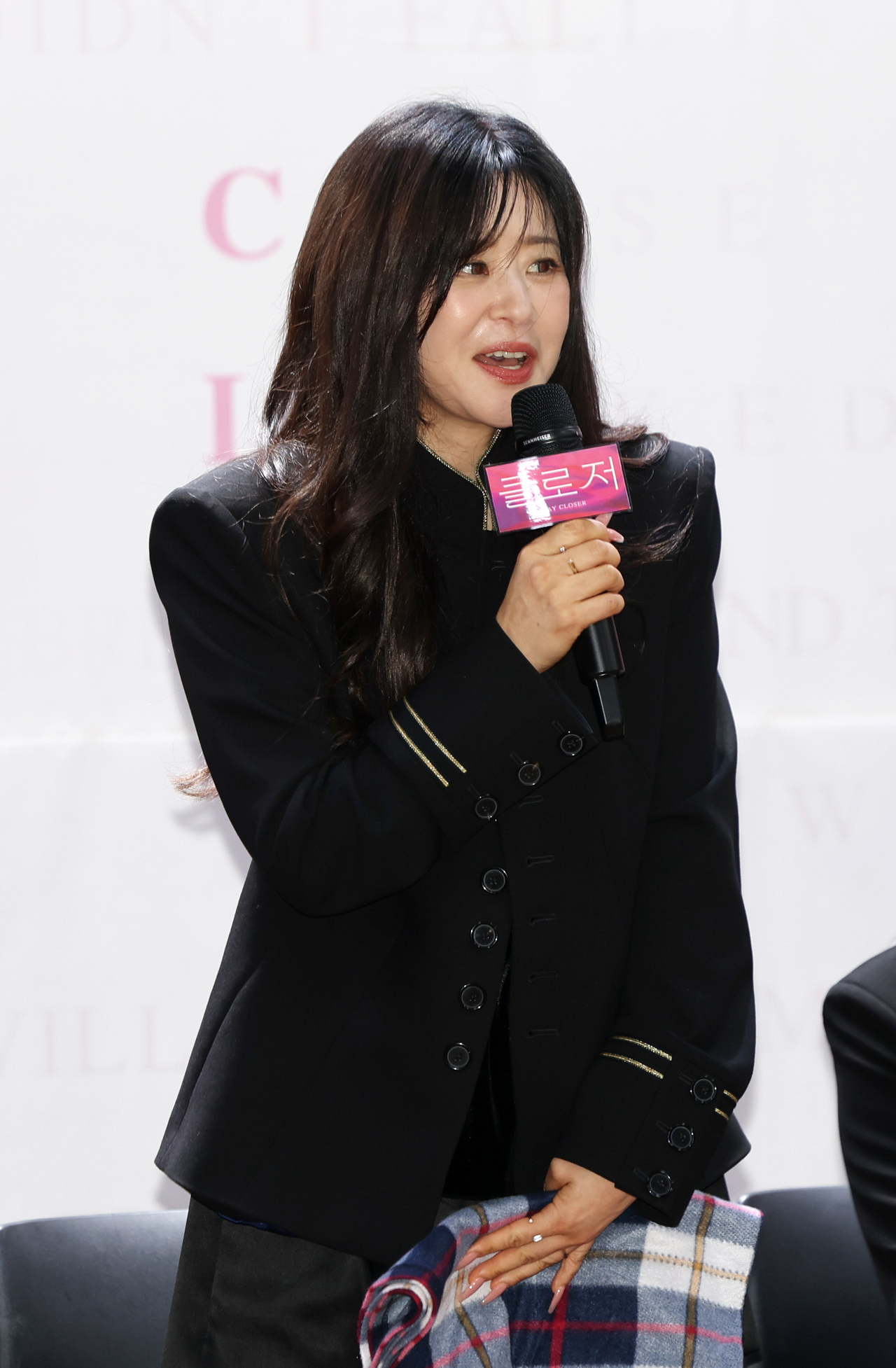
Lee So-young, nominee for minister of SMEs and Startups, laid out her positions Tuesday on regulatory reform, labor issues and policies for Kosdaq and startups at her National Assembly confirmation hearing. Opposition lawmakers pressed her on the circumstances of her nomination, her use of political funds, and her ties to real estate and a climate solutions firm. Lee defended herself against the allegations while signaling she would coordinate — and if necessary disagree — with other ministries and even the president on policy matters.
'Korea wants its own Nvidia but won't even accept Uber' — she pledges to lead on deregulation
Regulatory reform was the central theme of the hearing. Lee pointed to the contradiction of a country that aspires to produce companies like Nvidia or Tesla while failing to accommodate far more modest innovations such as Uber or Tada. "I don't think our society is yet open to innovation," she said. "We want companies like Nvidia or Tesla to emerge in Korea, but the reality is that we cannot even accept small innovations like Uber or Tada."
She added that an open attitude toward change was a prerequisite for new ideas to take root. "I believe that lowering the barriers of various entry regulations is the way to enable bold new challenges," she said.
"That is why I said I would tackle regulatory issues head-on, with the mindset of a minister of deregulation," she said.
Lee also made clear she would not shy away from voicing dissent within the government. Asked what area she most wanted to make her mark on if confirmed, she said she wanted "to try working in a new way."
"If necessary, I would like to have a public debate with the FSC chairman on Kosdaq policy, which is dominated by small and medium-sized enterprises, and I would also like to argue with ministers of regulatory agencies at Cabinet meetings over startup regulations," she said.
![Lee So-young, nominee for minister of SMEs and Startups, responds to a lawmaker's question at her confirmation hearing before the National Assembly's Trade, Industry and SMEs Committee on Tuesday. [Yonhap]](https://wimg.heraldcorp.com/news/cms/2026/09/16/rcv.YNA.20260915.PYH2026091505540001301_P1.jpg)
'Diversity, not discord' — and an abstention on the criminal procedure bill
On her working style as minister, Lee said she expected people would want to see her "not as a managerial minister who works in a solemn, familiar way, but as someone who works dynamically — sometimes looking rough around the edges, not following inertia, and willing to push back."
On the prospect of policy disagreements surfacing within the government, she said such moments would "show the diversity and vitality of the Korean government, not discord or conflict."
The question of whether she would hold her ground against the president arose after lawmakers raised her abstention, during her time as a National Assembly member, on a vote to amend the Criminal Procedure Act to abolish prosecutors' supplementary investigative powers. Lee explained that she had "publicly expressed concerns several times during the deliberation process, and since those concerns were not fully resolved, I could not vote in favor."
She added that because the party's position had been decided after multiple caucus meetings and hours of debate, voting against it would also have been disrespectful to that process — so she had abstained after much deliberation.
Asked what she would do if a policy she disagreed with came before the Cabinet after she became a minister, Lee said, "If there is something that conflicts with my convictions, I think I would try to persuade the ministers around me — and I would persuade the president as well."
![Lee So-young, nominee for minister of SMEs and Startups, answers lawmakers' questions at her confirmation hearing before the National Assembly's Trade, Industry and SMEs Committee on Tuesday. [Yonhap]](https://wimg.heraldcorp.com/news/cms/2026/09/16/rcv.YNA.20260915.PYH2026091507180001300_P1.jpg)
'The 52-hour rule doesn't fit the diversity of modern work'
Lee was equally direct on labor issues. On the 52-hour workweek cap, she acknowledged the need to reduce working hours while arguing that the current blanket enforcement needed reform.
"Korea has extremely long working hours, and the resulting deaths from overwork are very high — so there is a case for shortening working hours from a worker-health perspective," she said.
However, she said, applying the 52-hour limit as a rigid, uniform regulation — with criminal penalties of up to two years in prison for employers who violate it — "does not fit today's work structures and the diversity of how people work."
"Beyond the traditional model of commuting to a factory and working in a fixed location, many forms of knowledge work are evaluated by output rather than hours logged," she added.
On the government's push for a four-and-a-half-day workweek, Lee distanced herself from any mandatory rollout. When People Power Party lawmaker Jo Ji-yeon asked her position, she said the conditions for a legally mandated introduction "do not currently exist." She said her understanding was that the government's approach had been to support companies running pilot programs with incentives rather than to impose the change by law.
Opposition presses on nomination call: 'It was definitely not the chief of staff's office' — and on real estate gains: 'Nothing has been realized yet'
Opposition lawmakers also pressed Lee on how she came to be nominated. People Power Party lawmaker Jo Ji-yeon asked who from Cheong Wa Dae had contacted her. Lee said she understood it was customary not to disclose who made the approach or how. Asked whether she had heard directly from the president, she said, "At least it was not from the president."
When Jo pressed further, asking whether the call had come from First Deputy Chief of Staff Kim Hyun-ji — whom she described as a figure surrounded by public suspicion — Lee replied, "That is definitely not the case."
Her use of political funds also came under scrutiny. Opposition lawmakers questioned the contracting process and her failure to submit related documents after it emerged that Lee had paid about 70 million won ($51,700) in legislative consulting fees to a firm whose registered address turned out to be vacant.
Lee said she had contracted with the individual consultant based on their personal credentials, adding that "the name of the corporation or the state of its registration was not something I was focused on." She said she would be more careful going forward about verifying corporate details.
The issue of her owning a home she does not live in was also raised again. Lee said she understood government policy to differentiate tax benefits for non-resident single homeowners, and that it did not amount to a direct restriction on ownership itself. On the suggestion that she had profited from rising apartment prices, she said, "I have not sold the property, so nothing has been realized."
On the public online food delivery app policy, Lee cited poor service quality as the core problem. Drawing on her own experience using the cooperative delivery app, she said it was "far less convenient compared to private delivery apps" and that "without service improvements, injecting coupons alone will not be enough to fix things."
In her closing remarks, Lee said she would "always think of the field first when pursuing policies and communicate closely with the National Assembly, which represents the people."
The confirmation report on Lee could be adopted as early as Thursday, depending on how talks between the ruling and opposition parties proceed. The Trade, Industry and SMEs Committee is set to continue consultations on whether to adopt the report.
Former Minister Park Young-sun, who took office in April 2019 as the ministry's second minister, remains a towering figure within the Ministry of SMEs and Startups. A four-term veteran who had served as floor leader, she is still remembered inside the ministry as a "powerful minister." Her tenure is credited with launching the SME Policy Deliberation Council and establishing a regulatory innovation hotline. When she left office, observers inside and outside the ministry said her time there had significantly raised its standing within the government — no small feat for what had been seen as one of the cabinet's junior agencies.
At Tuesday's hearing, Lee similarly signaled an intent to break from the mold of a passive minister — invoking the prospect of a public debate with the FSC chairman, arguments with fellow ministers at Cabinet meetings, and a determination to push through policy by coordinating across agencies. Within and around the ministry, expectations are growing that Lee, a two-term lawmaker from a constituency seat, could become a second Park Young-sun.
hong@heraldcorp.com