Unification Ministry offers no replacement safeguard, raising fears of security gaps
'Opening civilian exchanges and closing the state's eyes are entirely different matters'
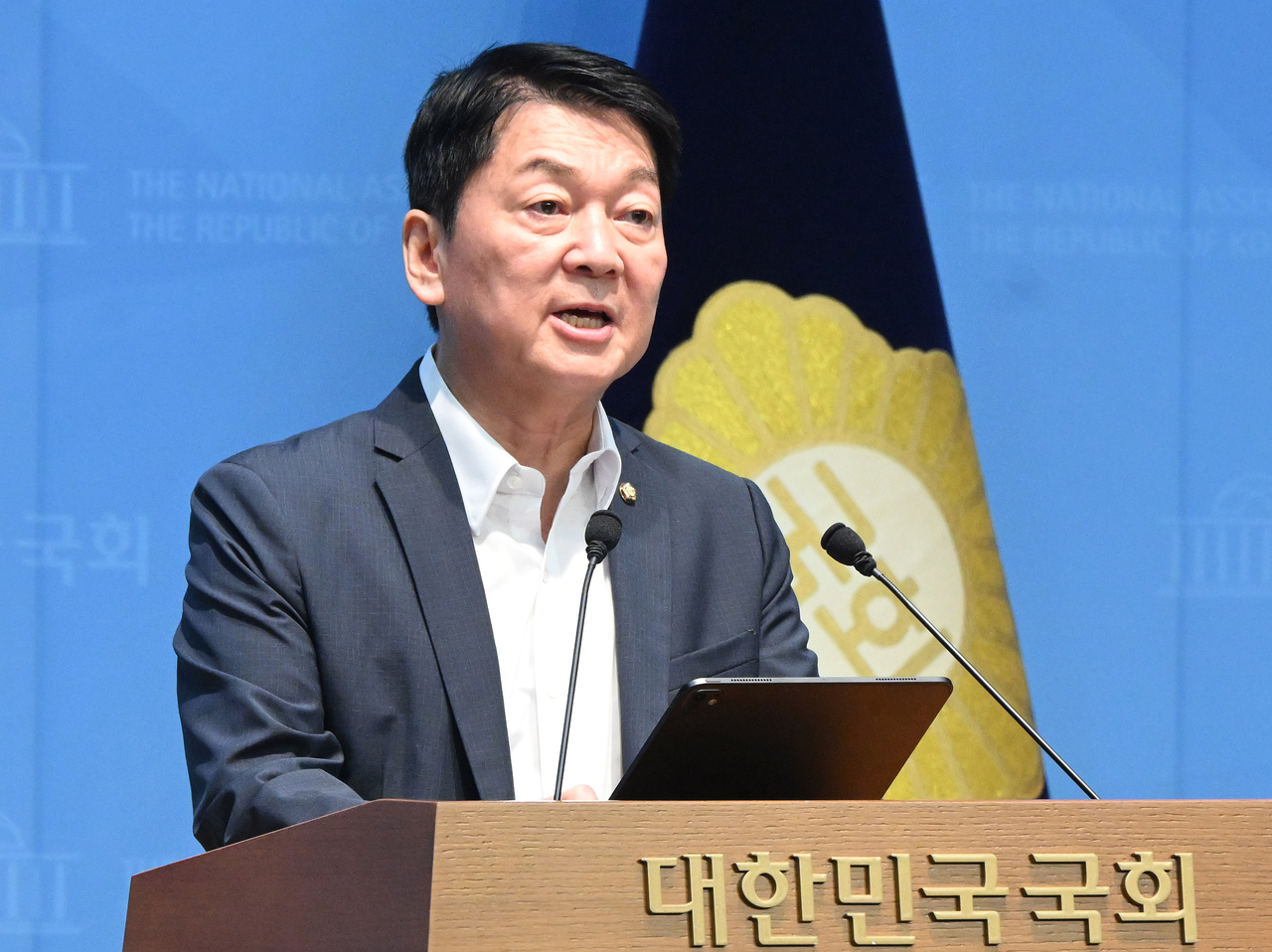
The National Intelligence Service and the Ministry of Justice have shifted their positions from "careful review" to "acceptance" of a proposal to delete a legal provision that allows authorities to block contacts with North Koreans deemed a threat to national security, it has been confirmed. Opposition lawmakers have raised concerns that removing the safeguard without a replacement could leave a dangerous gap in national security.
According to documents submitted to People Power Party lawmaker Ahn Cheol-soo of the National Assembly's Foreign Affairs and Unification Committee, the Ministry of Unification, the NIS and the Ministry of Justice have all agreed to accept a proposed National Assembly amendment that would delete Article 9-2, Paragraph 3 of the Inter-Korean Exchange and Cooperation Act.
The provision allows the minister of unification to refuse a prior notification of contact with a North Korean resident when there is a clear risk that such contact could harm inter-Korean exchange and cooperation, national security, public order or public welfare.
An analysis of documents submitted by the Unification Ministry shows that 86 prior notifications of contact with North Korean residents were rejected under the provision between 2022 and the first half of 2025 — four in 2022, 40 in 2023, 26 in 2024 and 16 in the first half of this year.
The Unification Ministry has been implementing a policy of "fully permitting private-sector contact with North Korea" since last July. In line with that policy, it had already accepted the amendment to delete the legal safeguard that had served as the basis for rejecting those 86 contacts.
The Ministry of Justice and the NIS had initially been cautious about deleting the provision. Last year, the Justice Ministry submitted an opinion to the National Assembly stating that "it would be desirable to specify the grounds for refusal more concretely," while the NIS said "consideration should be given to the fact that abolishing the indirect-contact notification requirement would heighten the risk of exploitation by North Korea's operations against the South, posing a threat to national security."
However, an interagency meeting convened by the Unification Ministry in February led the Justice Ministry and the NIS to reverse their positions, deferring to the ministry's "acceptance" stance.
If the provision is deleted, the Unification Ministry would lose its direct legal basis for rejecting a prior notification of contact — even when the contact involves a North Korean intelligence operative or an unidentified individual — on the grounds that it poses a clear risk to national security.
Gaps in the management of North Korea contacts have persisted even under the current notification system. According to documents submitted by the Unification Ministry, 33 violations of laws and regulations related to contact with North Korean residents were detected between July 2021 and June 2026, resulting in 10 fines and 23 written warnings. Five of the cases subject to fines involved unauthorized contact with members of Chongryon, the pro-Pyongyang General Association of Korean Residents in Japan, with at least eight individuals implicated.
The government intends to remove the legal basis that previously allowed it to screen out 86 contacts on national security grounds. Critics say, however, that no alternative mechanism has been proposed to preemptively block dangerous contacts involving North Korean intelligence operatives or unidentified individuals.
In response, the Unification Ministry said it would "respond strictly in accordance with relevant laws and regulations if actual security-threatening acts are confirmed during the contact process" — in effect signaling a shift to reactive measures only after problems or harmful acts have already occurred.
Ahn said the NIS and the Ministry of Justice "must explain why they reversed course and agreed to delete the legal safeguard, and whether they conducted their own independent security and legal reviews." He added that "if they simply followed the Unification Ministry's position, they have abandoned their responsibility for independent review as agencies charged with protecting national security and the rule of law."
Ahn went on to say that "opening and expanding the door to civilian exchanges is an entirely different matter from the state closing its eyes," and that "before stripping away the legal authority to preemptively block contacts that pose obvious risks, the government must first present the public with concrete countermeasures."
mp1256@heraldcorp.com