Seoul works to reconnect women's 'paused time' — turning caregiving into career capital
AI links jobs, care and safety — but fairness matters as much as technology
Looking beyond household type to lived experience: a new blueprint for Seoul's women and family policy
'Policy answers lie in citizens' daily lives — the public sector must innovate first'
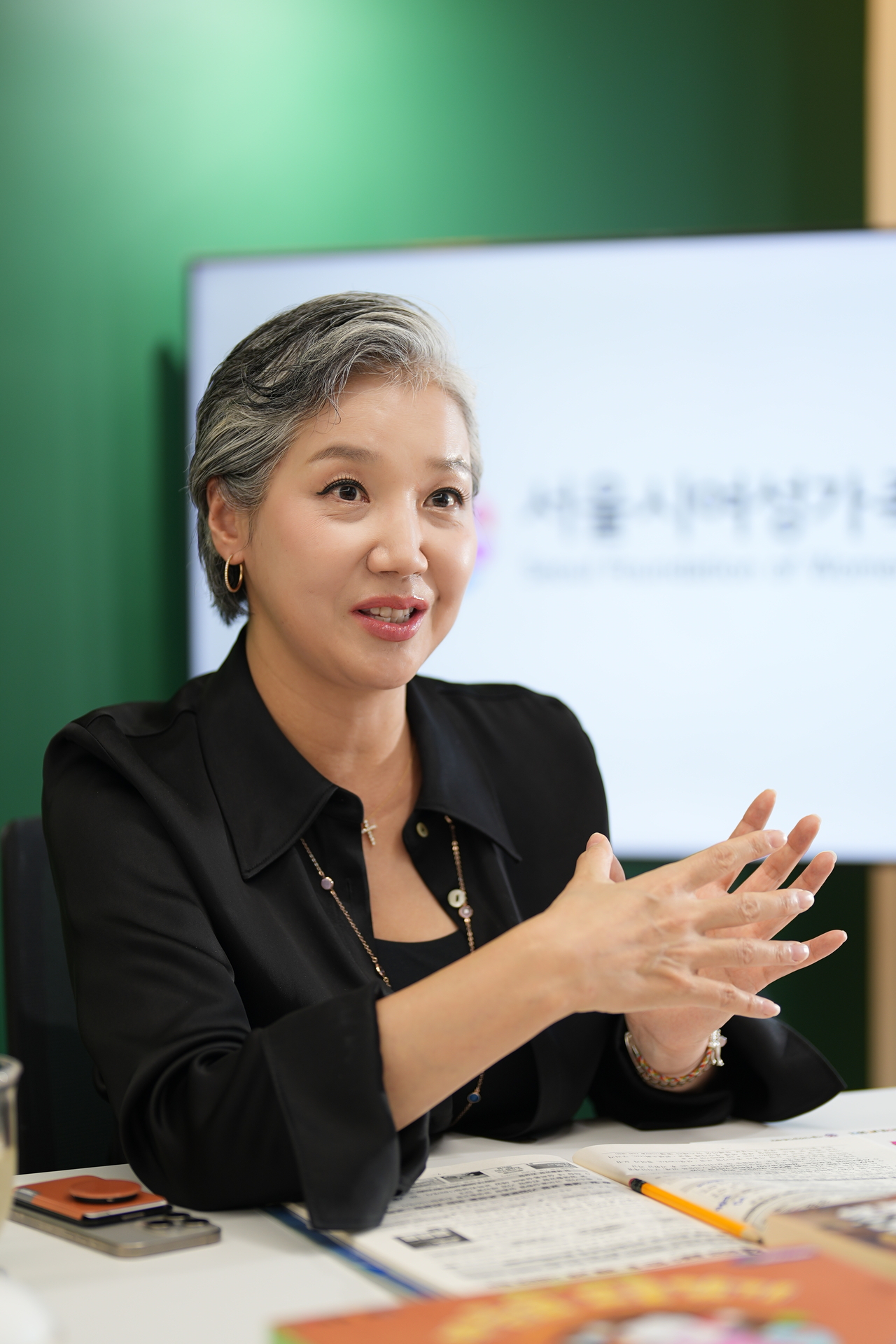
Time spent on housework and family caregiving shows up on a resume as a gap. For anyone who left the workforce to raise children or care for aging parents, re-entering the labor market often means having years of accumulated experience and skill go unrecognized.
Park Jeong-suk, CEO of the Seoul Foundation for Women and Family, believes this is precisely where women and family policy must change. Simply increasing the number of employed people or program participants is not enough, she argues — policy must reshape the very structure of daily life so that citizens can sustain both work and caregiving at the same time.
"Re-employment itself cannot be the final destination of policy," Park said in an interview with The Herald Business on Wednesday. "What matters is creating an environment where people do not have to give up work because of caregiving, and do not have to give up family life because of work."
That standard has guided her priorities since taking office. The measure of success, in her view, is not the number of programs launched but the tangible changes felt in citizens' lives. To maximize impact within limited resources, she has focused on broadening collaboration between the public and private sectors and on integrating programs and information that had previously been scattered.
Park has been particularly emphatic on one point: "Public institutions should actually be more innovative than the private sector." With citizens' needs and the social environment changing rapidly, she said, simply repeating existing programs is no longer sufficient for a public institution to fulfill its role.
One area the foundation has prioritized this year is the reappraisal of housework and caregiving experience.
Activities long treated as employment gaps — managing a household, caring for family members — have been reframed as genuine workplace competencies. The foundation developed 21 job-skill descriptions based on the National Competency Standards framework, translating experiences such as scheduling, communication and problem-solving gained through caregiving into the language of employment so that job seekers can articulate them during the hiring process.
Support for women returning to the labor market has also been broadened. The foundation runs the Seoul Career-Up Project, which links job-search grants, internships and employment incentive payments, while an IT and AI learning community called Seoul Women It's supports women seeking to enter new industries.
Seoul Women It's has drawn more than 3,600 participants, including employed workers and those hoping to enter related fields. Members propose their own learning topics and share experiences with working professionals.
The next step is individualized career planning. The foundation plans to develop and pilot a "Seoul-type career path" model that maps a tailored route for each person by combining the reason for their career interruption, their re-employment goals and their existing competencies. Self-directed study groups, expert workshops and short knowledge-sharing meetups will also be expanded.
AI should assist people, not replace them
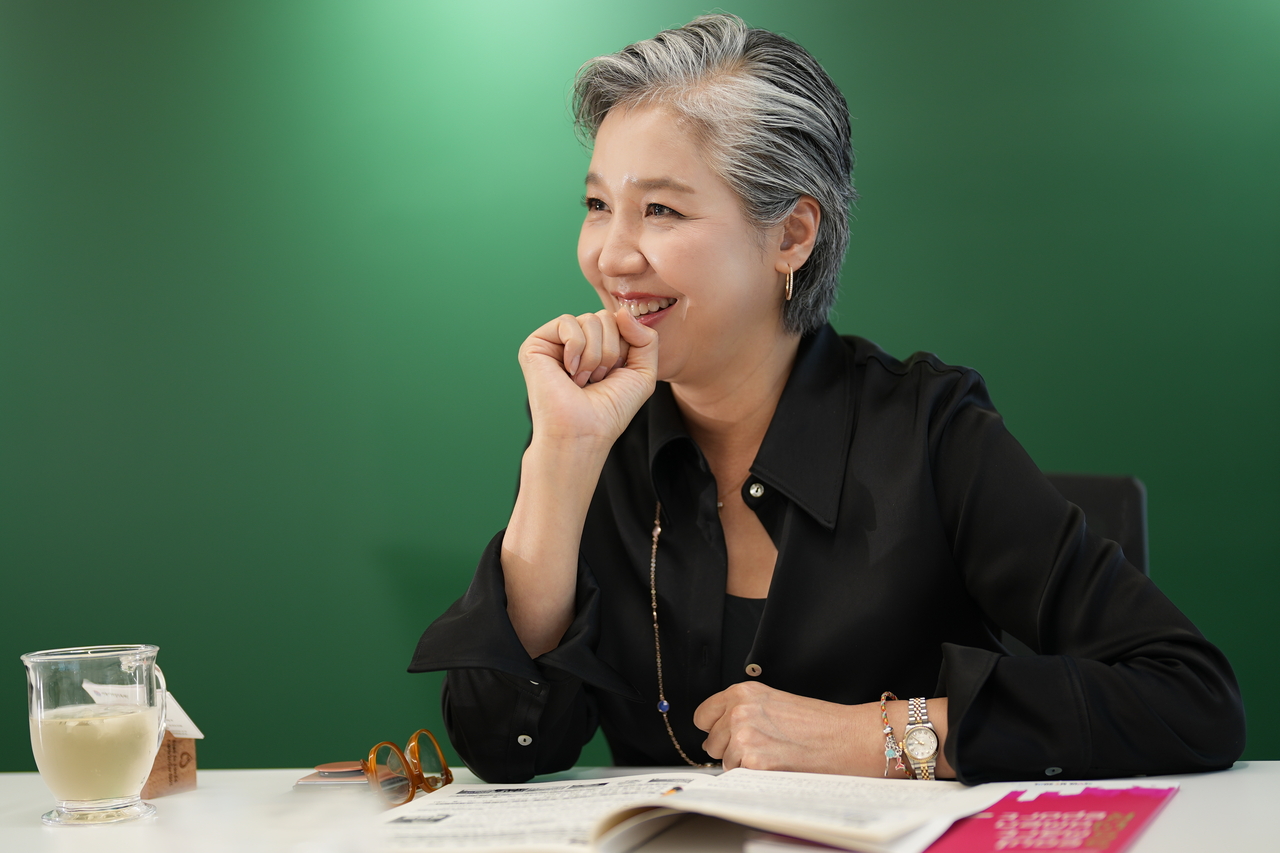
Park identifies AI as another major axis of change — but she is clear that technology must not become an end in itself.
Through its Smart Women Project, the foundation is applying AI and digital tools to women's economic activity, child care, responses to crime victimization and administrative work.
One of the most prominent applications is support for victims of digital sex crimes. The Seoul Digital Sex Crime Relief Support Center assisted 4,333 victims between 2022 and 2025, with cumulative support cases reaching approximately 99,000. The foundation has also strengthened a 24-hour response system that uses AI to detect illegally filmed content, analyze video similarity and assist with takedown requests.
The technology is changing the working environment for support staff as well as for victims. By automating the review of illegal footage, it reduces the psychological shock and secondary trauma that workers would otherwise experience from manually screening such material.
AI has entered child care center administration, too. An AI accounting chatbot designed to handle routine accounting inquiries allows staff to access the information they need regardless of time or location. As of 2025, it had logged 4,282 cumulative consultations, resolving cases without human intervention at a rate 1.5 times higher than telephone consultations.
Yet Park emphasizes the need to monitor AI just as much as she promotes its use.
An analysis of generative AI outputs conducted by the foundation found gender bias — professionals and leaders were depicted predominantly as male, while caregiving and housework were portrayed as women's roles.
"What matters is not how much AI is used, but whether the results are gender-equal and fair," Park said. "We need tools and usage guidelines that can diagnose and correct bias, and we need a 'human-in-the-loop' principle that keeps critical policy judgments and accountability in human hands."
The lens through which Seoul views family policy is also shifting.
Single-person households account for 40.5 percent of all households in Seoul in 2026. But the lives of citizens grouped under that single label are far from uniform. For young people, employment and housing may be the most pressing concerns; for those in middle age, changes in family relationships loom larger; and for older residents, isolation following the loss of a spouse or separation from adult children can be the greatest challenge.
Dual-income households present a similar complexity. The share of dual-income households among married couples nationwide reached a record high of 48.6 percent in the second half of 2025. Applying identical policies to parents in their 30s and 40s raising children and to people in their 60s and beyond who remain economically active is simply not workable.
In response, the foundation is moving away from categorizing support recipients by household type — "single-person household," "dual-income household" — and expanding its policy research and programs to reflect age, life stage and actual living conditions together.
"Dual caregiving" — the burden of simultaneously caring for young children and elderly parents — is another area receiving fresh attention. Beyond the financial and physical strain, the foundation argues that policy must also address the emotional exhaustion and social isolation that build up over prolonged caregiving.
Lowering the 'information barrier' so citizens don't have to search for help
Even the best policy falls short if citizens do not know it exists or find the application process too complicated. That is why Park places as much emphasis on accessibility as on policy content.
Seoul I-Room consolidates information on pregnancy preparation, marriage, childbirth and child-rearing that had been scattered across the Seoul Metropolitan Government and individual district offices, with a focus on helping citizens find the right policy for their situation and follow through to the actual service application.
Seoul-type kids cafes, neighborhood care centers and a platform called Mirae-ai 365 — which lets residents easily browse play and education programs by area — reflect the same philosophy of bringing care infrastructure closer to where people live.
Children's policy is expanding beyond facility construction into content. The foundation has developed board games and educational materials designed to build numeracy, social skills, creativity and problem-solving through play, and is distributing them to child care centers and similar facilities. Teaching methods are provided alongside the materials so that teachers, caregivers and child-minding workers can use them in line with each child's developmental level.
Efforts to lower information barriers are also under way in violence victim support. The goal is to consolidate information on support for domestic violence, sexual violence, stalking and digital sex crimes so that victims no longer have to visit multiple agencies and repeat their accounts each time.
The foundation is also exploring the use of AI to assess a victim's situation and guide them to the appropriate support agency and procedures.
For Park, a term as head of an institution is not simply a period of organizational management. She describes it as a time to convert an individual's experience, networks, expertise and operational capacity into lasting organizational assets.
The roughly two years since she took office — spent expanding partnerships with outside organizations and embedding new technologies in the field — have been driven by that conviction. Rather than treating budget and staffing constraints as reasons not to pursue new initiatives, the approach has been to draw on external resources and expertise to amplify policy impact.
The ultimate destination of the innovation she describes is, in the end, the citizen.
"I prefer the expression 'let's lift the glass ceiling together' to 'let's break it,'" Park said. "Some people should be able to keep working, others should have their caregiving burden eased, and still others should feel the reassurance of knowing there is somewhere to turn in a difficult moment."
7toy7@heraldcorp.com