Kim Min-seok repeatedly raises prospect of merger with Rebuilding Korea Party
Rebuilding Korea Party pushes back; Cho Kuk denies demanding a share of power
Floor negotiation group threshold, dual membership rules fuel leadership tug-of-war
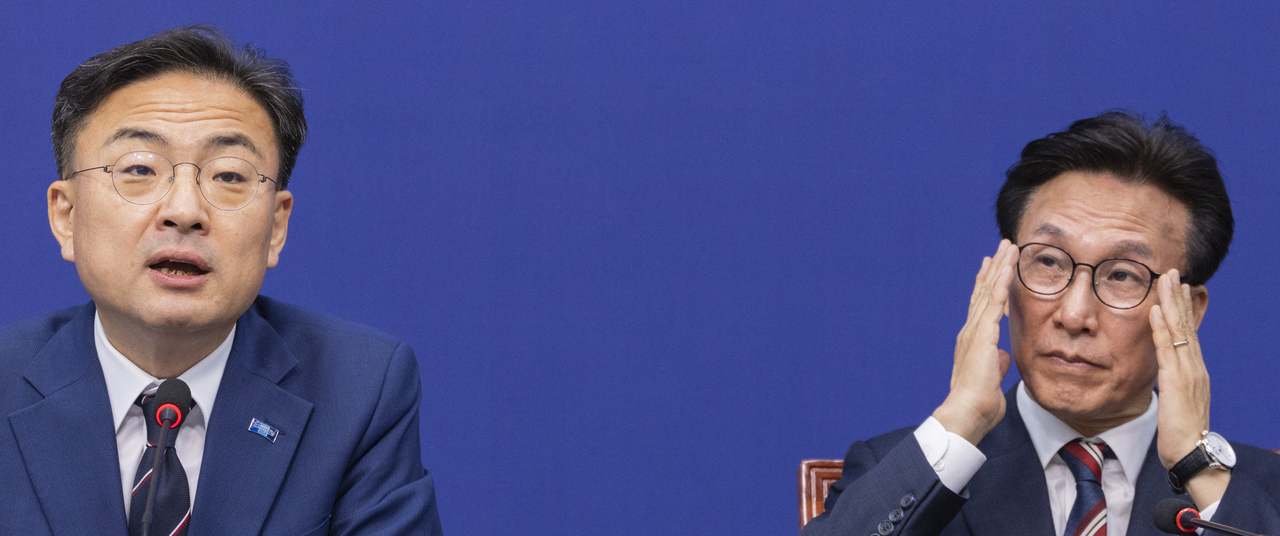
The Democratic Party of Korea and the Rebuilding Korea Party have been locked in a running war of nerves over how — and on whose terms — the two parties might align or merge. While the two sides have taken initial steps toward dialogue, a pattern has emerged: each time the Democratic Party appears to be steering the conversation, the Rebuilding Korea Party publicly applies the brakes.
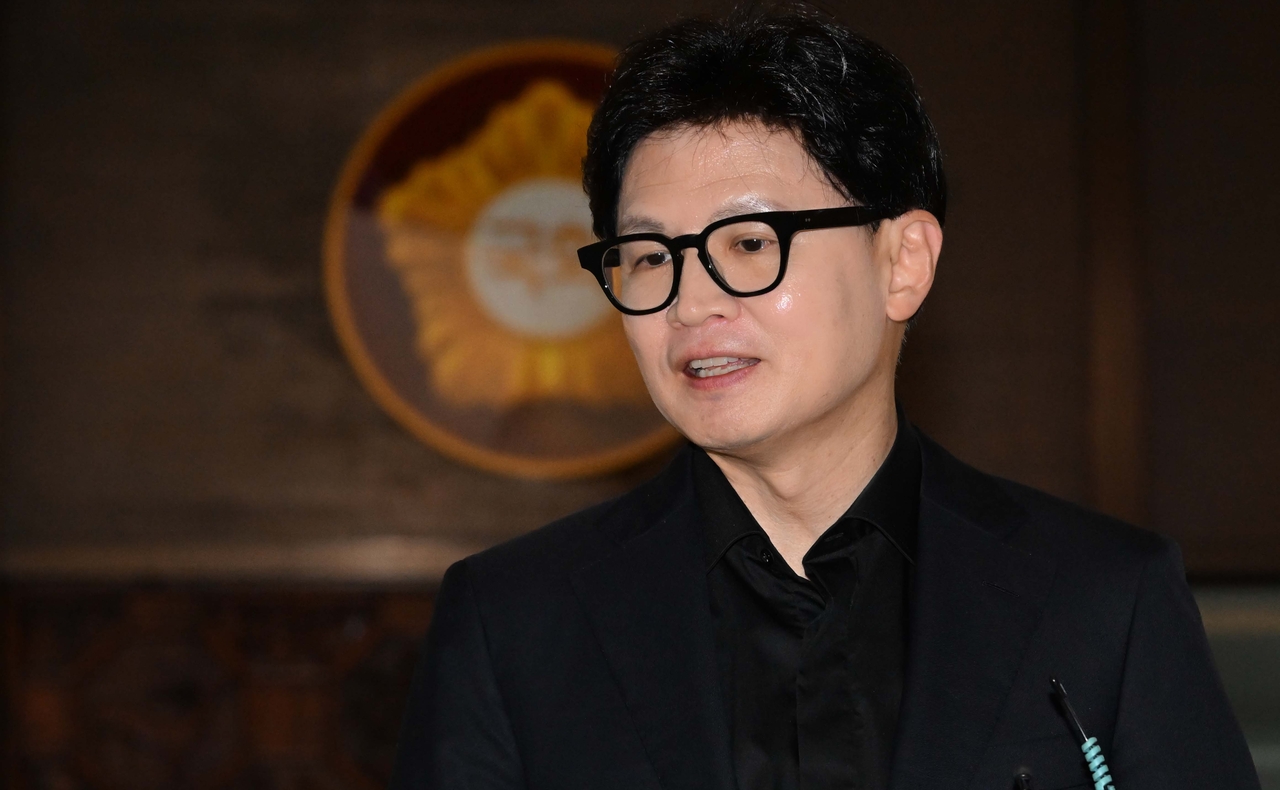
The friction sharpened this week. When Democratic Party leader Kim Min-seok remarked Saturday that "the era of dividing up shares is over" — a comment widely read as addressing a potential merger with the Rebuilding Korea Party — Rebuilding Korea Party policy institute head Cho Kuk pushed back immediately. Cho said no proposal for a merger or alliance had come from the Democratic Party since Kim took the helm, and denied that his party had ever demanded a share of power.
An attempt by the Democratic Party to sweeten the relationship by offering to lower the threshold for forming a floor negotiation group — a longstanding priority for the Rebuilding Korea Party — only exposed the gap between them. Kim proposed Wednesday reducing the current requirement of 20 seats to 15. The Rebuilding Korea Party rebuffed the offer, saying its official position calls for a threshold of 10 seats, and complained that the Democratic Party had put a number on the table without adequate prior consultation.
Rebuilding Korea Party Secretary-General Jeong Chun-saeng wrote on Facebook that while Kim was arguing 5 percent of Assembly seats — or 15 members — was the right benchmark, "anyone who knows full well how difficult it is to win 5 percent of seats in a system where money, organization and institutions all flow to the two major parties, and still proposes this standard, can only be read as having no will for political reform."
On Thursday, the dispute spilled into a public argument over whether any real communication had even taken place. Kim said in an appearance on the Democratic Party's YouTube channel that he had already discussed the floor negotiation group threshold and related issues with the Rebuilding Korea Party and other progressive parties.
The Rebuilding Korea Party told a different story. Party leader Shin Jang-sik said the only contact his party's secretary-general had received from the Democratic Party on the floor negotiation group issue was a single phone call asking to meet — there had been no negotiations. Spokesperson Im Myeong-hui added that "continuing to talk about a merger in the media without any prior contact is inappropriate for restoring trust and the relationship with the Rebuilding Korea Party."
The tension grew sharper still when Kim said the same day that the issue of dual party membership would need to be resolved before any merger talks with the Rebuilding Korea Party could proceed. "If the question of a merger with the Rebuilding Korea Party is raised, dual membership must be sorted out as a prerequisite before any member vote can even be considered," he said. The Rebuilding Korea Party pushed back, saying cross-checking the two parties' membership rolls would be practically impossible.
Observers say the underlying friction reflects a gap in how each party views control over any alliance or merger process. Since taking office, Kim has moved quickly to set the agenda — establishing a "grand unification task force" directly under his leadership and designating the Rebuilding Korea Party as a separate subcommittee within it, effectively positioning the Democratic Party as the driver of a broader realignment of the liberal camp. Kim had said Aug. 24 that he would "begin sweeping, rapid, all-fronts alliance-building, integration and expansion."
The Rebuilding Korea Party, by contrast, needs to protect its identity and bargaining power as an independent party. There is a palpable wariness that if the Democratic Party continues to set the conditions — whether on merger terms or the seat threshold for floor groups — the Rebuilding Korea Party will end up choosing whether to merge within a framework the Democratic Party has already drawn up.
A Democratic Party leadership lawmaker said in a phone interview that "the Rebuilding Korea Party will find it hard to simply agree with what we say, given its own concerns about self-reliance and internal party dynamics." The lawmaker said that context also explained why Shin had directly criticized Kim, saying Kim appeared focused on seizing the initiative through an "offensive" push for alliance and merger.
Voices inside and outside the party are urging caution about rushing toward a merger. Kim himself has said his approach to the Rebuilding Korea Party remains open on both fronts: "Alliance and merger are both on the table — alliance will happen regardless, but whether to merge is entirely undecided." A Rebuilding Korea Party official was equally pointed: "It seems like he wants to rack up credit for working toward unity and alliance, but with the Democratic Party talking like this in public, we are now second-guessing whether to even set a concrete schedule for a meeting."
thanks@heraldcorp.com