With Deputy Mayors Jeong Sang-hun and Kim Seong-bo joined by five directors covering planning, economy, transport, welfare and women's affairs, Seoul Mayor Oh Se-hoon has assembled a full senior leadership team spanning administration, housing, fiscal policy, technology, transport, welfare and gender — now the hard work of execution begins
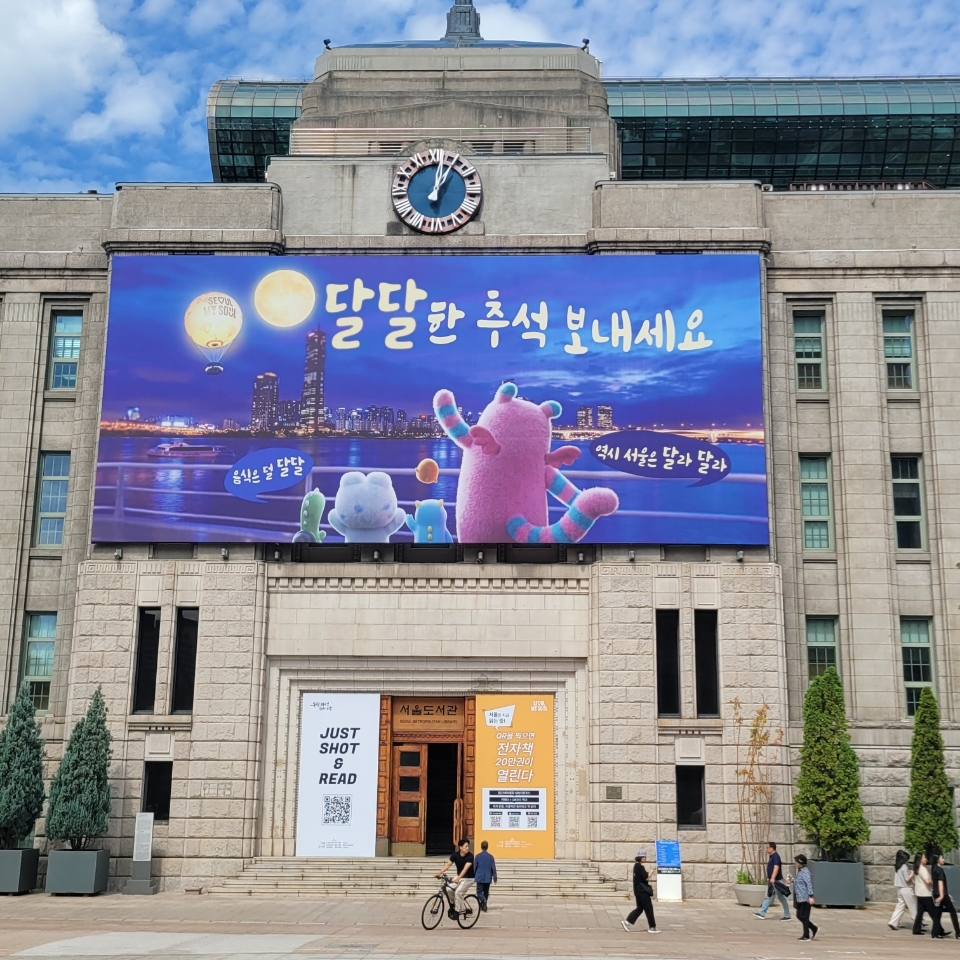
Seoul Mayor Oh Se-hoon's senior leadership team — dubbed the "seven-color rainbow" — is now complete.
The seven Grade-1 or higher officials who will steer city administration are: First Deputy Mayor Jeong Sang-hun (from North Gyeongsang Province), Second Deputy Mayor Kim Seong-bo (from Gwangju, South Jeolla Province), Planning and Coordination Director Lee Dong-ryul (from Gwangju, South Jeolla Province), Economy Director Kim Hyeon-u (from Seoul), Transport Director Yeo Jang-gwon (from Daejeon), Welfare Director Jeong Jin-u (from South Chungcheong Province), and Women and Family Director Ma Chae-suk (from Busan).
Six of the seven are career civil servants who entered public service through competitive examinations; the seventh is a private-sector specialist appointed through an open recruitment process.
The two deputy mayors hold vice-ministerial rank, while the directors of planning and coordination, economy, transport, welfare, and women and family affairs each hold Grade-1 status overseeing their respective policy domains.
The lineup was finalized when the city recently appointed Kim Hyeon-u, former head of the Seoul Business Agency, as economy director — filling the last senior post needed to execute Oh's key policy agenda in his ninth elected term.
The other six are career bureaucrats who entered public service through competitive examinations and rose through the ranks after serving in a wide range of senior city roles. The addition of a private-sector specialist with hands-on industry experience gives the team both administrative stability and a capacity for innovation.
First Deputy Mayor Jeong Sang-hun is one of Oh's closest aides, having previously served as the mayor's chief of staff, director of administration, and director of welfare policy. He is regarded as having a deep understanding of the city's organizational structure and overall administration, sharp political instincts, and strong drive.
Second Deputy Mayor Kim Seong-bo is the leading figure among the city's technical civil servants, having served as head of the housing and architecture bureau, director of housing policy, and director of disaster and safety. He serves as the command center for housing supply, urban planning, and disaster management.
Planning and Coordination Director Lee Dong-ryul previously served as director of administration and director of public health. He is regarded as a planning and coordination specialist with broad expertise in organizational management, budgeting, and policy alignment.
Transport Director Yeo Jang-gwon is a transport and environment specialist who served as transport planning officer and head of the climate and environment bureau. He oversees the city's core transport policies, including public transit reform, the Climate Pass program, and infrastructure expansion.
Welfare Director Jeong Jin-u is a welfare administration specialist who previously served as director of lifelong education and welfare planning officer. He is responsible for translating Oh's "Walking Together with the Vulnerable" policy into concrete programs covering protection of disadvantaged groups, care services, and responses to social isolation and loneliness.
Women and Family Director Ma Chae-suk previously served as public relations planning officer and as deputy district mayor of both Jung-gu and Jongno-gu. She is regarded as a leading figure among senior women officials in the city, with experience spanning both the main city hall and autonomous district administrations.
Economy Director Kim Hyeon-u, who filled the final piece of the puzzle, will oversee efforts to secure Seoul's future growth engines — nurturing high-value-added industries, developing talent for the AI era, and revitalizing the everyday economy.
His track record of expanding the Youth Employment Academy and systematically supporting promising companies from growth through market development to overseas expansion is cited as a key reason for his appointment.
The seven officials have built their expertise in distinct fields — administration, housing, planning, economy, transport, welfare, and women and family affairs — and come from diverse regional backgrounds and career paths. The combination of seasoned career bureaucrats and a private-sector economics specialist has led observers to describe the lineup as a "seven-color rainbow."

The tasks ahead for this team are far from light. They must deliver on the G3 Seoul Plan — the overarching city governance blueprint for Oh's ninth elected term, which sets out to make Seoul a "global top-3 city" alongside New York, London, and Tokyo.
Oh has formally unveiled the G3 Seoul Plan as the highest-level policy framework for his current term, with the ambition of placing Seoul alongside New York, London, and Tokyo as a global top-3 city.
The vision goes beyond climbing international city rankings: it aims to translate Seoul's global competitiveness into tangible improvements in residents' quality of life — covering jobs, housing, health, and safety.
The G3 Seoul Plan is built around five broad strategies: a healthy and safe city, an inclusive growth city, a housing-stable city, an opportunity and vitality city, and a spatial innovation city.
The healthy and safe city strategy aims to create an environment where residents can manage their health close to home and feel secure at any time and place. Plans include establishing exercise zones within a 10-minute walk of every home and expanding the city's fitness centers from 20 to 100 locations.
The inclusive growth city strategy focuses on reducing loneliness and gaps in education and care, while easing daily inconveniences for both residents and tourists. A flagship initiative is "Loneliness-Free Seoul 2.0."
The housing-stable city strategy links urban renewal projects, public housing supply, and lifecycle-based residential support into a single housing safety net. Through the "Fast-Track Integrated Planning 2.0" initiative, the city aims to break ground on 310,000 housing units by 2031.
The opportunity and vitality city strategy envisions AI, global talent, the nighttime economy, advanced industries, and culture and tourism as new engines of growth for Seoul.
However, the Seoul Metropolitan Council this month cut the entire 5.62 billion won ($4.08 million) budget for the "Youth AI Growth Pass" program, which had aimed to provide 500,000 young people with generative AI access and basic training. The failure of one of Oh's flagship initiatives to clear the council has highlighted cooperation with the assembly as a critical variable in advancing the G3 Seoul Plan.
The spatial innovation city strategy aims to distribute housing, jobs, education, and culture evenly across Seoul and connect them through transport networks, reducing disparities between different parts of the city.
Revitalizing the nighttime economy is another pillar of the push toward G3 status. The city has appointed Lee Ji-hyeon as special adviser for the nighttime economy to develop a vision and strategy, and is pursuing the development of four major nighttime landmarks and the creation of a distinct "Seoul by Night" brand.
The city's policy of transforming Seoul into a "garden city" through the Seoul International Garden Expo has also drawn positive responses from both residents and tourists for its contribution to quality of life.
Ultimately, the success of the G3 Seoul Plan will hinge on execution rather than planning. The seven top officials must work in concert across their respective fields and secure the cooperation of the Seoul Metropolitan Council for the plan to bear fruit.
A rainbow — with its seven colors of red, orange, yellow, green, blue, indigo, and violet — is a rare natural phenomenon that has long been regarded as an auspicious sign of good fortune, prized for the sense of wonder it inspires.
Whether Oh's "seven-color rainbow" team can steer Seoul past its political and fiscal obstacles and into the ranks of the world's top three cities remains to be seen.
seouldream01@heraldcorp.com