Stay on price-reset order raises consumer harm concerns
Delivery app fees and ad rates still need to come down, chief says
Dunamu-Naver merger to face careful scrutiny
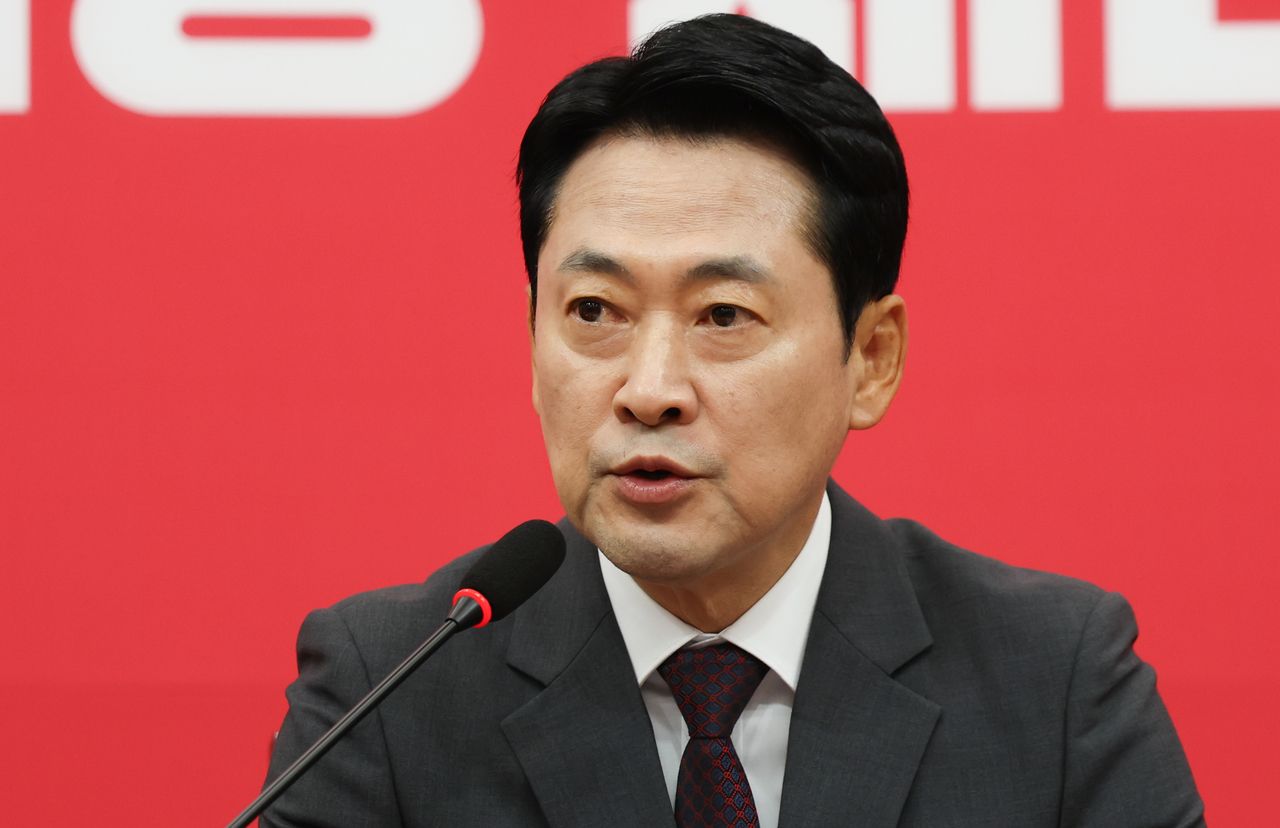
![Korea Fair Trade Commission Chairman Joo Byung-ki speaks at a press conference marking his first anniversary in office, held Monday at Government Complex Sejong. [Korea Fair Trade Commission]](https://wimg.heraldcorp.com/news/cms/2026/09/21/news-p.v1.20260921.1c6bc51afd674879abea2e76a7d9f63d_P1.jpg)
Korea Fair Trade Commission Chairman Joo Byung-ki said Monday he would review amendments to investigation rules to eliminate any room for companies to evade on-site probes. The move comes after Coupang Inc and Hanwha sought stays of enforcement during on-site inspections, hampering the agency's ability to conduct investigations and secure documents.
Joo also rebuffed renewed criticism from US lawmakers that the South Korean government discriminates against American companies such as Coupang Inc. He said the commission has enforced competition law against foreign firms for more than 25 years and has never once been told by an overseas competition authority that its enforcement was discriminatory or procedurally unfair.
Stays of enforcement spread — but chief draws line at coercive powers
Speaking at a press conference marking his first anniversary in office at Government Complex Sejong on Monday, Joo called the recent inability to carry out on-site inspections "an extremely serious matter." Both Coupang Inc and Hanwha had sought stays of Fair Trade Commission dispositions during on-site investigations.
"Fair Trade Commission on-site inspections are conducted with the consent of the party being investigated — they are entirely different from criminal search-and-seizure operations by police or prosecutors," Joo said. "There is no case where a company cannot conduct business or has its production activities halted because of an on-site inspection."
He added that most of the commission's laws serve as a last line of defense for economically vulnerable parties. "If the Fair Trade Commission's investigations to protect the rights of small business owners cannot be carried out in practice, there will be no way to protect them going forward," he said.
Joo said the commission planned to review amendments that would "more clearly eliminate any room to evade investigations in this manner."
However, he drew a line at introducing coercive investigative powers or a special judicial police unit, saying the situation did not yet warrant such measures. "Most investigations proceed with good cooperation," he said. "I do not think the situation has reached the point where we need to seriously consider introducing coercive investigations or a special judicial police system — neither of which has been adopted until now — just because of these two cases."
Stays of enforcement have also been piling up around commission dispositions beyond on-site inspections. Courts have repeatedly suspended the effect of price-reset orders the commission issued in cartel cases, and Joo stressed the potential harm to consumers.
"I personally have serious doubts about what irreparable harm a price-reset order could cause," he said. "On the other hand, the failure to properly carry out a price-reset order could cause irreparable harm to consumers as a whole."
![Coupang Inc's headquarters in Songpa-gu, Seoul. [Yoon Chang-bin]](https://wimg.heraldcorp.com/news/cms/2026/09/21/ams.V01.photo.HDN.P.20260611.P12026061112083152924529140_P1.jpg)
Review of Coupang's Kim Bum-suk over false filing still ongoing; 'strict action' pledged
Joo also pushed back against criticism from US lawmakers over Coupang Inc. The US House Judiciary Committee recently cited Coupang Inc as a case study while reviewing legislation that would restrict entry into the United States of foreign government officials who discriminate against American companies. Committee Chairman Jim Jordan referred to "the guy at the Korean FTC" — widely understood to mean Joo — and raised the possibility of barring his entry.
"Our history of enforcing the law against foreign companies spans more than 25 years," Joo said. "Not once in that time has another overseas competition authority raised concerns about the non-discriminatory nature of our enforcement or procedural fairness."
He added that the commission would continue to enforce the law in a fair and non-discriminatory manner, as it always had, and said that if there was a need to convey a position to the US government or Congress, it would be appropriate to do so through the Ministry of Foreign Affairs. He said recent bilateral talks with US competition authorities focused on general issues facing the two countries and the overall direction of competition law enforcement, rather than individual cases.
On whether Coupang Inc Chairman Kim Bum-suk submitted false documents related to his designation as the conglomerate's controlling person, Joo said the commission was "still confirming any legal violations through a review of the documents" and would "complete the review promptly and take strict action in accordance with the law and principles."
Joo explained that when the commission previously designated the Coupang corporate entity as the controlling person, it had received a written pledge stating that no relatives were involved in management — but documents uncovered during the investigation contradicted that pledge.
On the stay of enforcement sought against the change in Coupang Inc's controlling-person designation, Joo said a prolonged stay could render this year's designation meaningless, adding, "I hope the judiciary will reach a decision quickly."
![Korea Fair Trade Commission Chairman Joo Byung-ki speaks at a press conference marking his first anniversary in office, held Monday at Government Complex Sejong. [Korea Fair Trade Commission]](https://wimg.heraldcorp.com/news/cms/2026/09/21/news-p.v1.20260921.4570fdf30fb44b12a388fc742e9cccae_P1.jpg)
Delivery app fees must fall; Dunamu-Naver merger to face careful review
Joo reaffirmed his position that fees and advertising rates charged by online food delivery platforms must come down. Responding to the argument that price regulation could stifle innovation, he said, "Excessive pricing makes it difficult for merchants to receive fair compensation for their performance," and that regulators have a sufficient role to play when prices reach that level of excess.
On the phenomenon of product prices rising even after cartel sanctions, he said it was necessary to distinguish between price increases driven by higher raw material costs and those resulting from collusion.
Regarding recent increases in printing paper prices, he said the commission could not sanction a company for a price increase alone if the increase was unavoidable, but added, "However, for prices that have risen due to collusion, we must make efforts through regulation to normalize prices back to competitive levels."
On egg prices, he assessed that the market was transitioning to a new order following sanctions against the Korea Egg Producers Association for price-fixing, which had effectively removed the association's role in price-setting.
Pushing back against criticism that merger reviews take too long, Joo said the commission's review periods were not lengthy compared with those of overseas competition authorities. On the Dunamu-Naver merger in particular, he said it was "a matter requiring extremely careful judgment, as it involves a combination of two market-dominant operators," adding that the review was complex enough to require more than 10 rounds of document requests to support the economic analysis.
On the government bond auction cartel case, he said the bidding system's complex structure had required careful deliberation, but that "a settlement outcome will be reached soon."
Joo also stressed the need to use structural remedies when market dominance or monopoly power cannot be addressed through other means. Responding to concerns about property rights, he said, "We protect property rights while requiring the transfer of a business — it is taking away a license, not an infringement of property rights."
Joo outlined his key priorities going forward as improving regulations to promote competition and strengthening oversight and discipline against unfair practices.
The commission plans to lower barriers in the defense industry, where competition has long been restricted due to national security considerations. It is in talks with relevant ministries on strengthening procedures to review whether certain items should remain classified as defense materials, and on promoting new market entrants. The aim is to encourage small and mid-sized companies and venture firms with strong technology capabilities to enter the sector, spurring research and development innovation in defense.
The commission will concentrate its monitoring capacity on sectors closely tied to daily life, including food, education, energy and daily necessities. A special investigation planning unit set to launch Oct. 1 will be used to swiftly examine unfair practices. The commission also plans to establish a penalty surcharge system that takes company size into account.
An economic analysis bureau of 37 staff, also launching on the same day, will extend its scrutiny beyond the point of sanctions — verifying and monitoring whether market prices recover to pre-cartel competitive levels after enforcement action, and analyzing the overall competitive state of industries and market structures to propose long-term policy alternatives.
The commission is also accelerating legislation to restrict market participation by operators that repeatedly collude despite having already been sanctioned. The approach involves revoking registrations or licenses, or suspending business operations. Joo said the commission has built consensus with relevant ministries on introducing the system across about 20 sectors with persistent cartel records, including safety, environment and transportation. Once consultations are complete, the commission plans to finalize the applicable sectors and specific measures before pursuing legislation.
The commission also plans to strengthen the bargaining power of franchise owners. It is reviewing a relaxation of the requirements for forming associations, to allow franchise owners to organize even at smaller franchise headquarters with fewer than 30 member stores. To reduce blind spots where headquarters avoid consultations, the commission plans to minimize the permissible grounds for refusing consultation requests and to explicitly classify de facto refusals to engage as prohibited conduct.
y2k@heraldcorp.com