[BOK financial stability report]
First empirical analysis of rate-hike transmission lag
Bank delinquency rates peak 15 months after hike
Delinquency among vulnerable households seen as top risk
![Bank of Korea Gov. Shin Hyun-song gavels open a Monetary Policy Board meeting at the central bank's headquarters in Jung-gu, Seoul, on Aug. 27. [Yonhap]](https://wimg.heraldcorp.com/news/cms/2026/09/22/rcv.YNA.20260827.PYH2026082703100001300_P1.jpg)
Loan rates respond most sharply about five months after the Bank of Korea raises its benchmark interest rate, according to a new analysis by the central bank.
The finding comes as the BOK's rate-hiking cycle shows signs of extending, with delinquency rates among financially vulnerable households — already higher than in past tightening cycles — identified as the top risk.
The BOK's Financial Stability Report for September, released Tuesday, said consecutive benchmark rate increases are expected to gradually translate into a broader rise in borrowers' interest burdens, with a lag.
The bank's empirical analysis estimated that outstanding loan rates at commercial banks respond most strongly about five months after a benchmark rate hike, while bank delinquency rates peak around 15 months later.
The most pressing concern is the vulnerable segment — households and businesses with limited financial buffers, such as modest asset holdings and low incomes, which may struggle to absorb rising interest costs on their own, causing their debt-servicing capacity to deteriorate quickly. Past periods of rising loan rates have also seen delinquency rates climb relatively faster among financially vulnerable households and small and medium-sized enterprises.
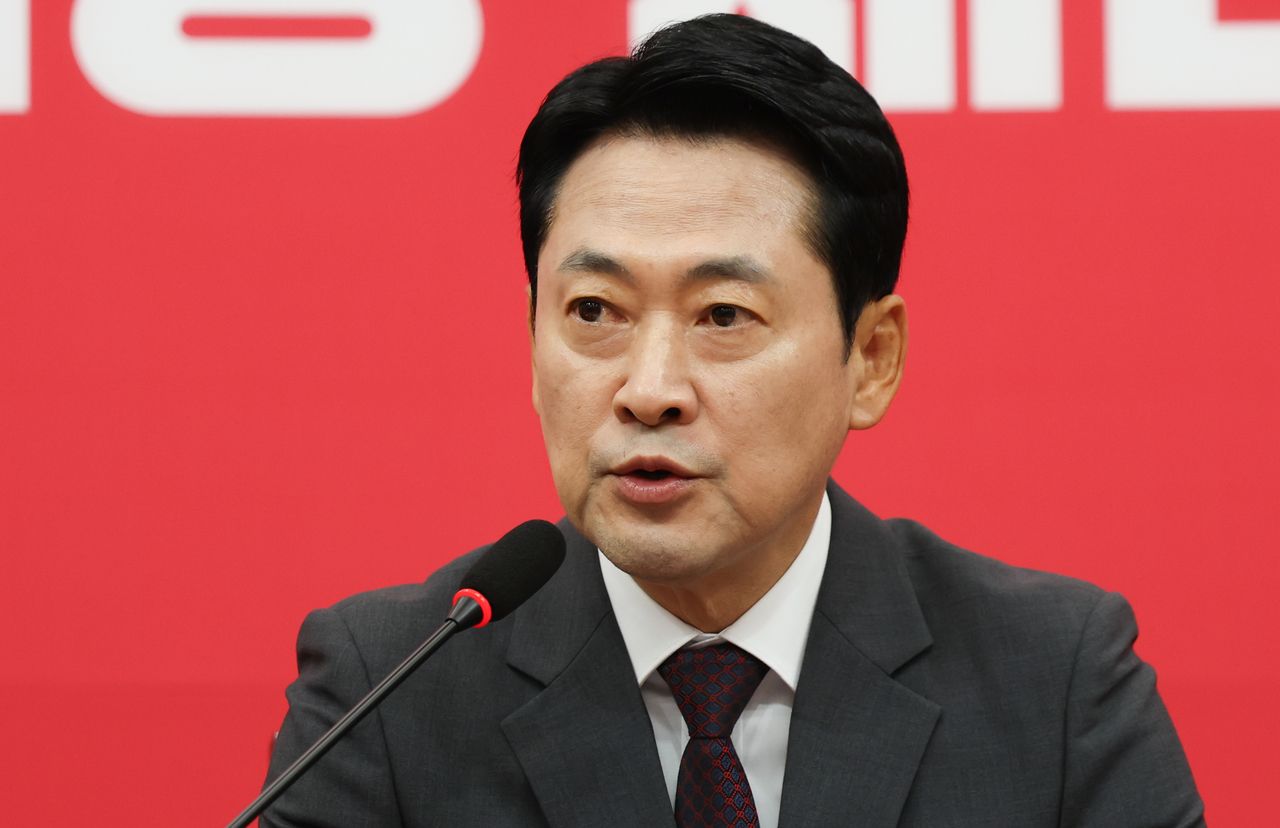
Jang Jeong-su, a BOK deputy governor, said at a briefing Tuesday that the household sector had seen an overall decline in the share of variable-rate loans and a reduction in the number of vulnerable borrowers compared with previous rate-hiking cycles. "The number of vulnerable borrowers has fallen, but delinquency in the vulnerable segment still carries high risk," he said.
Delinquency rates among vulnerable households remain elevated compared with past tightening periods, pointing to some erosion in repayment capacity. The BOK warned that rising delinquencies in the vulnerable segment could trigger a vicious cycle, with credit downgrades and worsening refinancing terms leading to further defaults.
The average household's capacity to cope is at least in better shape than during previous rate-hiking cycles, the BOK assessed. Debt ratios have improved relative to the last tightening period, and the debt service ratio has declined thanks to the government's household lending management measures and a push to expand long-term, fixed-rate loans. The share of variable-rate loans fell from 68.4 percent at end-July 2021 to 56.1 percent at end-June this year. The proportion of financially vulnerable households has also held steady at around 6 to 7 percent, supported by policy measures.
Jang Yong-sung, the Monetary Policy Board member who oversaw the financial stability assessment, said the BOK would "closely monitor inflation, economic conditions and financial stability as it determines the timing and pace of any further rate increases." He added that the bank planned to strengthen monitoring of financial and foreign exchange markets and domestic and external risk factors, and would work closely with the government to deploy market-stabilization measures promptly if instability arises. He also said it would be necessary to "operate monetary policy and macroprudential policy in a complementary and harmonious manner to prevent financial imbalances from deepening, while also seeking policy coordination with fiscal and financial authorities to address the difficulties of the vulnerable segment at the micro level."
kimstar@heraldcorp.com
forest@heraldcorp.com