Mass production at Pohang to begin in Q4 this year
Production capacity target of 55,000 tons by 2028
Proprietary process transition set for 2029
Argentine lithium and steelworks iron to drive cost cuts
High-density LFP to expand into broader EV market
Reducing reliance on Chinese precursors to sharpen cost competitiveness
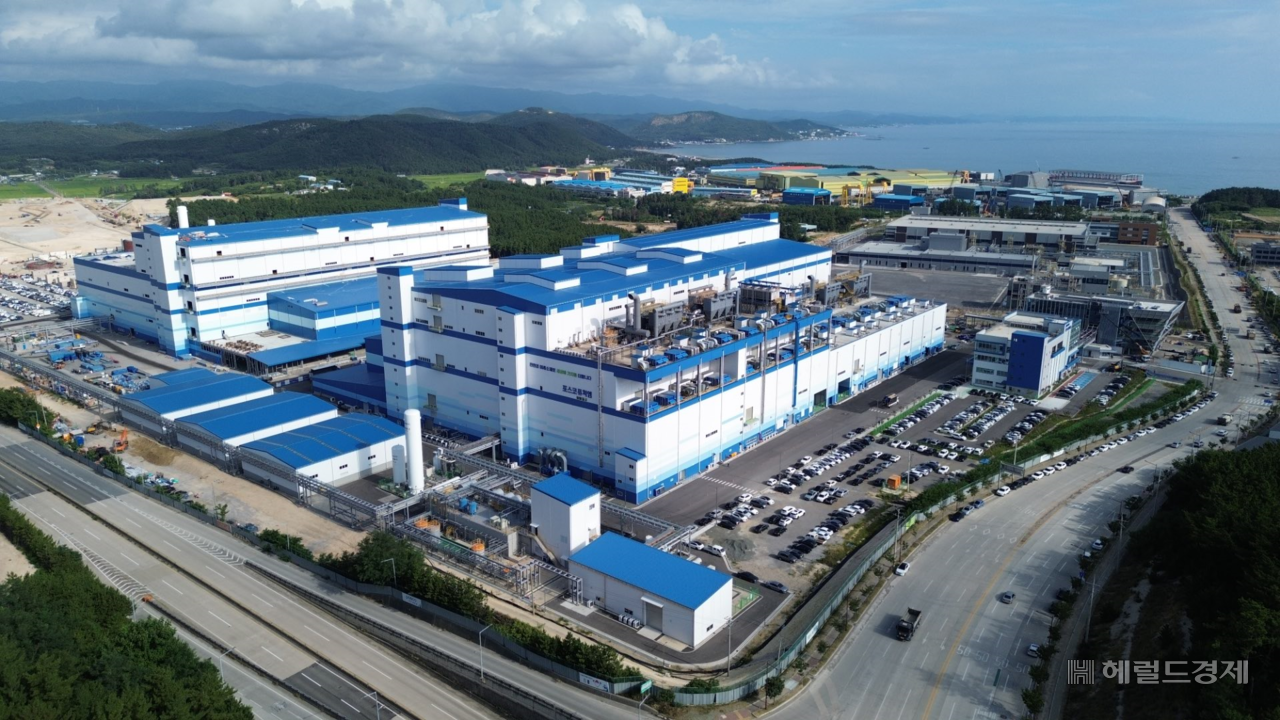
Posco Future M has unveiled a new manufacturing method that eliminates the iron phosphate (FP) precursor stage from the lithium iron phosphate (LFP) cathode production process, adopting it as a medium- to long-term strategy. The approach cuts both the number of manufacturing steps and overall costs. The company plans to leverage the Posco Group's raw material supply chain to reduce dependence on China while pushing into the Chinese-dominated LFP market with proprietary processes and high-density products.
According to industry sources, Posco Future M disclosed the three-phase LFP strategy at an investor relations event held in Hong Kong on Monday and Tuesday.
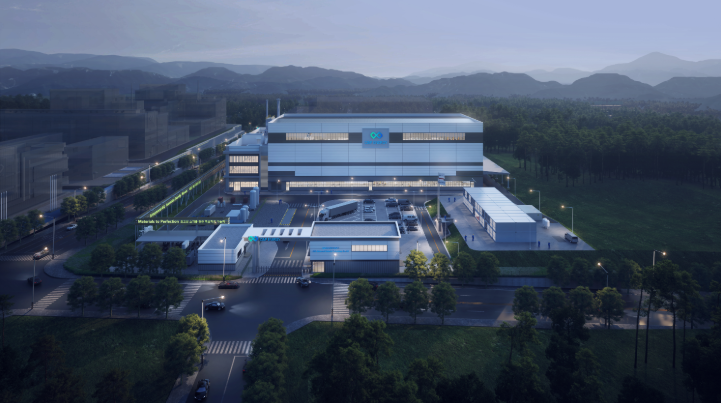
In the first phase, the company will convert part of its high-nickel cathode production line at the Pohang factory to LFP use and begin mass production in the fourth quarter of this year. From the second half of 2027, it plans to bring online a dedicated LFP factory being built at the Pohang Yeongil Bay industrial complex by a joint venture among Posco Future M, Pino and China's CNGR.
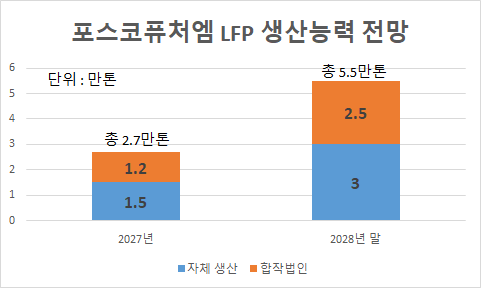
Production capacity is set to expand rapidly. Posco Future M expects to reach 55,000 tons of LFP production capacity by the end of 2028 — 30,000 tons from its own operations and 25,000 tons from the joint venture. The company plans to eventually scale total capacity to as much as 80,000 tons.
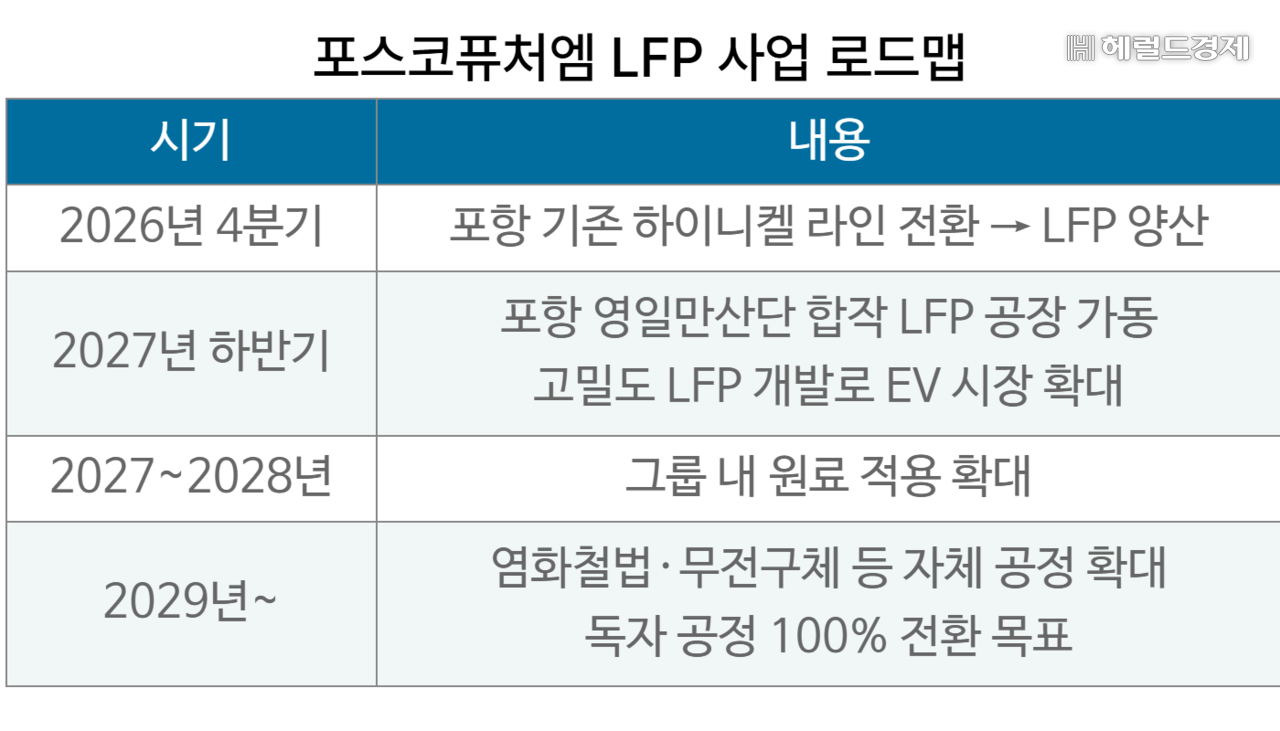
In the next phase, the company will develop a high-density LFP with improved energy density to extend its applications beyond the current focus on energy storage systems (ESS) and entry-level electric vehicles into a broader EV market. Following its current third-generation product, Posco Future M aims to complete development of a fourth-generation LFP this year, a fifth-generation by the end of 2027, and a sixth-generation by 2028.
The final phase centers on overhauling the production process itself. Posco Future M plans to expand its use of raw materials secured within the Posco Group from 2027 to 2028, then raise the share of proprietary new processes — including the iron chloride method and the precursor-free method — to 100 percent by 2029.
The standout technology is the precursor-free method. In the conventional LFP cathode process, iron raw materials are first used to produce an FP precursor, which is then mixed with lithium and other inputs to make the final product. Chinese manufacturers have built strong price competitiveness around this approach, backed by cheap iron sulfate and phosphate-based raw material supply chains.
Posco Future M is developing a method that skips this intermediate step entirely. It uses lithium carbonate secured by the Posco Group in Argentina and iron oxide from its steelworks to manufacture LFP directly, bypassing the FP precursor stage.
In simple terms, the conventional process follows the sequence: iron raw material → FP precursor → LFP. The new method eliminates the FP precursor step and feeds lithium- and phosphate-based raw materials together with iron oxide directly into LFP production.
The simplified process is expected to deliver meaningful cost savings. Removing the FP precursor manufacturing stage cuts the equipment, energy and processing costs associated with intermediate material production, as well as the expense of purchasing precursors from outside suppliers.
The method also reduces dependence on Chinese supply chains. Sourcing key raw materials such as lithium and iron from within the group and cutting precursor usage lowers reliance on Chinese-made materials — an advantage in navigating US and European regulations targeting Chinese battery materials.
The other proprietary process is the iron chloride method, which uses waste acid from steelworks to produce FP precursors. It involves fewer steps than the conventional iron sulfate process and allows byproducts to be recycled as raw materials. An early challenge involving residual chlorine that required additional washing has been resolved through process improvements, bringing product quality up to standard without a separate washing step.
Posco Future M's focus on cost reduction reflects the competitive dynamics of the LFP market. LFP cathode materials offer lower energy density than ternary cathodes such as NCM (nickel-cobalt-manganese), but their use of iron and phosphate as primary inputs makes them relatively inexpensive and long-lasting. Demand has been expanding rapidly beyond ESS into entry-level electric vehicles, yet Chinese manufacturers hold strong price competitiveness across the entire value chain — from raw materials and precursors to finished cathode production.
Posco Future M is also moving quickly to establish its market position. Last month, it reached an agreement with a major domestic battery maker to supply more than 190,000 tons of LFP cathode material over six years from 2027 to 2032.
Initially, the company plans to use FP precursors from external partners, then gradually increase the share of in-house raw materials and proprietary technology.
"A non-Chinese supply chain is expected to serve as a competitive advantage in winning new orders from global automakers," said Lee An-na, a researcher at Yuanta Securities Korea. "If mass production stabilizes successfully, this could become one of the most cost-competitive processes among non-Chinese LFP producers."
kwater@heraldcorp.com