Remarks made at Tuesday press briefing in Sejong
'Beyond building highways, we must contribute to public service and three mega-projects'
'Toll exemptions and fuel discounts during holidays should follow what the Assembly and government decide'
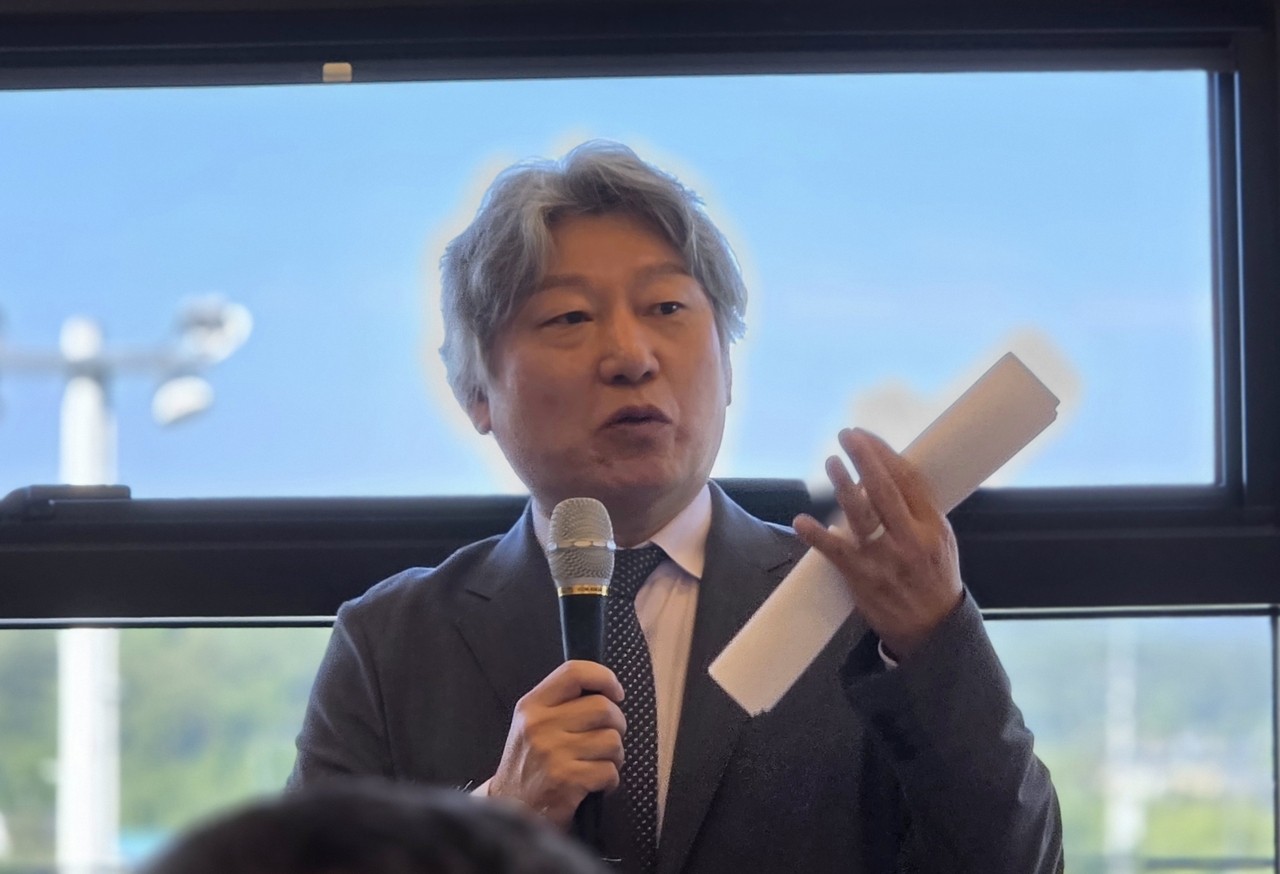
"We played a central role in bringing Korea to the era of $40,000 per capita income, and we take pride in that. But the demands of the public and our customers have changed. We will make sure there are no shortcomings in our B2C services."
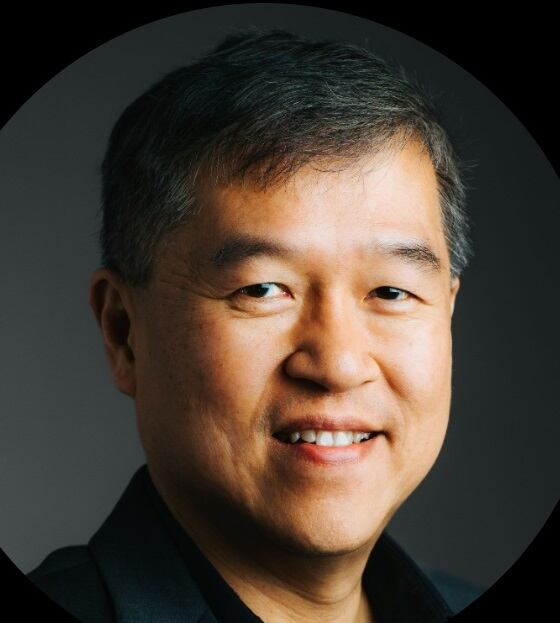
Korea Expressway Corporation President Yu Jeong-hun made the remarks Tuesday at a press briefing with reporters covering the Ministry of Land, Infrastructure and Transport, held in Sejong. His comments signaled an intent to instill within the organization the idea that while the corporation has long fulfilled its core mission of building and maintaining highway infrastructure — contributing to national economic development by moving people and freight — it must now treat that as a baseline and evolve into a provider of upgraded services.
"As the president has also pointed out, rest stops are a prime example," Yu said. "From the moment a customer enters a tollgate to the moment they exit, we need to look at what is inconvenient for them and upgrade accordingly."
Yu said the first priority in improving services is providing convenient and safe transportation for the public, and the second is contributing to the national economy. With that in mind, he said the corporation is focused on arterial road projects — including ring-road networks around major regional cities — and building power grid infrastructure beneath expressways, as part of its contribution to the government's three mega-projects.
The expressway power grid initiative is being explored in two directions: co-constructing lines alongside new highways, or burying them beneath existing ones. The corporation has begun consultations with Korea Electric Power Corporation on launching a pilot project.
The corporation is also reviewing plans to connect the underground grid to renewable energy generated along and around expressways. Yu said he is confident the initiative will serve as a turning point in resolving the country's power supply challenges while transforming highways from mere traffic corridors into composite infrastructure platforms integrating power and communications.
Yu said the corporation also plans to take a more active approach to solar power generation. To advance the expansion of renewable energy and strengthen energy transition policies — including the public institution K-RE100 initiative — the corporation will make use of idle spaces such as embankments, parking lots and noise barriers along roads, and will diversify its project models to include private investment schemes, community solar income villages and local partnership projects.
Through these efforts, the corporation aims to increase its expressway solar capacity from 162 megawatts to 260 megawatts by 2030. For the community solar income village program, 66 villages adjacent to expressways are under review; after a first round of three villages, a second round of 44 villages is set to be selected by the end of this month.
Yu also said the corporation will focus on improving rest stops and strengthening safety management for frequent highway users. The plan calls for a fundamental overhaul of all 215 rest stops nationwide, starting with eight that have already been converted to direct management. "We will run the directly contracted rest stops so well that people say, 'Korea Expressway really does a better job when it handles things itself,'" Yu said. He added that decisions on whether to broadly expand direct contracting, link operations to subsidiaries, or create new subsidiaries will be made based on the performance of the eight rest stops.
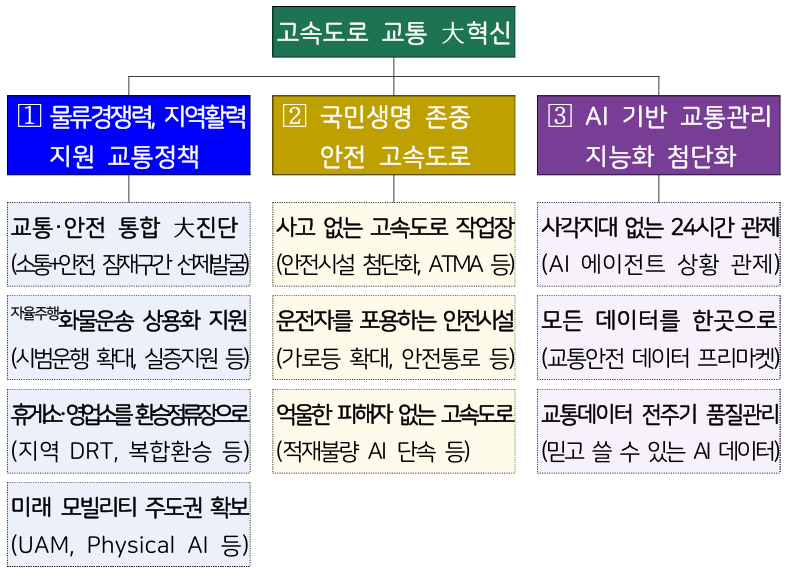
On highway safety, Yu said 147 people died in accidents last year, and pledged to expand safety facilities and advance AI-based intelligent traffic management as part of a sweeping overhaul. The corporation also plans to pursue autonomous driving for freight trucks as a way to reduce accidents. "A lot of driving happens in the early morning hours, which is why there are so many truck accidents," Yu said. "The UK adopted autonomous driving early on. We will gather data through pilot programs and work to get major logistics companies like CJ Group and Korea Express, as well as drivers, interested in autonomous driving."
Asked about the financial burden of waiving expressway tolls and cutting fuel prices by 100 won per liter during this year's Chuseok holiday, Yu was measured in his response. "I think it is right to follow what the government and the National Assembly decide," he said. He added that while the corporation's debt ratio is approaching 100 percent, simply driving it down to 50 percent would not in itself constitute good management. "Our role is to work hard at what the public asks of us and to think about whether anything is leaking through inefficiency," he said.
In this regard, Yu noted that expressway service stations sell an average of 10 million liters of fuel per day during holiday periods, and said the 100-won discount this Chuseok is likely to draw significantly more vehicles than usual. The corporation plans to prepare about 1.5 times the normal holiday supply to prevent any disruption.
On the appointment of Hong Ji-seon as minister of land, infrastructure and transport, Yu recalled first meeting Hong during his time as head of Gyeonggi Province's railway bureau. "He struck me as a quietly powerful engine," Yu said, adding that he expects communication to flow much more smoothly now that someone with broad expertise across the ministry's work has taken the post.
smh@heraldcorp.com