
With agency launch imminent, observers say delay is no longer an option
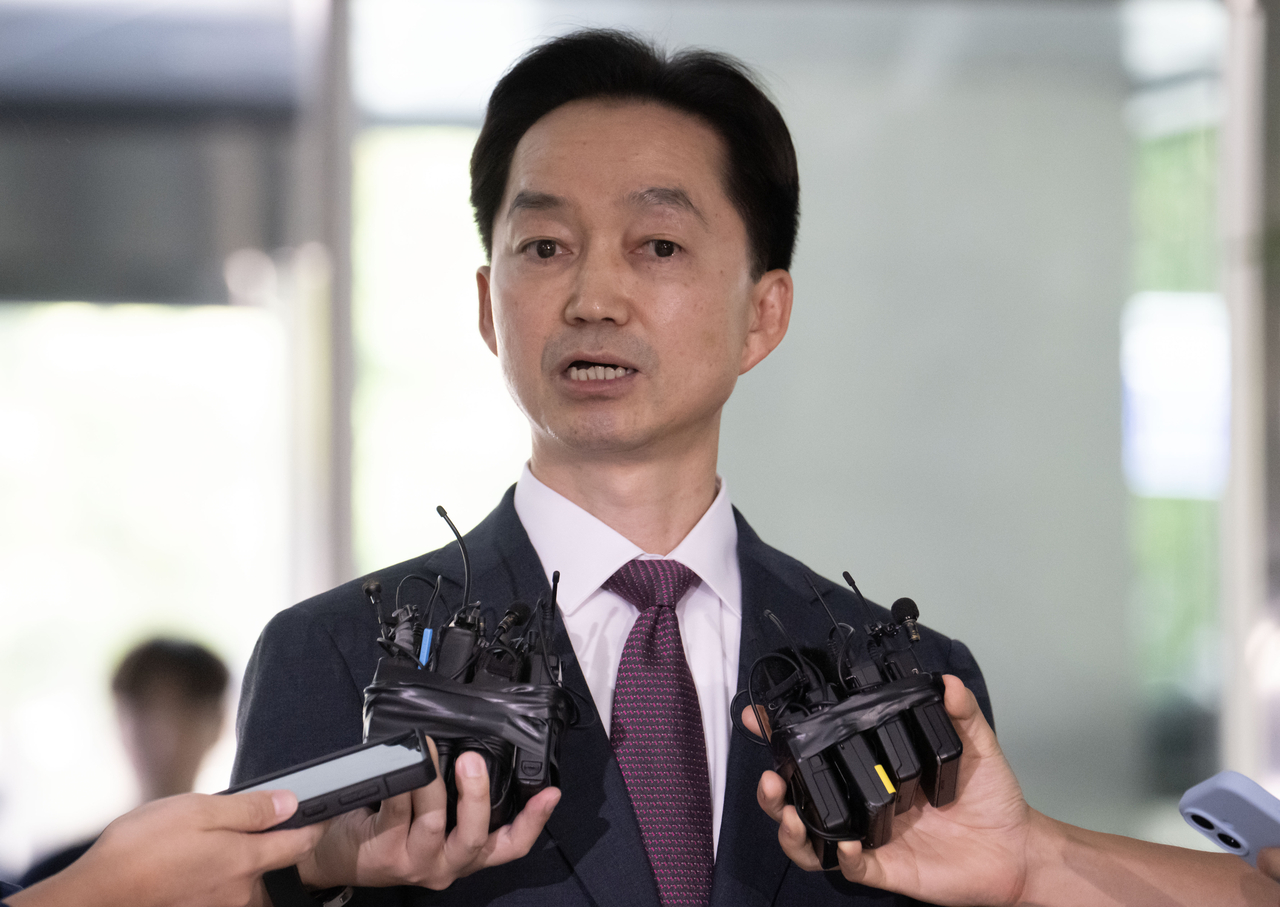
Whether Kim Ji-yong, the nominee for inaugural director of the Serious Crime Investigation Office, will be appointed despite fierce resistance from hardliners within the ruling camp is expected to be decided within the coming week.
Legal circles said Sunday that the time has come for the government to decide whether to submit a confirmation hearing request for Kim to the National Assembly, given how long it has been since his nomination was first proposed and with the agency's launch now just five days away.
The clock — briefly paused during President Lee Jae Myung's overseas trip and the Chuseok holiday — has started ticking again. Observers say any further delay, regardless of which way the decision goes, will only add to the government's burden.
When Minister of Interior and Safety Yun Ho-jung first proposed Kim's appointment on Sept. 7, the expectation was that the process would move swiftly.
Cheong Wa Dae signaled as much at the time, announcing that the president intended to request a confirmation hearing for Kim even as Lee was on a state visit to France — a clear sign the administration wanted to move quickly.
The urgency stemmed from the agency's scheduled launch on Oct. 2, less than a month away at the time, and the need to wrap up preparations smoothly. The director's role cannot be left vacant: the position carries authority over all serious-crime investigations the agency will handle, as well as the power to recommend appointments for investigators at grades one through five — making early installation critical to a successful launch.
But the vetting process stretched far longer than anticipated after controversy erupted over Kim's prosecutorial background. Critics pointed to his past opposition, during his time as a prosecutor general, to legislation stripping prosecutors of investigative powers — a reform known as "geomsuwan-bak."
Within the Democratic Party of Korea, Gyeonggi Province Governor Choo Mi-ae and lawmaker Kim Yong-min publicly opposed Kim's appointment, while lawmaker Lee Sung-yoon, himself a former prosecutor general, effectively declared his opposition as well.
The Rebuilding Korea Party — considered part of the broader ruling bloc and a potential merger partner with the Democratic Party — also came out publicly against the nomination. Im Eun-jeong, chief of the Seoul Eastern District Prosecutors Office and the candidate with the longest legal career among prosecutors who applied to and were accepted by the agency, also voiced her opposition.
President Lee ultimately stepped in on Sept. 14, ordering additional vetting of Kim in an attempt to defuse the situation. The move was aimed at addressing hardliners' concerns — specifically, whether Kim should be classified as a prosecutor-first ideologue who opposed the investigative-powers reform, and whether he had any involvement in cases seen as improper exercises of prosecutorial authority during his time in the service.
Even so, nearly two weeks after that order, resistance from ruling-camp hardliners had not subsided. The standoff devolved into a back-and-forth, with Kim and the Ministry of Interior and Safety pushing back against accusations, only for hardliners to counter again.
Kim's camp insisted he had no involvement whatsoever in the handling of the Channel A case, the case involving Choi Eun-soon — the mother of former first lady Kim Keon Hee — and the illegal travel ban imposed on former Justice Minister Kim Hak-eui, or that he had in fact opposed the investigations or indictments in those matters.
Kim also argued that he had been sidelined under the Yoon Suk Yeol administration, saying this showed he was not a "pro-Yoon" figure. He added that he agreed with the principle of separating investigation from indictment as a core tenet of prosecutorial reform.
If the government proceeds with submitting the confirmation hearing request to the National Assembly, it will face a backlash from ruling-party hardliners — but having already signaled Lee's intent as the appointing authority, the move would most likely lead to Kim's eventual appointment.
There remains a possibility that Lee could instead heed the opposition and search for a new nominee, but observers expect a decision to come soon regardless, as the longer any resolution is delayed, the worse the situation becomes.
hss@heraldcorp.com





