Hosted by Democratic Party of Korea lawmaker Ahn Tae-jun
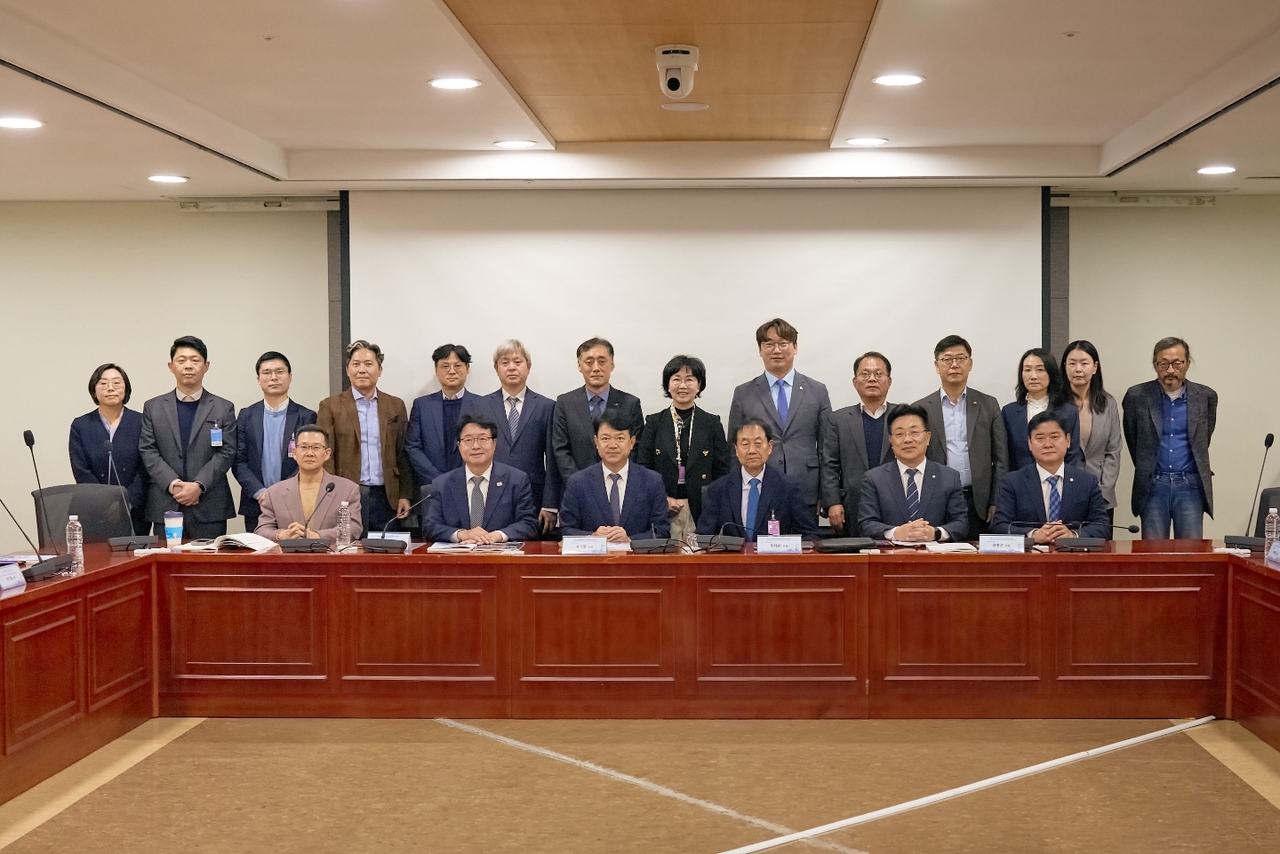
Korea Land and Housing Corporation held a policy forum Thursday at the National Assembly Members' Hall in Yeouido, Seoul, co-hosted with Democratic Party of Korea lawmaker Ahn Tae-jun, on the theme of "Innovative Payment System Reforms to Eliminate Wage Theft Among Construction Workers."
The forum was organized to share the current state of wage payments to construction workers and to discuss ways to improve payment systems and reform laws and regulations to eradicate wage theft. Ahn hosted the event, with LH serving as the organizer, and the Ministry of Land, Infrastructure and Transport, the Ministry of Employment and Labor, the Korea Federation of Construction Contractors and the Korea Specialty Contractors Association serving as sponsors.
At the forum, Park Gwang-bae, a senior researcher at the Korea Construction Policy Research Institute, presented on "The Current State and Problems of Wage Payments to Construction Workers." Park said wage theft in the construction industry last year totaled 416.6 billion won ($312 million), accounting for 20.1 percent of all industries, and that three in 10 construction workers — 29.5 percent — had experienced delayed wage payments within the past year.
Son Chang-gi, deputy head of LH's construction management division, then presented on "New Wage Payment Methods to Eliminate Wage Theft Among Construction Workers." Son said wage theft reports at LH sites had fallen from 54 cases in 2020 to five last year, but added that a payment system linking actual attendance records with fintech was needed so workers could receive wages easily and frequently in line with the work they performed.
Jo Gang-yeon, chief executive of Paywatch Co., rounded out the presentations with a fintech technology case study on "Real-Time Work Verification and Wage Payment Services Linked to Labor Data."
A general discussion and question-and-answer session followed, moderated by Lee Bok-nam, a professor at Seoul National University. A total of 10 panelists from relevant agencies, including the Ministry of Land, Infrastructure and Transport and the Ministry of Employment and Labor, took part.
Participants agreed on the need to shorten the gap between labor performed and wage payment and to ensure transparent construction site operations. They discussed a range of regulatory improvements — including more efficient linkage with government systems — to strengthen the practical effectiveness of the proposed payment methods.
"Wage theft destabilizes a family's livelihood, and that financial anxiety leads to reckless work and on-site accidents — which means a site where wages are paid on time is a safe site," Ahn said. "I will take the lead in providing legislative support so that the new wage payment system can spread beyond LH to public and private construction sites alike."
An LH official said the corporation would work together with the National Assembly and the government to help the new wage payment system discussed Thursday take root on the ground.
Meanwhile, LH is pursuing an electronic payment system, a pilot program for advance wage payments combining the latest fintech technology, and a digital wage system to prevent wage theft at construction sites and establish a transparent payment framework.
hss@heraldcorp.com