Presidential communications chief issues late-night statement with stern warning
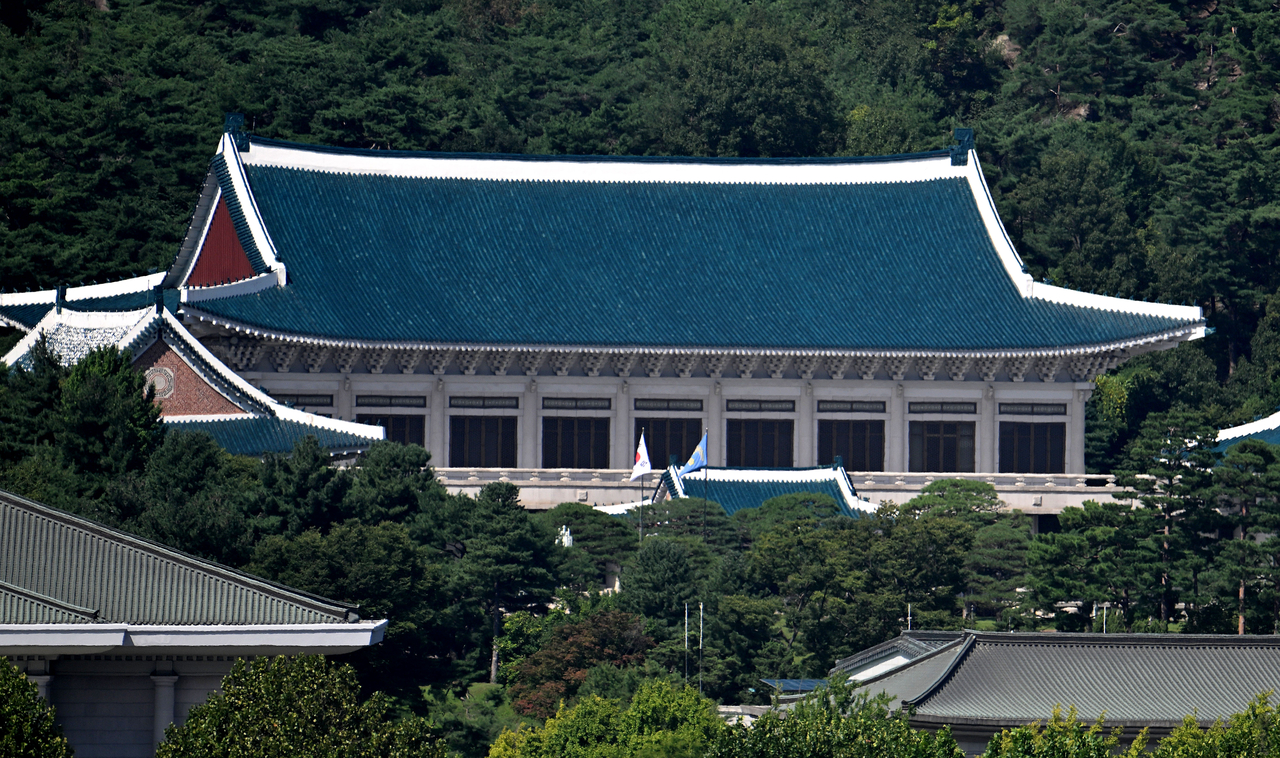
Cheong Wa Dae said Sunday it "expresses strong regret and demands an official explanation and apology" after Ukraine publicly denied the existence of a confidentiality agreement over the repatriation of North Korean prisoners of war to South Korea — a disclosure Ukraine had already made unilaterally at the UN General Assembly without prior consultation.
Presidential Communications Chief Seong Ki-hong issued the statement late Sunday night.
Seong said the question of repatriating North Korean POWs to South Korea was "a highly sensitive matter touching on security, diplomacy, national defense and human rights — both internationally and domestically — that had been discussed carefully over a long period."
He said Ukraine had requested confidentiality during the consultations, citing concerns that going public could trigger domestic criticism that Kyiv had passed up the chance to exchange its own prisoners for the North Korean soldiers. "Ukraine asked that the repatriation be kept confidential, saying it was an extremely sensitive matter that could invite domestic criticism that they had given up the opportunity to exchange a large number of their own prisoners," Seong said. "Our side also agreed to keep it confidential and proceeded with the repatriation process, taking into account the safety of the prisoners and their families as well as various diplomatic and security considerations."
He said Ukraine then broke that agreement by having its president announce the repatriation to South Korea at the UN General Assembly without adequate prior explanation or specific consultation. When President Lee Jae Myung expressed regret over the disclosure in violation of the confidentiality agreement, Ukraine's presidential office responded by announcing — without any prior consultation, notification or even a heads-up — that "there had been no confidentiality agreement," a claim Seong said was false.
"As a result, a controversy has even arisen domestically over whether the president lied," Seong said. He called Ukraine's unilateral disclosure a "very serious problem," but said the Ukrainian presidential office's subsequent announcement — falsely claiming no confidentiality agreement had existed, in response to President Lee's factually grounded public remarks — "seriously undermines trust between the two governments and constitutes an act that causes grave damage to the friendly relations between the two countries."
Seong issued a stern warning about the impact Ukraine's actions could have on bilateral relations and demanded an apology. "We express strong regret over Ukraine's unilateral disclosure in violation of the agreement and the subsequent false public statement denying the existence of the confidentiality agreement, and we demand an official explanation and apology," he said, adding that the presidential office was "reviewing additional measures that may be necessary."
Seong also directed criticism at domestic political figures. "We express deep regret that some figures at home, rather than pointing out Ukraine's wrongdoing, are politicizing a sensitive diplomatic and security matter tied to the national interest, defending Ukraine's unjustifiable conduct and thereby harming that interest," he said. He urged them to "refrain from making unverified false claims or assertions that differ from the facts."
sang@heraldcorp.com