To mark the 81st anniversary of the founding of the Korean National Police Agency, The Herald Business is introducing each of Seoul's 31 police stations.
Our Neighborhood Police Station (12): Seoul Seodaemun Police Station
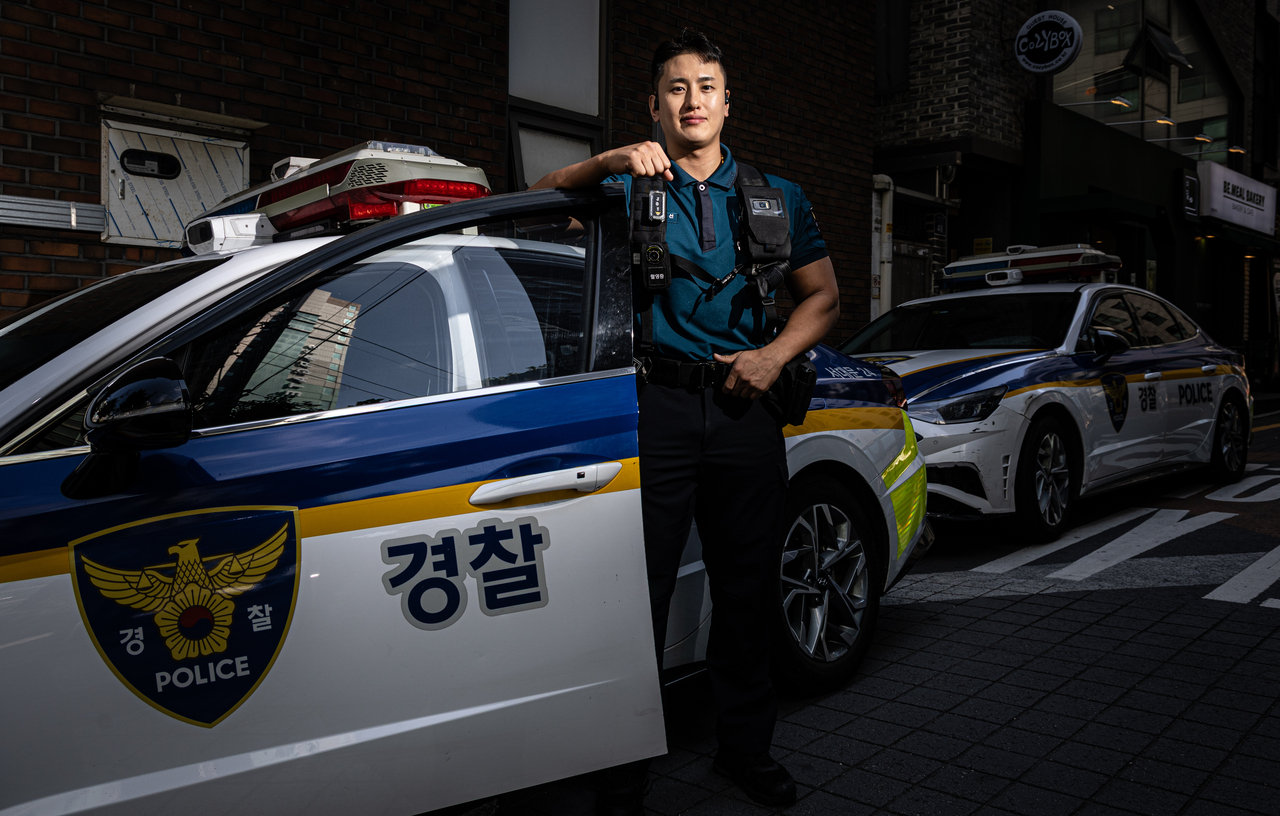
"A campus town alive around the clock." Sinchon, one of Seoul's most iconic university districts, gets busier than usual when the academic semester begins — and at the center of it all is the Sinchon District Police Unit, responsible for public safety in the Sinchon and Ewha Womans University area.
Sinchon draws a constant flow of university students, young adults and international students. The neighborhood's character as a college district generates a wide range of policing demands — from stalking and dating-related crimes to voice phishing and reports of intoxicated individuals. During university festivals, noise complaints spike as larger-than-usual crowds pour in.
On an average day, some 160,000 people pass through the Sinchon and Ewha Womans University area alone.
Seodaemun-gu is home to nine universities — Methodist Theological University, Kyonggi University, Digital Seoul Culture Arts University, Myongji University, Myongji College, Seoul Women's College of Nursing, Yonsei University, Ewha Womans University and Chugye University for the Arts — the highest concentration of universities among any basic local government unit in the country.
The concentration of young people also attracts criminals who prey on students and young workers. Last year, a landlord and a licensed real estate agent were referred to prosecutors on charges of committing 8 billion won ($5.88 million) in jeonse fraud — a scheme involving fraudulent lease deposits — targeting university students and young professionals in the Sinchon area.
More recently, anxiety grew after a man wearing a black mask and nothing else was spotted repeatedly near the Ansan trail adjacent to Yonsei University dormitories. Ko Beom-seok, the newly appointed chief of the Seoul Metropolitan Police Agency, made the area his first inspection stop after taking office, reviewing the security situation around the Ansan trail and Yonsei University.
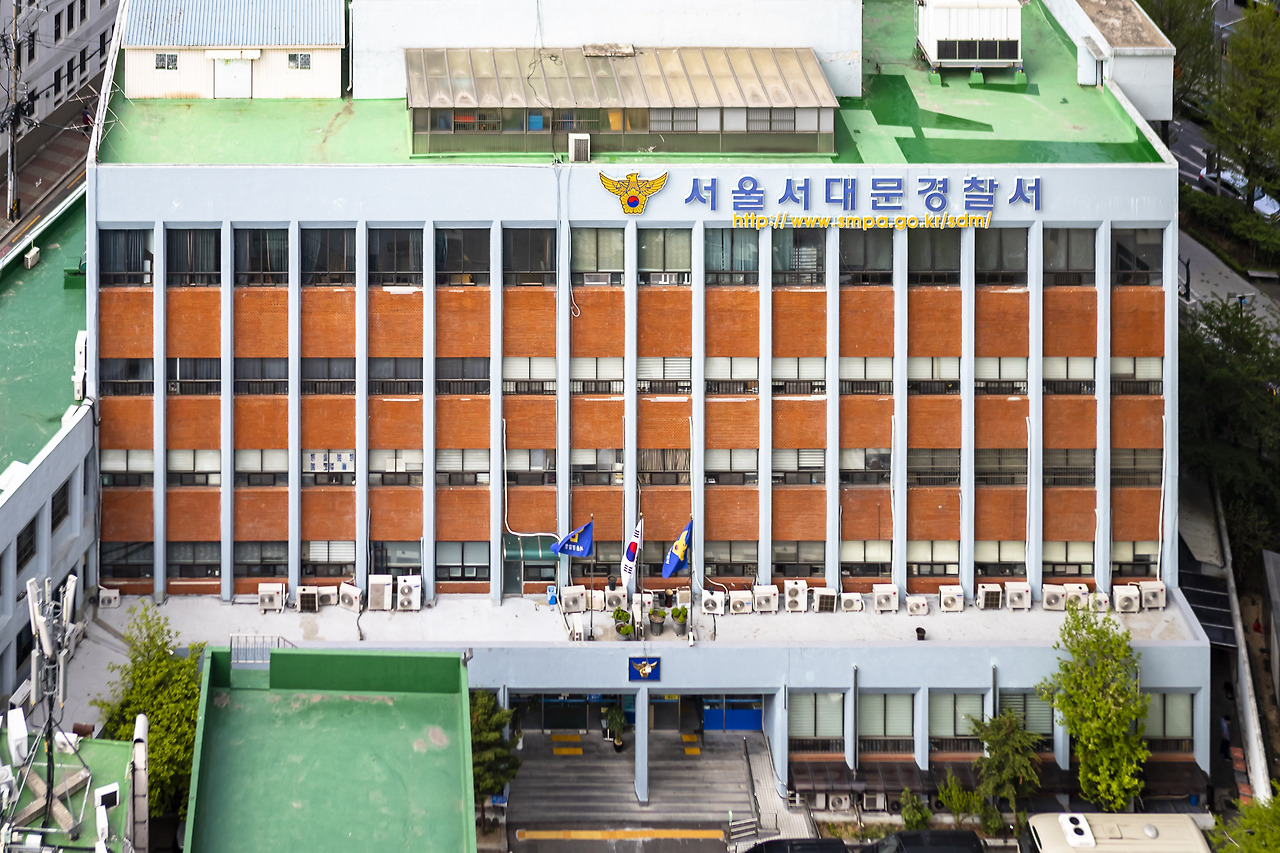
The history of Seodaemun Police Station dates to July 1894, during the Joseon era, when it was established as the West Police Branch. Elevated to full station status as Seodaemun Police Station in June 1921, it has relocated its headquarters several times while maintaining responsibility for public order in the Seodaemun area. Its current jurisdictional structure took shape after four branch offices in Gyeonggi Province were transferred to the newly established Goyang Police Station in 1949, and nine police boxes were handed over when Seobu Police Station was created in 1969.
In December 1982, a new headquarters building — one basement level and five above-ground floors — was completed at 113 Tongillo, Seodaemun-gu, and served the station for more than 40 years. Since April 2024, operations have moved to a temporary office at 13 Chungjeong-ro, Seodaemun-gu, while a new permanent building is under construction. The new headquarters is scheduled to open in 2030 on the original Tongillo site.
The station oversees two district police units — Chungjeong-ro and Sinchon — and six police boxes: Yeonhui, Hongje, Namgajwa, Bukgajwa, Hongeun and Hongeun 2.
Beyond the university district, Seodaemun-gu has extensive residential neighborhoods centered on Hongje-dong, Hongeun-dong, Namgajwa-dong and Bukgajwa-dong. Mountains including Ansan, Inwangsan and Baengnyeonsan border these residential areas, and Hongje Stream runs through the Hongeun, Hongje and Yeonhui neighborhoods. Sites tied to modern Korean history — including Dongnimmun Gate and the Seodaemun Prison History Hall — are also scattered throughout the district.
The faces of Seodaemun: Detective division's Senior Officer Yun Yeo-hyeong
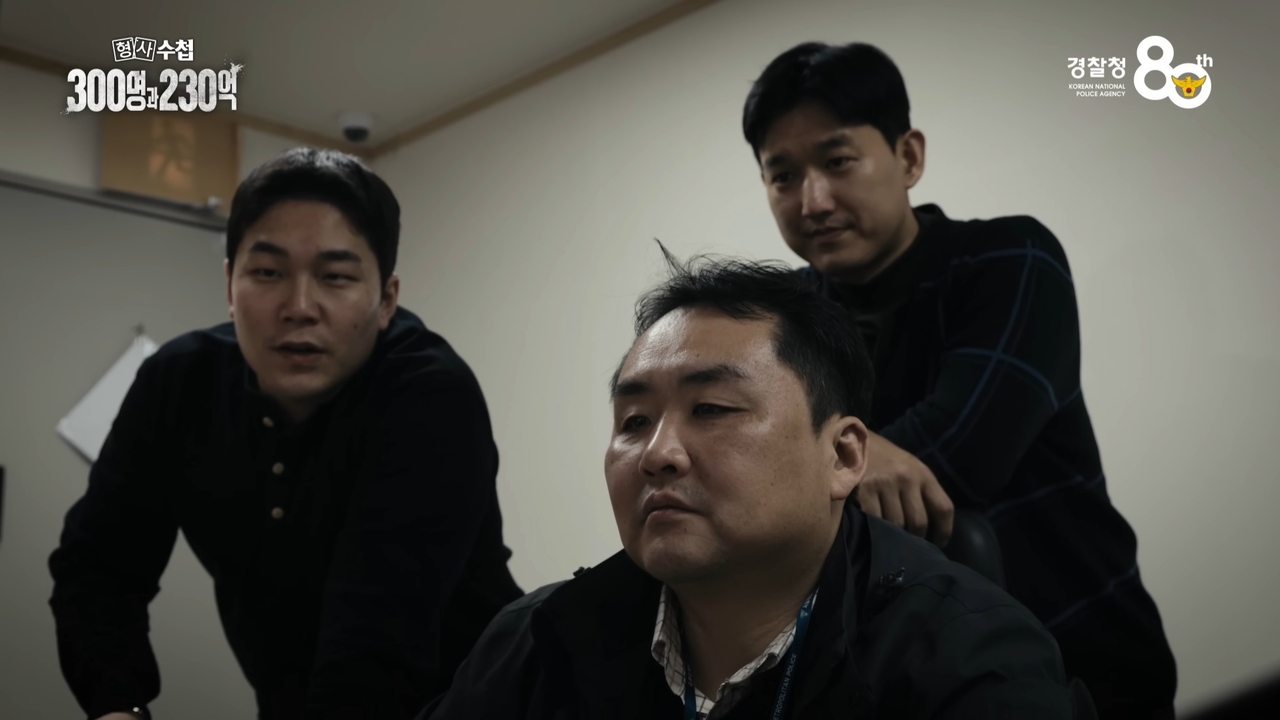
Senior Officer Yun Yeo-hyeong joined the force in 2013 and is now a nine-year veteran investigator in the Seodaemun Police Station detective division.
The case Yun remembers most vividly is the arrest last year of a suspect who had been on the run for years in connection with a crypto fraud scheme worth hundreds of billions of won. The investigation began when a tip-off email arrived for Lee Dae-woo, then head of the Seodaemun Police Station detective division and known at the time as the "crime hunter."
The tip alleged that the sender was being subjected to extortion and threats. As Major Crimes Team 5 examined it, investigators confirmed that the person identified as the perpetrator was a suspect who had been on a wanted list for four years on charges of swindling investors through cryptocurrency trading chat rooms and similar schemes. The suspect was found to have been living lavishly while on the run, purchasing supercars worth hundreds of millions of won and high-end luxury goods.
The team pinpointed the suspect's hiding place and conducted two weeks of stakeout surveillance before making the arrest. Investigators then traced the suspect's financial flows and seized some of the victims' losses — including deposits on a foreign-car lease and an apartment — as part of efforts to recover damages.
"It was a case that brought countless victims to tears through a fraud scheme worth hundreds of billions of won," Yun said. "I believe that protecting the public from crimes like crypto fraud and voice phishing — crimes that utterly destroy people's lives — is how the police build trust."
The Seodaemun Police Station detective division is also still pursuing a cold case that has gone unsolved for more than a decade.
Between 2010 and 2011, a divorced couple died roughly five months apart. The mother died in a house fire in Seoul; the father fell to his death from an apartment in Goyang, Gyeonggi Province. Both deaths were initially ruled accidents.
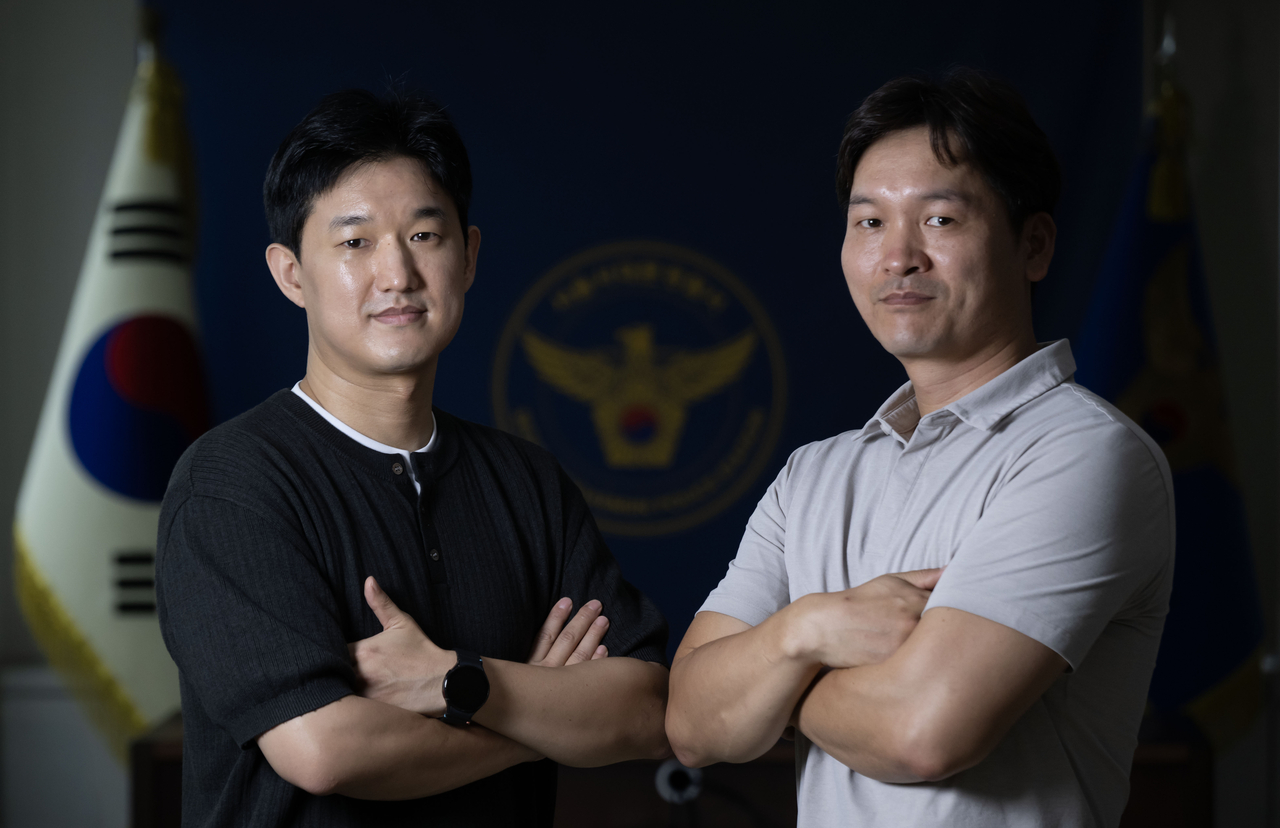
When detectives from Seodaemun Police Station's major crimes unit reviewed the cases again, they noted that the couple's daughter, identified by her surname Jang, had been present at both scenes, and that insurance policy beneficiaries had been changed around the time of each death. Police concluded there was a possibility of criminal involvement in both deaths, designated Jang as a suspect on charges of patricide and matricide, and launched a reinvestigation.
Jang disappeared once during the investigation but was later apprehended, only for the arrest warrant to be rejected by a court. After further investigation, police forwarded the case to prosecutors with a recommendation for indictment — but Jang vanished again ahead of a prosecutorial interview, and the case was suspended due to the suspect's whereabouts being unknown. Jang denied any involvement in her parents' deaths.
The Seodaemun Police Station detective division continues to track Jang, who has been on a wanted list for more than a decade. Even last year, detectives traveled to various parts of the country to follow up on tips from people who claimed to have seen her.
Beyond investigation: Connecting bereaved families to suicide survivor support services
Helping families left behind after a tragedy find their way back to everyday life is another duty Senior Officer Yun considers essential in the field.
In early August, an elderly person in their 80s died by suicide by jumping from an apartment building in Seodaemun-gu. The family had installed double locks on the windows out of concern for the person's safety, but the tragedy still occurred.
Police guided the bereaved family on how to apply for support covering autopsy fees, funeral costs and hospital transport expenses, and connected them with the Seoul Suicide Prevention Center and other relevant agencies so they could receive psychological counseling.
"It is important to identify warning signs as early as possible and connect people to counseling or treatment before an incident occurs, but psychological support for the families left behind afterward is equally necessary," Yun said. "I believe it is also a vital role of the police to support surviving family members so they do not find themselves in an unstable situation or become caught up in another tragedy."
If you're thinking about self-harm or suicide, dial the Suicide Prevention Hotline at 109, available 24 hours a day, seven days a week. Please request a translator for English-language services.
Hongeun Police Box's Inspector Yu Seon-o: 'Patrolling the neighborhood as a father of three'
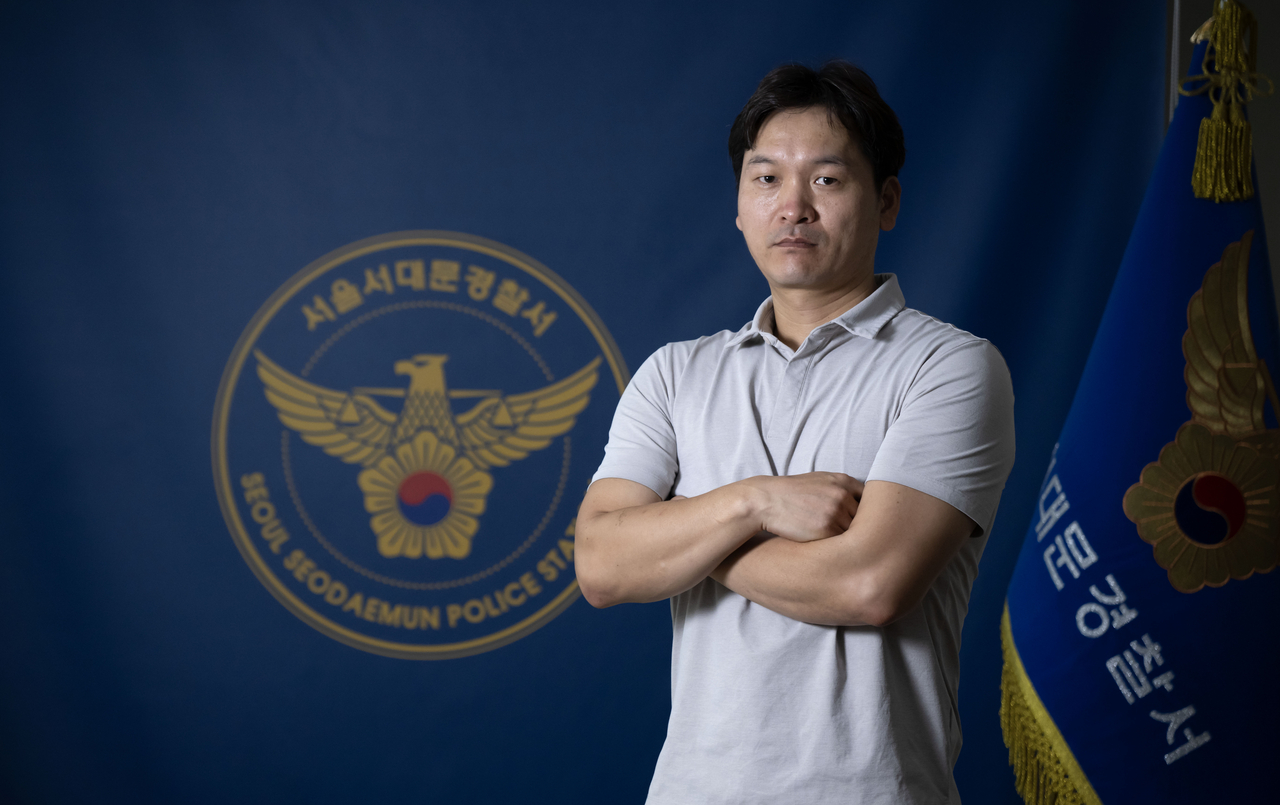
Inspector Yu Seon-o, who joined the force as a patrol officer in September 2011, is stationed at the Hongeun Police Box. A veteran of the Army Special Forces, Yu said the moment that made him want to become a police officer was seeing an officer directing traffic by hand on a cold winter day. He applied to the police force believing it was a job where he could help people in need while putting his physical fitness to use.
After joining, he spent about eight years with the 101st Security Group before serving as a community police officer at Seodaemun Police Station's Namgajwa Police Box for a year and a half. He then worked at the Korean National Police Agency on autonomous policing and related duties for about four years, and has been at the Hongeun Police Box for the past year and a half.
Last winter, he prevented what could have been a deadly accident. Around 5 a.m., a carbon monoxide emergency call came in from an apartment complex of more than 700 units in Seodaemun-gu. Officers arrived to find a couple collapsed on the floor, with three children inside the room.
Yu and his fellow officers opened the windows to ventilate the apartment, carried the children out on their backs, helped the parents to their feet and brought the entire family down to the ground floor, where they handed them over to emergency medical services.
Even after the rescue, Yu stayed at the scene to investigate the cause. He identified the possibility that a pipe connecting to a shared flue had not been properly sealed during a past boiler replacement, and asked the building management office to check whether other units faced the same risk.
"It was winter, but I remember sweating from the urgency of the situation," Yu said. "When the family we rescued thanked us, I felt a real sense of fulfillment as a police officer."
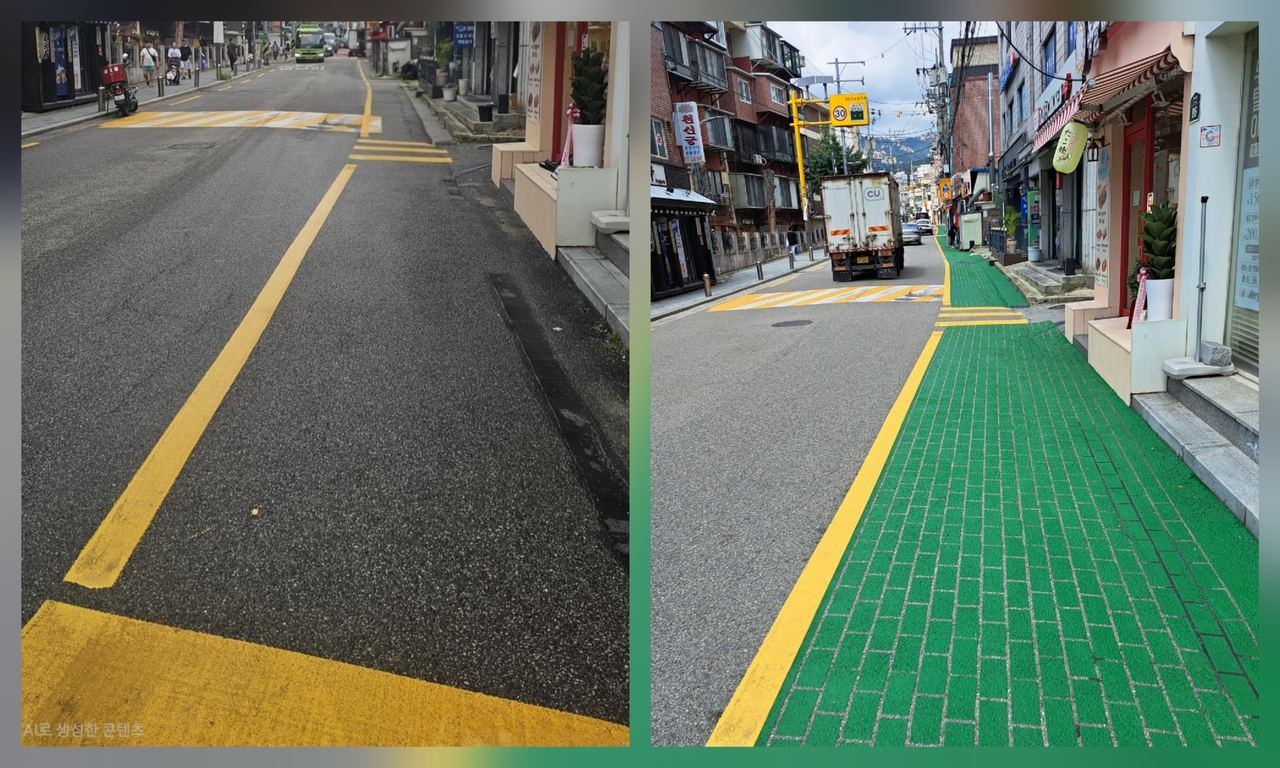
Yu places great importance on foot patrols. He walks the routes residents actually use — Hongeun Elementary to Pobangter Market, Hongje Elementary to Yujin Arcade, Inwang Elementary to Hongje Station — focusing on high-traffic areas such as Hongje Station, Yujin Arcade and Pobangter Market, and looking out for safety hazards along the way.
In July, he spotted a school zone where the boundary between the roadway and the pedestrian space was poorly defined, and asked the relevant authorities to repaint the markings to make them more visible.
His particular attention to patrols around schools stems in part from raising three children of his own within the district. The principle he wants to uphold going forward is to remain a police officer his children can be proud of.
"I hope that someday my children will look back and think, 'Dad did his job well and worked with a sense of mission,'" Yu said. "I want to be a father and a police officer they can be proud of — someone they think of when they tell themselves, 'I should take responsibility for whatever I do, just like Dad.'"
Sinchon District Unit's fitness-focused officer: Building connections through exercise
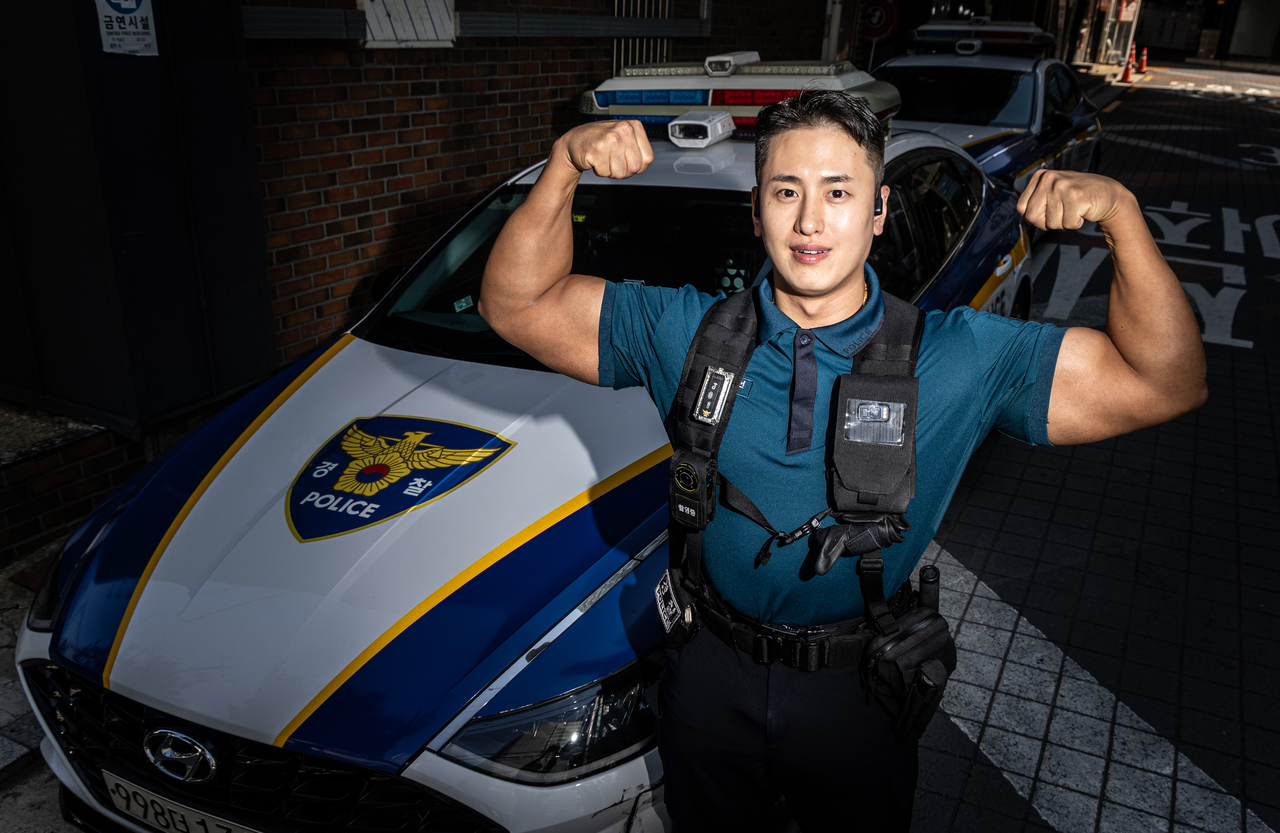
"I believe that to protect the public's safety, police officers must first be able to protect themselves."
For Senior Officer Chae Jong-seon of the Sinchon District Police Unit, physical training goes beyond personal upkeep — it is how he keeps himself grounded as a police officer. Chae joined the force in 2015 and spent six and a half years on security and guard duties with the Cheong Wa Dae 101st Security Group before transitioning to community policing in 2021, working in close contact with residents ever since.
Chae said that working as a community officer means he frequently encounters teenagers through reports of delinquent behavior and similar calls.
In those moments, exercise became a natural conversation starter with young people. He would talk with teenagers who showed interest in fitness and physical conditioning, and sometimes offered advice on how exercise could help give their lives direction.
"I think exercise is where diligence and self-discipline begin," Chae said. "I try not to forget my duties as a police officer not only when I am in uniform, but also when I am not."
Since 2018, Chae has participated in the production of a fitness calendar featuring police officers from across the country, with proceeds donated to support children who have suffered abuse and others in need. In 2019, he took first place overall in a police fitness competition.
Over the past eight years, the calendar has raised about 150 million won in donations. This year alone, about 32 million won has been collected.
Sales of the second-half calendar begin Thursday. All proceeds are donated through organizations including the Community Chest of Korea, the Salvation Army and child protection agencies to support children who have suffered abuse.
kido@heraldcorp.com