District Mayor Park Un-gi toured all 14 dong from Sept. 1 to Sept. 18 in his first post-inauguration community visit, gathering residents' views on daily life and local development. The 151 items received — covering traffic, parking and more — are now being tracked by response type, from immediate action to long-term review.
Seodaemun-gu District Mayor Park Un-gi has completed his first post-inauguration tour of all 14 dong in the district, sitting down with residents in each neighborhood. The 151 concerns and suggestions residents shared about daily inconveniences and local development are now being translated into on-site improvements and policy reviews.
Seodaemun-gu held a series of community forums under the banner "Energize! The Age of Seodaemun Residents," beginning in Chunghyeon-dong on Sept. 1 and wrapping up in Bukgajwa 2-dong on Sept. 18. Because this was Park's first neighborhood tour since taking office, the sessions were designed to let residents take the microphone and speak about local problems and needed changes, rather than serving as one-way briefings on district affairs.
The 151 items gathered across the 14 dong broke down by category as follows: traffic and parking, 44; parks and environment, 24; safety, 22; welfare, 21; redevelopment, 18; dong administration, 13; and resident self-governance, 9. Traffic and parking accounted for roughly 29 percent of all submissions — the largest share — reflecting strong resident interest in parking availability, road and pedestrian conditions, and traffic safety.
The district is not stopping at simply collecting feedback. All 151 items are being reviewed individually and sorted into categories — immediate action, in progress or planned, long-term review, and referral to other agencies — for ongoing management.
Issues that could be fixed right away were addressed on the spot. In Chunghyeon-dong, overgrown weeds around a pavilion were cleared and the surrounding area cleaned up in response to resident feedback. In Hongje 2-dong, damaged no-smoking signs near Saesol Daycare Center were replaced and additional guidance signs installed. In Hongeun 1-dong, 14 damaged bollards near Hongje Elementary School were repaired to improve safety for children commuting to school.
In Yeonhui-dong, a damaged section of the steps leading down to the Hongjechen stream was repaired, while in Hongje 3-dong, a road reflector was installed at an intersection along Munhwachon-gil. These are examples of small everyday inconveniences and safety hazards identified by residents that led to real on-site changes following their suggestions.
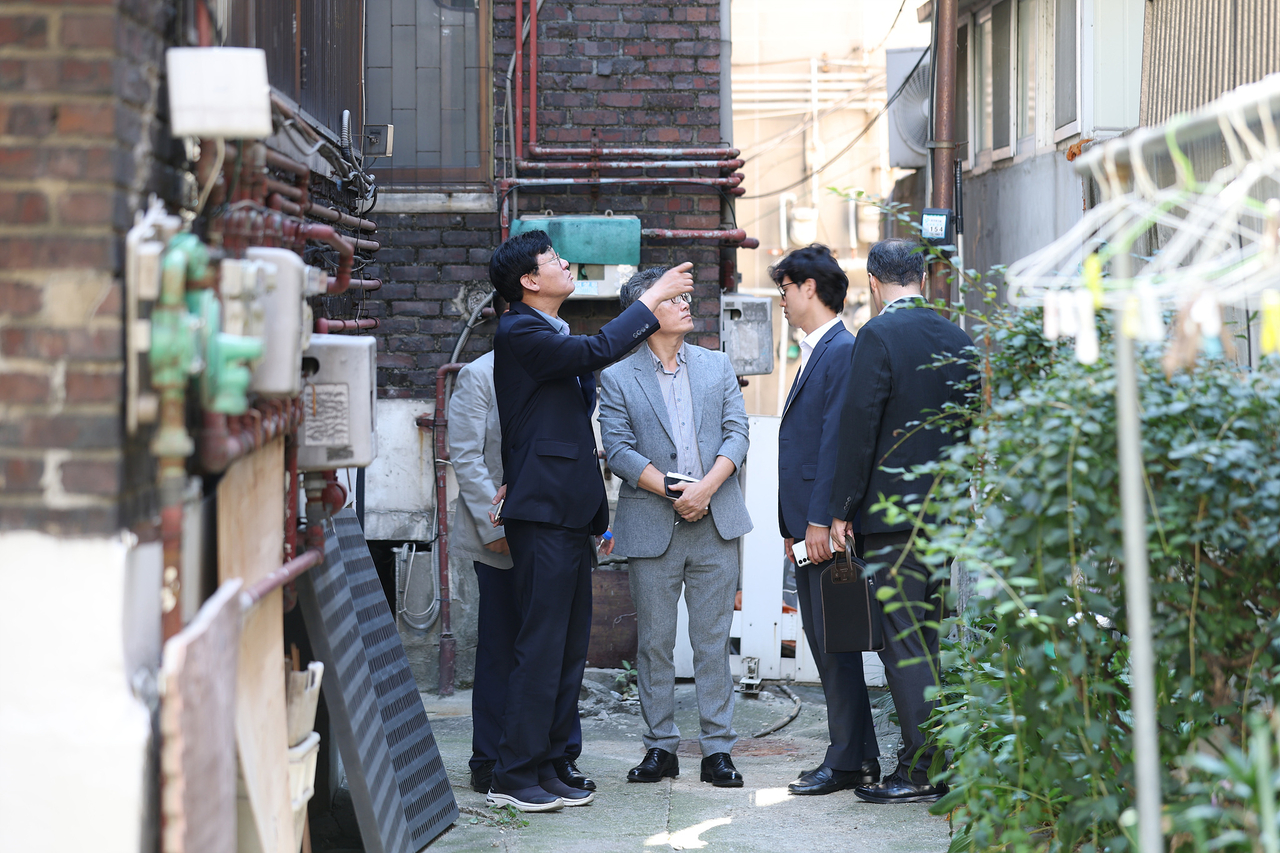
After hearing residents' concerns, Park also visited sites in person. In Namgajwa 1-dong, when residents raised concerns about a dilapidated building, Park went to inspect the site immediately after the forum. For cases where an immediate visit was not possible, the relevant departments were directed to conduct their own site checks and determine how to proceed.
Problems that could not be resolved quickly were not left without a response. For projects requiring significant funding or phased review — such as the construction of new senior centers and community service centers, and the widening of Hongeun Bridge — the district explained the necessary procedures and policy direction to residents.
For matters requiring coordination with other agencies — including the installation of pedestrian signals and crosswalks, adjustments to village bus routes, and road use within the Hongje District 3 redevelopment zone, which involve the Seoul Metropolitan Government, police and local development associations — residents were informed of which bodies would be consulted and what steps would follow.
Park instructed each department not to consider its work done once a resident submission is received, but to keep residents informed throughout the process and upon resolution. His intent is to make this tour of all 14 dong not a one-off outreach event, but a process through which residents' voices lead to tangible changes on the ground and in policy.
seouldream01@heraldcorp.com