Jo Sang-yeon, Samsung Electronics executive vice president, joins Global Semiconductor Alliance forum
Panels with OpenAI, Broadcom; Foundry chief Han Jin-man also attends
Taylor fab set for mass production; supply chain resilience expected to improve
'Not enough electricians, plumbers — no single company can solve this alone'
Workforce gap seen deepening ahead of Taylor second fab expansion
TSMC also racing to secure skilled workers in Arizona
![Jo Sang-yeon (second from left), executive vice president and head of Americas for Samsung Electronics' DS Division, speaks during a panel discussion at the Global Semiconductor Alliance US Executive Forum in Menlo Park, California, on Tuesday (local time). [GSA website]](https://wimg.heraldcorp.com/news/cms/2026/09/28/news-p.v1.20260928.41fad25a446942f9a6432de9c6dcd5ab_P1.jpg)
Samsung Electronics is sounding the alarm over a skilled labor shortage as it prepares to begin mass production at its foundry in Taylor, Texas, in 2027, calling on the entire semiconductor industry to step up and address the workforce crisis.
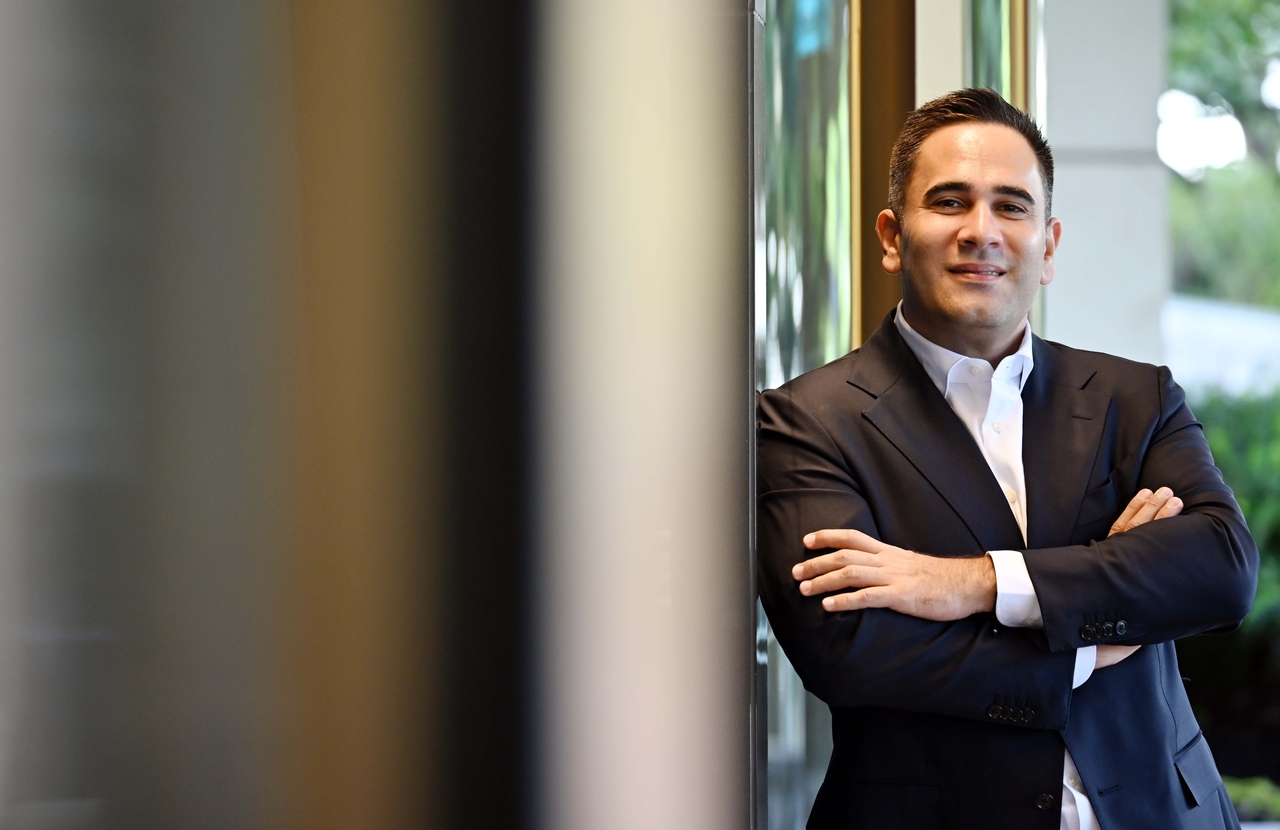
Jo Sang-yeon, executive vice president and head of Americas for Samsung Electronics' DS Division, participated in a panel discussion at the Global Semiconductor Alliance US Executive Forum in Menlo Park, California, on Tuesday (local time), alongside Richard Ho, vice president at OpenAI; Charlie Kawas, president of Broadcom; and Mark Papermaster, chief technology officer of AMD.
The GSA US Executive Forum is an annual gathering where semiconductor industry leaders discuss key issues and explore areas of cooperation. Han Jin-man, president and head of Samsung Electronics' Foundry Business Division, who participated as a panelist last year, returned to the event this year to continue building industry ties.
During the panel discussion, Jo said memory chip partners should be brought in at the architecture design stage, not just at the procurement stage — meaning memory should be treated as a core element from the earliest phase of system design, not as a secondary component.
With stable chip procurement becoming increasingly critical amid supply bottlenecks driven by surging AI demand, Jo said customers should factor in memory allocation, alternative sourcing and geopolitical risk assessment from the architecture definition stage, rather than leaving those considerations until the tape-out phase.
![Han Jin-man (fifth from left), president and head of Samsung Electronics' Foundry Business Division, and Jo Sang-yeon (fourth from left), executive vice president and head of Americas for Samsung Electronics' DS Division, attend the Global Semiconductor Alliance US Executive Forum in Menlo Park, California, on Tuesday (local time). [Jo Sang-yeon's social media]](https://wimg.heraldcorp.com/news/cms/2026/09/28/news-p.v1.20260928.c5908961e1af4d7c8a570fc617e13563_P1.jpg)
Jo added that Samsung Electronics' Taylor factory entering full customer mass production in 2027 is part of that broader strategy.
Tape-out refers to the completion of a chip design and its handoff to a foundry for manufacturing — the final step before full-scale mass production begins.
Samsung Electronics completed the tape-out of Tesla's next-generation AI chip, the AI5, in July and is preparing to begin mass production at the Taylor factory using a 2-nanometer process starting next year. The tape-out of the following-generation AI chip, the AI6, is scheduled for completion in December.
Jo said the diversification of production bases through the Taylor factory's mass production ramp-up next year would strengthen supply chain resilience.
However, he flagged a shortage of skilled workers as a major obstacle. In a social media post after the forum, Jo wrote: "There is one thing I didn't say on stage. A fab runs on electricians, plumbers and technicians — and right now, there simply aren't enough of them."
"We are working with universities, community colleges and high schools in Texas to develop the workforce, but this is not something one company can solve alone," he said. "The entire industry needs to engage more actively on this issue."
![Jo Sang-yeon (second from left), executive vice president and head of Americas for Samsung Electronics' DS Division, takes part in a panel discussion at the Global Semiconductor Alliance US Executive Forum in Menlo Park, California, on Tuesday (local time), alongside Richard Ho (center), vice president at OpenAI; Charlie Kawas (fourth from left), president of Broadcom; and Mark Papermaster (far right), chief technology officer of AMD. [GSA website]](https://wimg.heraldcorp.com/news/cms/2026/09/28/news-p.v1.20260928.9916ce47329447b9b35a9416a66d8978_P1.jpg)
The United States has long excelled at chip design but has relied almost entirely on Asia for manufacturing, leaving its domestic production base relatively weak. While Samsung Electronics, SK hynix and TSMC are all building large-scale production facilities in the US, the initial construction and operational work has largely depended on workers dispatched from South Korea and Taiwan.
Ahead of the Taylor factory's mass production launch, Samsung Electronics recently opened its first internship recruitment drive, significantly expanded job postings for process engineers and launched workforce development programs with local universities. With plans also in place for a second Taylor fab expansion, the labor shortage is expected to deepen further.
TSMC announced a $20,000 contribution on Saturday to Arizona's semiconductor pre-apprenticeship workforce program, stepping up its push to secure skilled technicians near its local facilities.
As companies race to lock in technical talent ahead of their production expansions, the SEMI industry association projected that the US could face a shortage of up to 157,000 semiconductor workers by 2030.
Meanwhile, Richard Ho, the OpenAI vice president who joined Jo on the panel, is set to deliver a keynote address at Samsung AI Forum 2026, to be held at Samsung Electronics' Seocho headquarters on Wednesday.
joze@heraldcorp.com