KB Real Estate releases September housing price trends
Seoul apartment sale prices up 1.13%, jeonse up 1.00%
Sanggye Jugong 7 complex jumps 130 million won in six months
Seoul median sale price breaks through 1.3 billion won
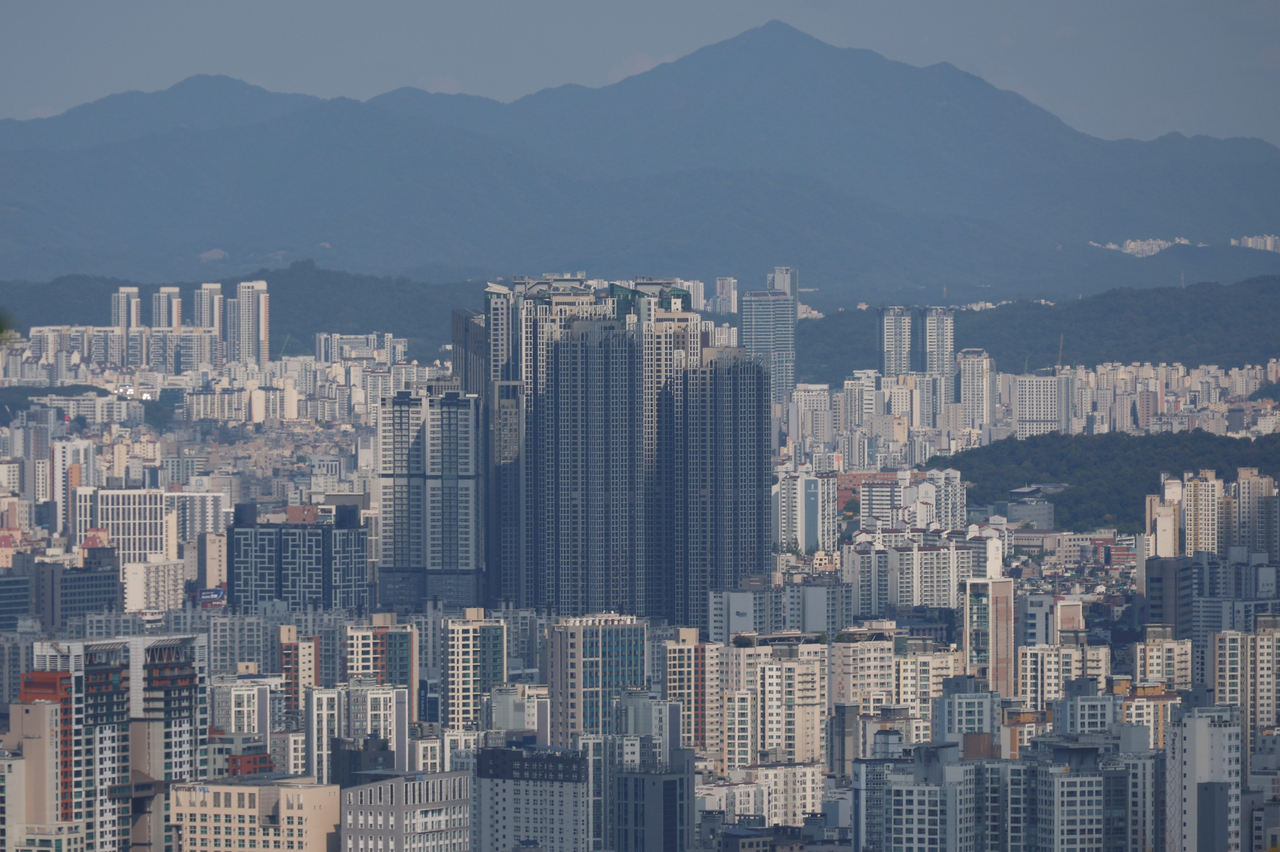
Distressed sales are piling up in the Gangnam area as a proposed tax reform targeting high-priced homes takes hold, and prices at the top 50 most valuable apartment complexes have turned negative for the first time in four months. Meanwhile, buying demand is flooding into Seoul's outer districts — Nowon-gu, Dobong-gu and Gangbuk-gu — and driving the city's overall price gains.
According to KB Real Estate's September national housing price trends report released Monday, Seoul apartment sale prices rose 1.13 percent from the previous month as of the 14th, with the rate of increase narrowing by 0.01 percentage point from August.
By district, the strongest gains were concentrated in mid-to-lower-tier areas: Nowon-gu (2.32 percent), Jungnang-gu (2.20 percent), Dobong-gu (1.95 percent), Seongbuk-gu (1.93 percent), Gangbuk-gu (1.90 percent), Gangseo-gu (1.75 percent) and Guro-gu (1.63 percent). Rising jeonse prices have pushed first-time buyers toward the city's outskirts, sharply lifting prices across those areas.
One example: a 49-square-meter unit at the Sanggye Jugong 7 complex in Nowon-gu changed hands Sunday for 780 million won ($577,000), up 130 million won from April. A 59-square-meter unit at Changdong Dong-A Cheongseol in Dobong-gu also set a record high at 918 million won.
Apartments transacting above 2 billion won are also emerging. Last month, a unit at Imun iPark Xi in Dongdaemun-gu's Imun-dong sold for 2.06 billion won, and an 84-square-meter unit at Raemian Gireum Centerpiece in Seongbuk-gu's Gireum-dong crossed the 2 billion won threshold with a July 20 transaction at that price.
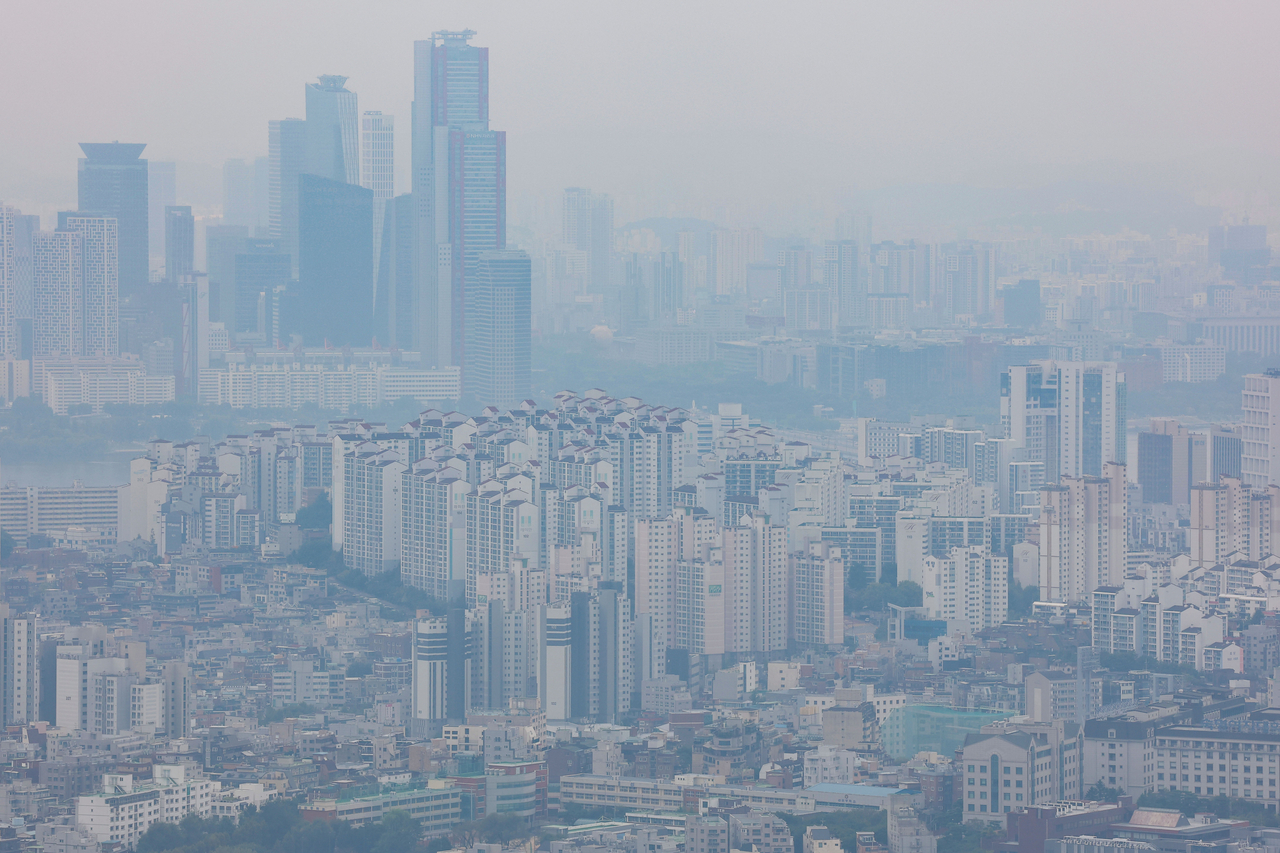
Gangnam-gu, by contrast, fell 0.30 percent. The KB Leading Apartment 50 index — which tracks monthly market-cap changes at the 50 highest-valued apartment complexes — slipped 0.22 percent to 99.2, turning negative for the first time since May.
Prices at the high-end large complexes tracked by the index had fallen from March through May ahead of the expiration of a capital gains tax surcharge exemption for multi-home owners, then rose for three consecutive months before turning soft again this month following the announcement of the tax reform package in early August.
Gyeonggi Province rose 1.06 percent, with the pace of increase widening by 0.23 percentage point from the prior month. Five southern districts — Suwon's Yeongtong-gu (4.30 percent), Anyang's Dongan-gu (2.75 percent), Gwangmyeong (2.73 percent), Hwaseong's Byeongjeom-gu (2.71 percent) and Suwon's Paldal-gu (2.51 percent) — posted their highest gains of the year and led the province's overall rise. Incheon edged up 0.07 percent, and the national average increase came in at 0.49 percent.
Seoul's apartment jeonse price growth rate eased to 1.00 percent, down 0.1 percentage point from the previous month. A clear decoupling between Gangnam and the rest of the city was evident in the jeonse market as well, mirroring the sale-price trend.
Nowon-gu (2.04 percent), Seongbuk-gu (1.93 percent), Gangbuk-gu (1.84 percent), Gangdong-gu (1.83 percent), Jungnang-gu (1.47 percent), Songpa-gu (1.40 percent) and Yeongdeungpo-gu (1.24 percent) posted the largest jeonse gains, while Gangnam-gu (-0.19 percent) turned negative.
In Gyeonggi Province (0.80 percent), jeonse prices were strong in Gwangmyeong (1.88 percent), Hanam (1.75 percent), Hwaseong's Dongtan-gu (1.73 percent), Hwaseong's Byeongjeom-gu (1.67 percent), Suwon's Jangan-gu (1.43 percent), Guri (1.41 percent) and Suwon's Yeongtong-gu (1.39 percent). Incheon rose 0.33 percent and the national average gained 0.49 percent.
The national housing sale price index — covering apartments, row houses and detached homes — rose 0.34 percent from the previous month. Within the greater Seoul metropolitan area, Gyeonggi Province led with a 0.79 percent gain, followed by Seoul at 0.75 percent and Incheon at 0.05 percent.
National housing jeonse prices rose an average of 0.32 percent, while Seoul gained 0.64 percent. The national housing sale price outlook index rose 0.5 point from the previous month to 107.7.
Seoul's outlook index fell 1.4 points to 116.4, marking three consecutive months of declining sentiment. By subregion, the 14 districts north of the Han River posted an index of 124.8, down 0.3 point, while the 11 Gangnam districts came in at 108.9, down 2.4 points — a steeper decline. The national jeonse price outlook index rose 0.2 point to 120.7, while Seoul's fell 3.5 points to 132.1.
The average Seoul apartment sale price was tallied at 1.62 billion won, with the 11 Gangnam districts averaging 2.01 billion won — crossing the 2 billion won mark for the first time. The average Seoul jeonse price stood at 722.53 million won.
The median sale price in Seoul — the midpoint when all transactions are ranked — broke through the 1.3 billion won level, reaching 1.31 billion won. The median Seoul jeonse price was 643.33 million won.
The price quintile ratio — measuring the gap between the top 20 percent and bottom 20 percent of apartments by price — stood at 14.0 nationally and 6.3 in Seoul.
lucky@heraldcorp.com