An extract from bangpung, a traditional herbal medicine ingredient, has been found to promote the regeneration of damaged bone, according to research by a team led by Dr. Kim Hyun-sung of the Spine and Joint Research Institute at Jaseng Hospital of Korean Medicine.
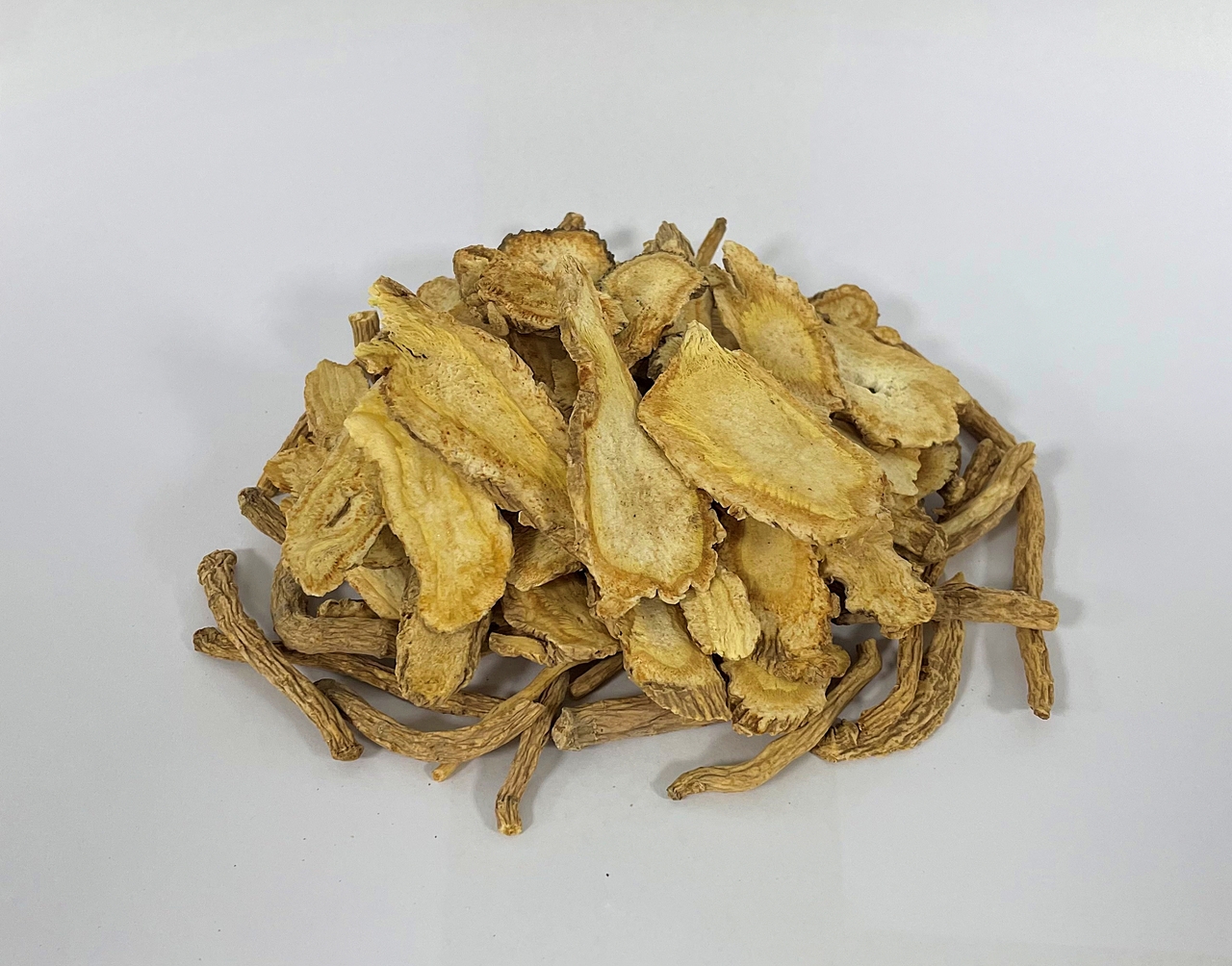
Bangpung is a plant in the carrot family and is entirely distinct from bangpung namul, the leafy vegetable eaten as banchan. It has long been used as an herbal remedy to manage joint pain and inflammation, and is also one of the six constituent herbs — alongside useul, ogapi, gucheok, daeduhwangkwon and duChung — in Shinbaro, a widely prescribed herbal formula for musculoskeletal conditions such as herniated discs.
When healthy bone weakens due to aging or menopause, it can lead to osteoporosis and an increased risk of fractures. Recovery from fractures also slows, and even after a bone heals, insufficient density can raise the risk of re-fracture. Current treatments for osteoporosis include bisphosphonates, which suppress bone resorption by osteoclasts, and parathyroid hormone agents, which stimulate bone formation. However, these drugs can cause gastrointestinal side effects, and concerns about their long-term safety have consistently been raised. Interest has grown in treatment materials that can aid bone regeneration with fewer side effects.
In this regard, the research team focused on the possibility that herbal medicines already used in musculoskeletal treatment could also influence bone formation and recovery. The team closely analyzed the role, effects and mechanisms of bangpung — a key ingredient in Shinbaro — in the bone regeneration process.
The team first conducted cell experiments, treating osteoblasts isolated from rat skulls with bangpung extract at varying concentrations and observing how well the cells grew and formed bone. The extract promoted osteoblast differentiation without showing cytotoxicity. It also increased the activity of alkaline phosphatase (ALP), an enzyme whose secretion rises at the onset of bone formation, and boosted calcium deposition, the stage at which bone hardens. In addition, expression increased in both RUNX2, a gene that regulates osteoblast differentiation, and Col1a1, a gene encoding the bone matrix that forms the basic structure of bone.
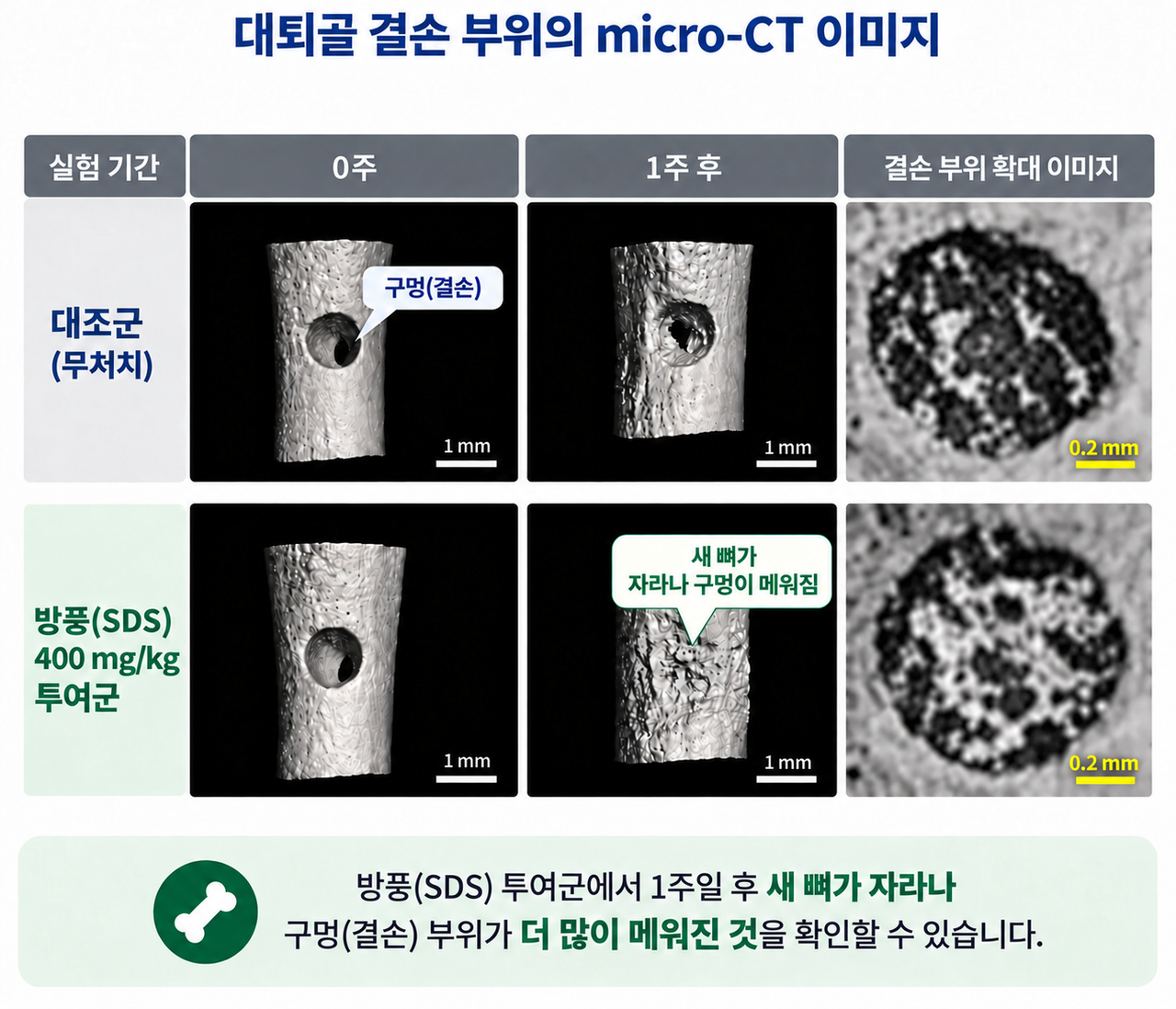
Animal experiments also confirmed bangpung's bone-regenerating effects. After small holes were made in the femurs of rats, bangpung extract was administered at varying doses for one week, and the degree of recovery in the damaged areas was examined using micro-CT imaging. Higher doses of the extract corresponded to greater increases in newly formed bone volume and bone density. TRAP-positive cells — an indicator of osteoclast activity — decreased markedly, while expression of osteocalcin (OCN), a marker of bone formation, increased.
To examine bangpung's efficacy in greater detail, the research team also conducted molecular docking simulations. The analysis assessed how stably the herb's key compounds bind to proteins involved in the activity of osteoclasts and osteoblasts — specifically RANK, a receptor protein involved in osteoclast formation and activity, and RUNX2, a protein involved in osteoblast formation and activity.
The analysis predicted that prim-O-glucosylcimifugin, one of bangpung's primary active compounds, and other components could stably bind to both RANK and RUNX2. This suggests that bangpung may interact with molecular targets involved in both bone resorption and bone formation, supporting the potential mechanism behind the bone-regenerating effects observed in the earlier cell and animal experiments. Since osteoporosis develops when bone is lost faster than it is formed, this dual action points to bangpung's potential as a treatment material for osteoporosis.
"This research is significant in that it is the first to confirm that bangpung, a herbal medicine previously known only for its anti-inflammatory and immune-regulating properties, can also contribute to fracture healing by simultaneously regulating both bone formation and bone resorption," said Dr. Kim Hyun-sung of the Spine and Joint Research Institute at Jaseng Hospital of Korean Medicine. "We will continue to build a more concrete evidence base for bangpung and herbal prescriptions containing it as treatments for fractures through long-term observational research." The study was published in the SCI(E)-indexed international journal Advanced Biology (IF: 3.2).
kty@heraldcorp.com