Jongno-gu cracks down on unauthorized road use, adds safety personnel and designates smoking zones through cross-departmental cooperation; district also works to address toilet shortage by urging merchants to expand facilities and requesting budget from Seoul Metropolitan Government
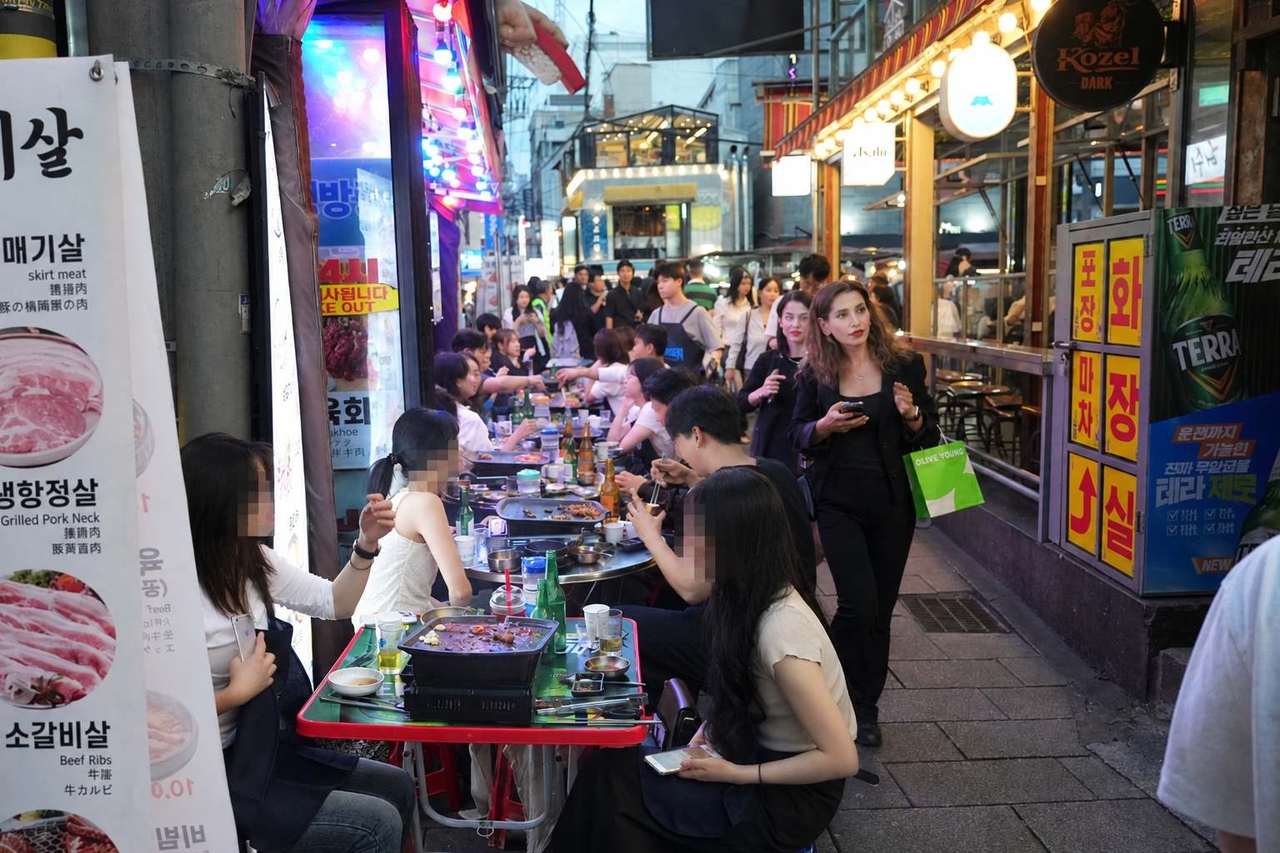
Jongno-gu is stepping up efforts to transform the outdoor dining strip around Jongno 3-ga into a safe and pleasant environment where tourists, residents and merchants can all coexist.
The push comes after the area topped Time Out's "40 Coolest Neighborhoods in the World 2026" list, drawing global attention. The district said it intends to use the recognition as an opportunity to tackle remaining challenges, including cleanliness and late-night safety management along the shared street.
The district has long pursued targeted street management, tailoring its focus to the season and location — traditional markets during public holidays, school commute routes at the start of each semester, and the Seochon and Bukchon neighborhoods during peak outings.
The outdoor dining strip around Jongno 3-ga has been among the more difficult areas to manage. As tourist numbers surged, illegal outdoor vending and road obstructions multiplied, and complaints about narrowed pedestrian space piled up.
In response, Jongno-gu designated Donhwamun-ro 11-gil as a "shared street" in November 2024, followed by Ikseon-dong Galmaegi Alley in October 2025. Rather than clearing out all street stalls, the district adopted a model in which the district office, the merchants' association and individual street vendors share responsibility for safety, upkeep and order.
Under the system, 77 businesses are currently operating — 24 street stalls and 53 regular shops. Street stalls are limited to a footprint of 5.5 meters wide by 3 meters deep, while regular shops may operate only within a single front-facing row. Trading hours run from 6 p.m. to 4 a.m. the following day. Vendors who violate the rules three or more times face exclusion from the shared street program.
Going forward, the district plans to raise the standard of management in the area. Relevant departments will coordinate to conduct regular crackdowns on businesses operating beyond their permitted road-use area, with administrative penalties and fines to follow. To curb the nuisance of indiscriminate smoking, the district will designate smoking zones and install additional waste bins.
The district is also moving to address the shortage of public toilets. It plans to expand the number of privately operated restrooms open to the public, and starting next year will cover septic tank cleaning costs once a year — up to 150,000 won ($111) per facility — on top of existing support for consumables such as toilet paper and cleaning supplies. Businesses selected through a public application process will also be eligible for renovation grants of up to 5 million won ($3,700) per site. The district plans to request related funding from the Seoul Metropolitan Government and will urge merchants along the shared street to expand their own restroom facilities through the Mutual Growth Development Committee.
The district also plans to hire additional personnel to prevent public urination and smoking in the alleys of the low-income residential quarter nearby, and to maintain safety and cleanliness in the area.
Since September, the district has launched intensive management of areas identified as hygiene hotspots. Zones drawing large crowds — including the shared street between Nakwon Instrument Arcade and Myodong intersection, and the Song Hae Street stretch between Nakwon Instrument Arcade and the Yuuijeon Building in Jongno 2-ga — have been designated priority zones, where daily water-cleaning, pollutant removal and exposed waste collection are now being carried out.
The district will continue to refine the road-use permit system and the pedestrian space reclaimed through traffic restructuring. A joint public-private safety management team patrols the area daily from 5 p.m. to 2 a.m. the following morning, managing pedestrian flow and responding to emergencies.
The district also plans to conduct periodic inspections of conditions along the shared street and incorporate feedback from residents, merchants and visitors to refine its management approach.
"Jongno 3-ga has established itself as an attractive destination that draws not just domestic visitors but the attention of the world," Jongno-gu District Mayor Yoo Chan-jong said. "We will keep the commercial energy alive while creating a clean, orderly outdoor dining street where residents' daily lives, pedestrian safety and visitor convenience all come together in harmony."
seouldream01@heraldcorp.com