Lee Hwa-young of LG Group's AI Research Institute speaks on agentic AI
Productivity gains cited as core value of agentic AI
'AI handles not just routine tasks but highly skilled work'
'No coding needed — results delivered in natural language'
'Entirely different outcomes depending on how you orchestrate'
AI agents driving innovation in manufacturing, finance and chemistry
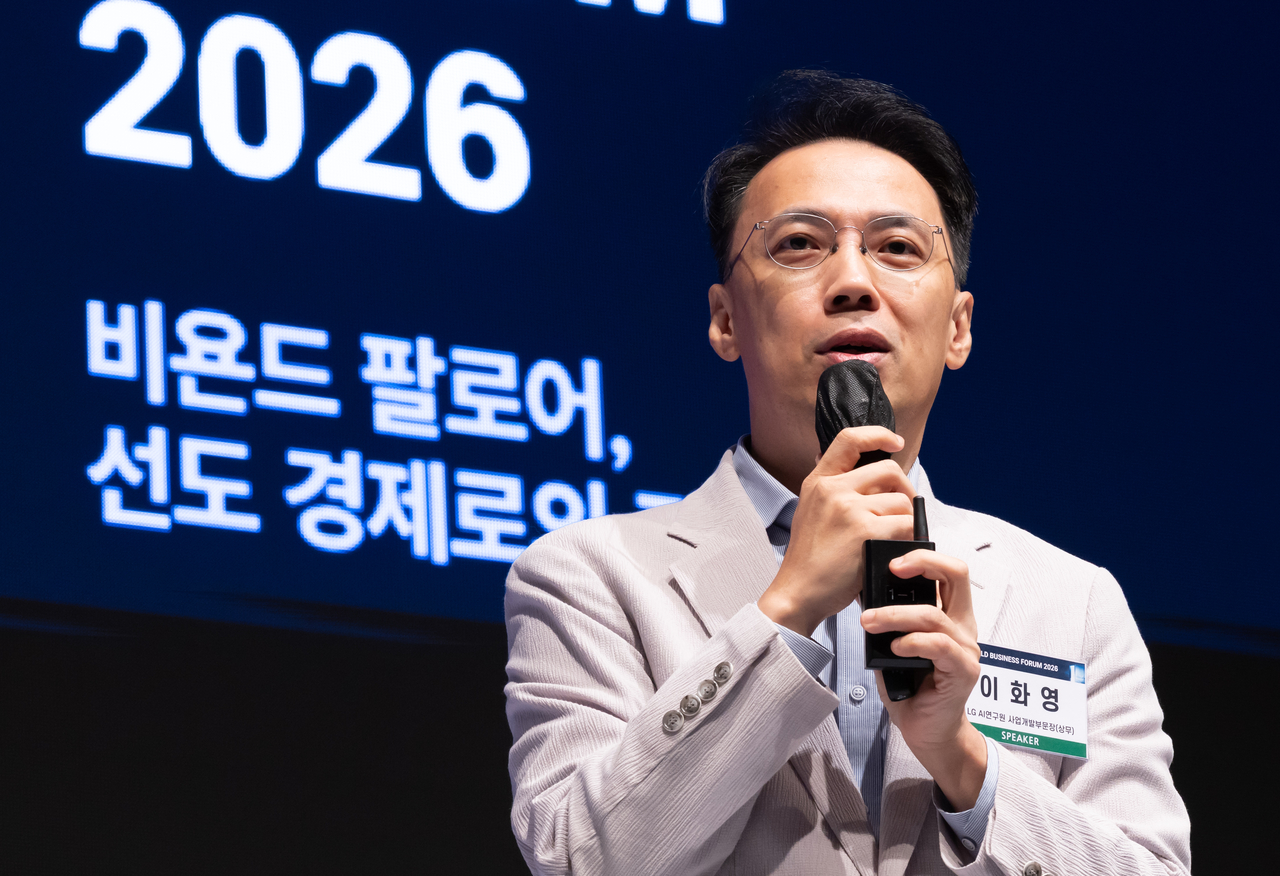
"Agentic AI can dramatically boost individual productivity."
Lee Hwa-young, senior vice president and head of AI business development at LG Group's AI Research Institute, named productivity gains as the core value of agentic AI during a lecture titled "AI-based business value creation strategies" at Herald Business Forum 2026 on Tuesday at the Dynasty Hall of Shilla Hotel in Jung-gu, Seoul. Where a task once required a day or two when handed to a specialist, agentic AI can deliver results within hours, she said.
"When we work, we don't do it alone — we collaborate with colleagues, supervisors and other departments to reach a goal," Lee said. "Agentic AI has started playing a role in the spaces between all those interactions." She added that agentic AI can reduce the delays that arise when departments and individuals hand work back and forth.
Lee particularly highlighted that AI has begun handling not just routine, repetitive tasks but highly skilled work as well. Using new drug candidate development as an example, she said, "What the world's top biotech and life science researchers do is synthesize vast bodies of research, reason through them, form many hypotheses and verify them through experiments. If you give that kind of work to the latest agentic AI, it does it at remarkable speed."
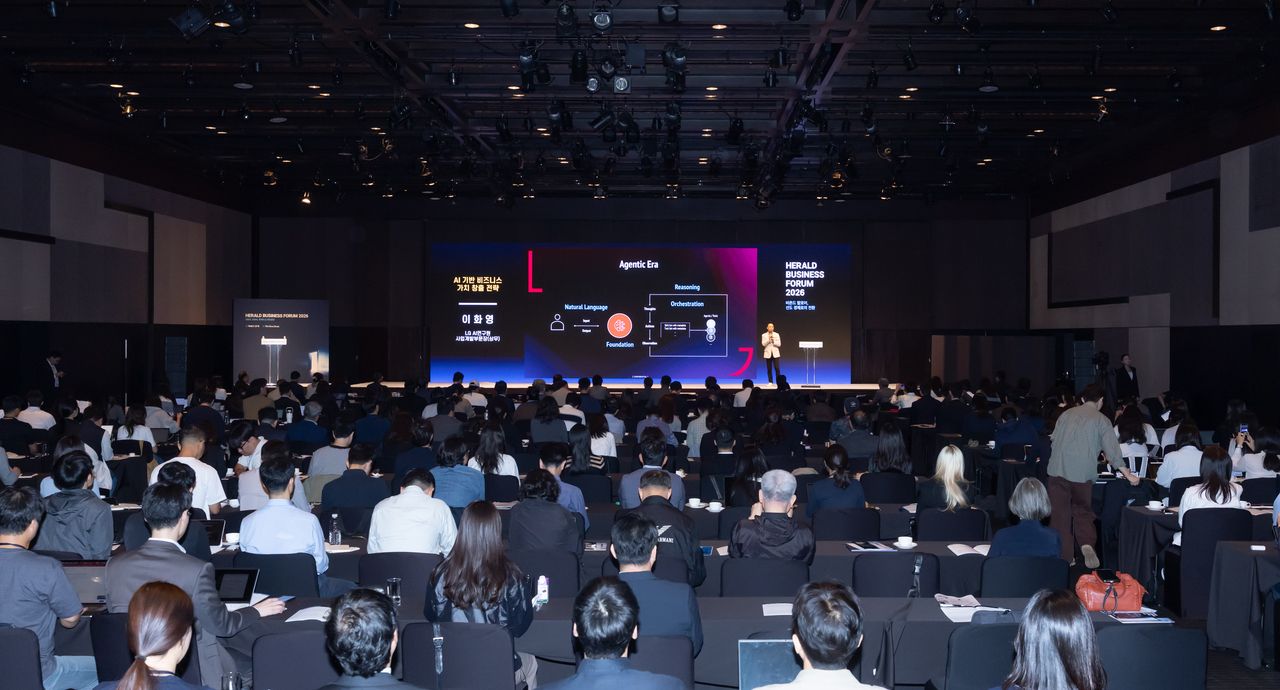
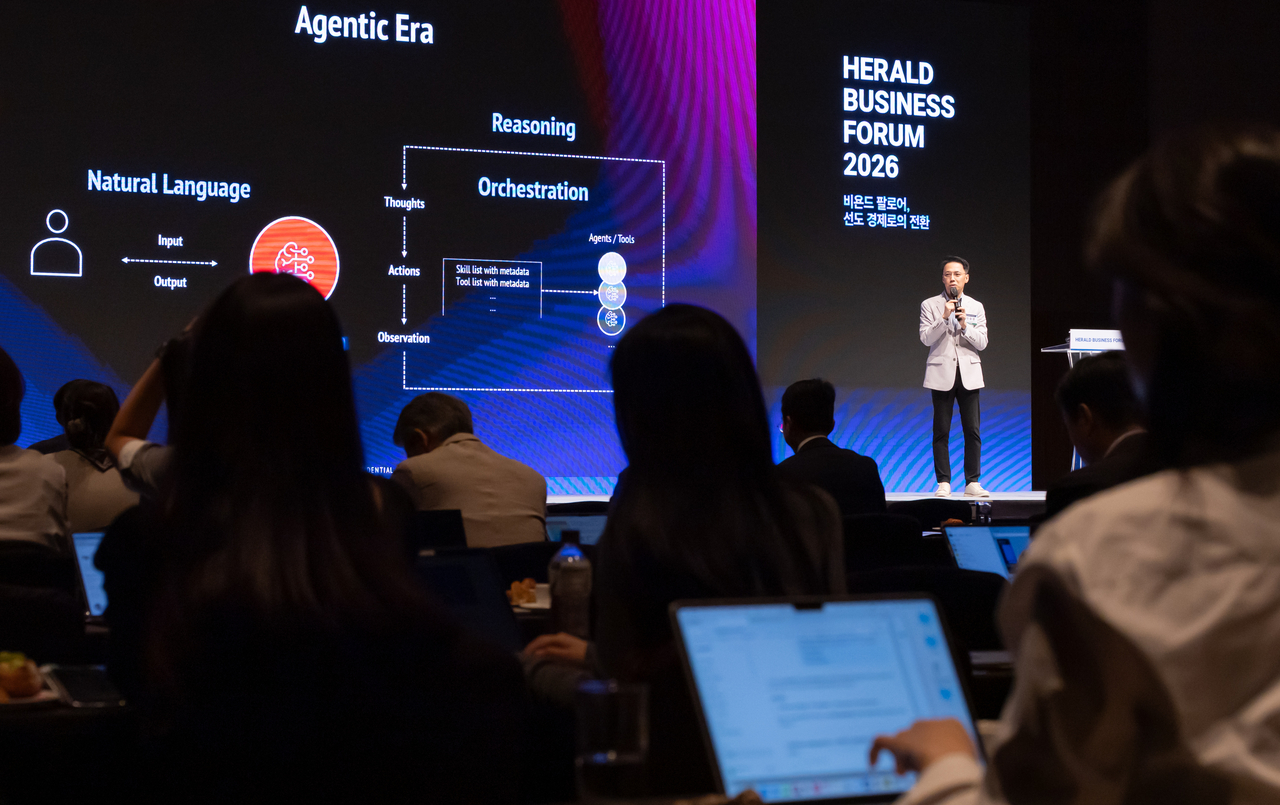
From natural language to reasoning and orchestration
Lee identified four key drivers behind the rise of agentic AI: natural-language interfaces, foundation models, reasoning and orchestration.
In the past, getting a computer to perform a task required entering instructions in a programming language line by line. Now, she said, a user can simply describe what they want in plain language and the AI will write the code, execute it and return the results. "Today, you don't even need to code," Lee said. "You speak in natural language, the computer understands, writes the code, runs it on its own and translates the output back into natural language for you."
She also stressed the role of foundation models. Earlier deep-learning systems required large volumes of data to be labeled individually for each specific purpose, but foundation models can generalize across a wide range of tasks. "Foundation models are not limited to doing one specific job well — they can handle many different tasks very capably," Lee said. "The fact that the labeling work required for deep learning is no longer necessary is a critical development."
Combining that capability with reasoning — AI that thinks independently and forms hypotheses — and orchestration, which coordinates multiple AI agents, can push productivity even higher, she said. "AI works alongside people, but it also works alongside other agentic AI," Lee said. "Entirely different outcomes can emerge depending on how you orchestrate them."
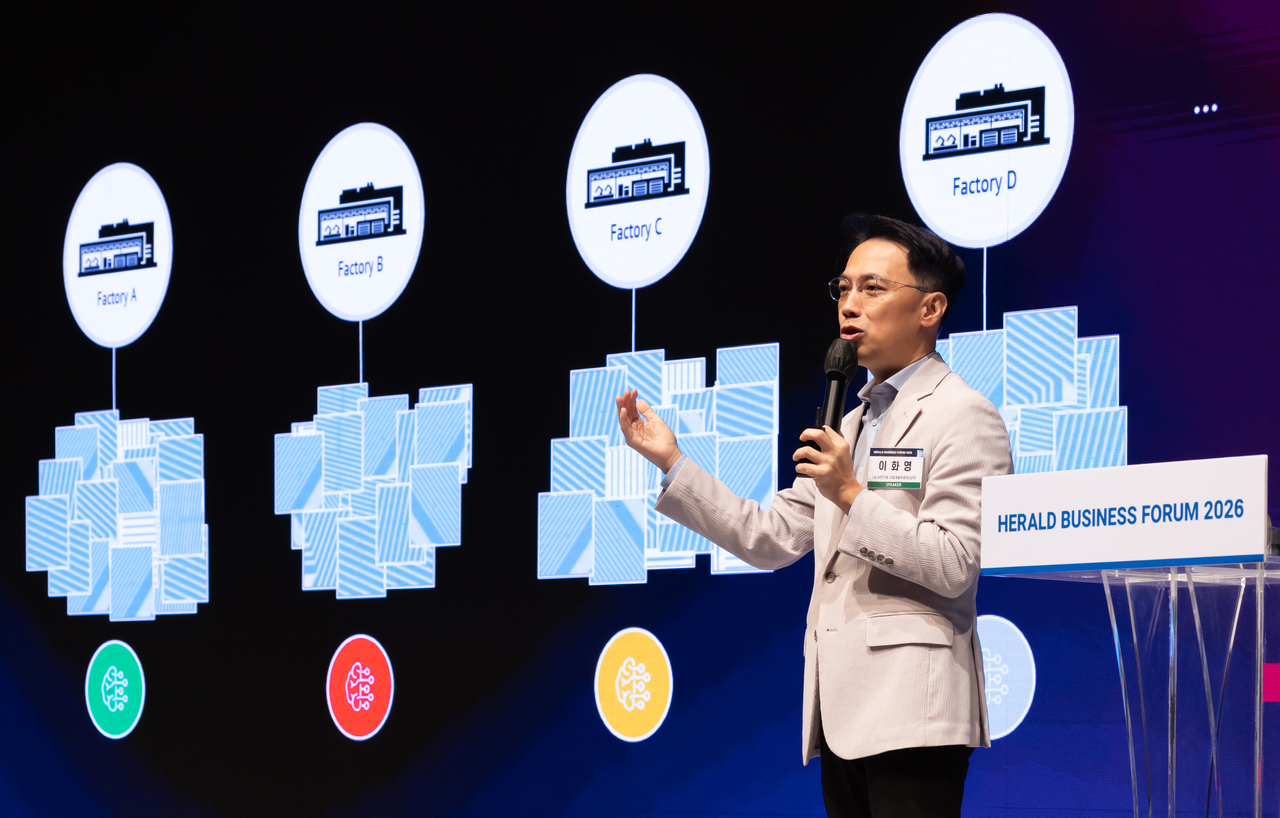
Foundation models applied to battery quality inspection
LG Group is already applying foundation-model-based quality inspection technology on actual manufacturing floors, with batteries serving as a prime example. Under the previous approach, labeled datasets of good and defective products had to be compiled separately for each factory, production line and product, and individual deep-learning models built for each combination. "There are factories all over the world, each with multiple lines, each line producing multiple products," Lee said. "Multiply it all out and you need roughly 10,000 deep-learning-based quality judgment models."
LG Group has replaced that system with a foundation-model approach. A large volume of battery images is used to train the model, which is then shown sample images of good and defective units to learn quality judgment. "When we fed the agent prompts containing already-labeled good and defective batteries most similar to the one being inspected, it was able to make very accurate determinations," Lee said.
The same foundation-model approach has been applied to structured numerical data as well, analyzing figures generated during the manufacturing process to determine whether a quality inspection is needed. "We reduced the equipment required for quality inspection by more than 30 percent and cut takt time — the time needed to produce a single unit — dramatically improving overall productivity," Lee said.
8,000 stocks analyzed daily; autonomous lab pursued for chemistry
In finance, LG Group's AI Research Institute has combined forecasting with multi-agent collaboration. The institute developed a model that analyzes both text data — news articles, accounting reports and analyst research notes — alongside share price time-series data to predict future price movements. Building on that, it constructed what it calls a "financial forecasting super agent," which oversees sub-agents acting as an AI economist, an AI journalist and an AI analyst. Each covers macroeconomic conditions, real-time news and corporate financial reports respectively, while the supervising agent synthesizes their findings and issues further instructions as needed.
"We can generate daily scores predicting the one-month outlook for 8,000 listed companies — 5,500 in the United States and 2,500 in South Korea — along with written explanations of the reasoning behind each prediction," Lee said.
In chemistry, LG Group is pursuing what it calls an autonomous laboratory, where AI handles everything from designing new materials to carrying out synthesis and verification. A user inputs the desired physical properties, the AI proposes a suitable molecular structure, a robot synthesizes the substance and measures its actual properties, and the results are fed back to the AI to identify new candidates.
Closing her remarks, Lee said the future direction of agentic AI lies in "creating outstanding performance through orchestration — skillfully coordinating a range of tools and agentic AI together."
keg@heraldcorp.com