Seoul Metro's AI-based train cabin cooling system earns top honors at the 2026 Local Public Institution Innovation Competition — system expected to cut annual electricity costs by 5.6 billion won when rolled out across all lines
CEO Kim Tae-kyun vows to drive AI adoption across safety, service and management to lead smart public transit
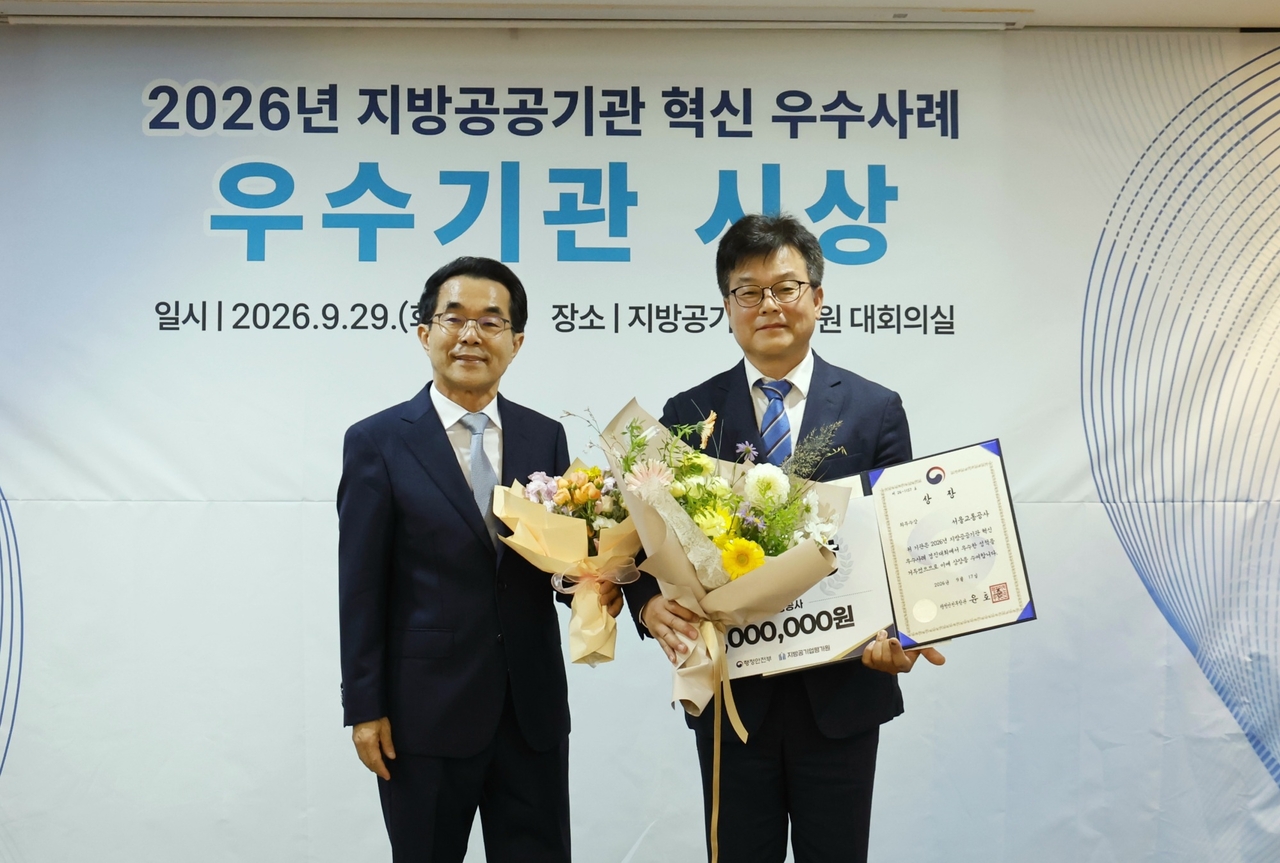
Seoul Metro has won recognition for an AI-powered innovation that proactively prevents cabin temperatures from rising during peak commuting hours, significantly improving both cooling efficiency and passenger comfort.
Seoul Metro said Tuesday its AI-based train cabin cooling control system received the Minister of Interior and Safety Award — the top prize — at the 2026 Local Public Institution Innovation Competition, hosted by the Ministry of Interior and Safety and the Local Public Enterprise Evaluation Institute.
The competition is held to identify and promote outstanding cases in which local public institutions have overcome regional challenges and advanced public service innovation.
A total of 20 cases were selected across three categories — regional coexistence and cooperation; realization of social values including ESG management; and AI and digital public service innovation — with one grand prize and nine top prizes awarded in each category.
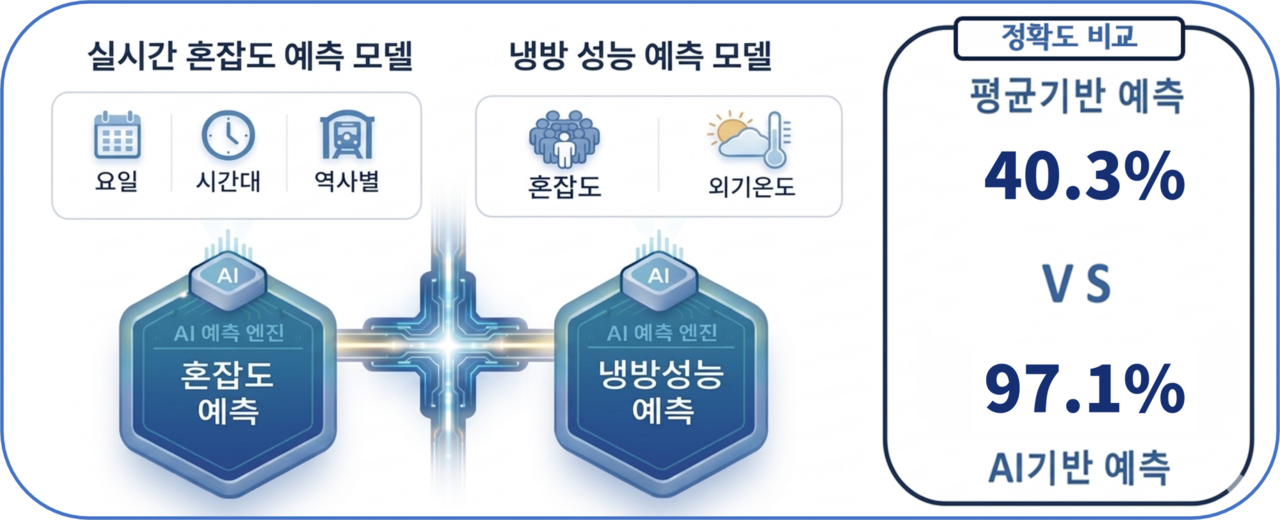
Selected as a top case in the AI and digital public service innovation category, Seoul Metro's system addresses cabin temperature complaints — which account for roughly 80 percent of summer passenger grievances — by shifting from reactive manual responses to proactive automated control. The system uses condition-based maintenance big data, with AI comprehensively analyzing factors such as season, day of the week, time of day and station-by-station congestion levels. Based on predicted congestion and real-time temperature readings, it automatically adjusts cabin temperature to an optimal level.
Under the previous approach, crew members had to manually operate cooling units or rely on a single fixed temperature setting, leaving little room for dynamic adjustment.
In a pilot conducted over July on 22 new train sets (220 cars) on Line 4, cabin temperatures in high-congestion sections fell by approximately 1.2 degrees Celsius. Overall cooling operation across all sections decreased by 41 percent.
Based on that pilot data, Seoul Metro expects that expanding the system to all lines could cut annual electricity costs by 5.6 billion won ($4.12 million) and reduce carbon emissions by preventing excessive cooling.
The achievement has drawn attention not only domestically but also within the global urban rail industry. In May, Seoul Metro presented the AI-based cooling control system as a leading AI case at the annual meeting of the Community of Metros Benchmarking Group (COMET), held in Nanjing, China, drawing active questions and discussion from member organizations.
COMET has 48 major metro operators worldwide as members. The group pursues inter-agency cooperation and the advancement of global urban rail through real-time exchanges on online forums and regular video and in-person meetings to share best practices.
Building on this recognition, Seoul Metro plans to accelerate its company-wide AI transformation. It is currently advancing 22 projects across three core areas: strengthening safety management, enhancing customer convenience and innovating work processes. Representative initiatives include an intelligent track facility inspection system, an automated CCTV alert display system for trains, and a smart media operating framework. The company is also working to spread an AI culture and build internal capabilities, including by hosting an AI utilization competition — dubbed AI-THON — open to all employees.
The intelligent track facility inspection system uses AI deep-learning technology installed on revenue trains — rather than dedicated maintenance vehicles — to inspect tracks in real time. The automated CCTV alert display system analyzes onboard CCTV footage in real time to automatically detect and respond to unusual situations. The smart media operating framework supports the creation of promotional content using generative AI.
"I expect this award to mark a successful starting point for the tangible results that our company-wide AI transformation will deliver," Seoul Metro CEO Kim Tae-kyun said. "We will do our utmost to actively introduce AI technology across all aspects of Seoul Metro's safety, service and management — leading innovation among public enterprises and creating a world-class smart public transit environment."
seouldream01@heraldcorp.com