LG Electronics AI Research Lab head Kim Young-jun speaks at Herald Business Forum 2026
Outlines direction for robot foundation model development
VLA model data constraints drive emergence of world models
Failure data from manufacturing lines key to robot recovery training
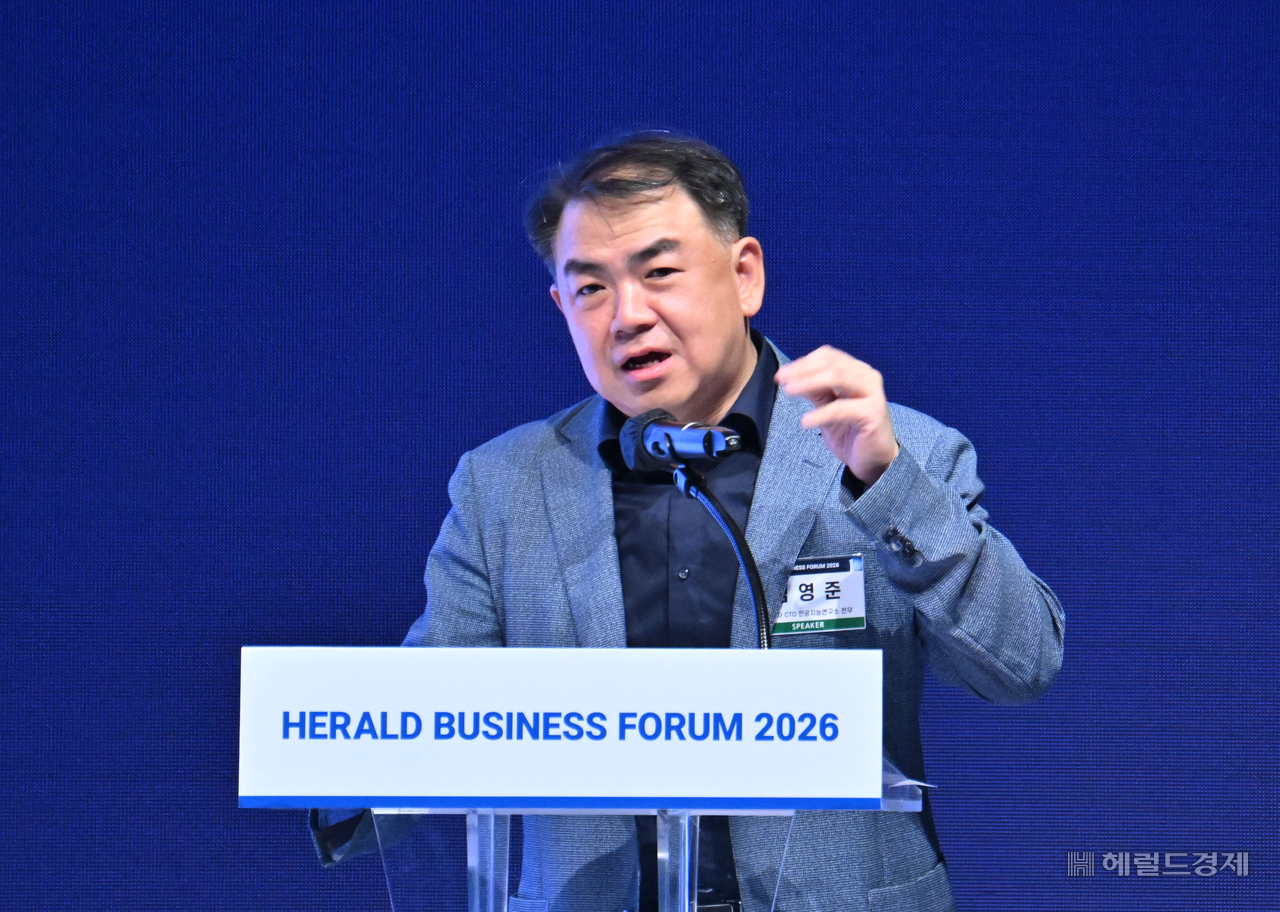
Kim Young-jun, executive vice president and head of the AI Research Lab at LG Electronics, said Tuesday that South Korea must leverage its strength in industrial data to unlock the economic potential of robotics. "One of the biggest challenges in robotics is how to actually generate economic value," Kim said at the Herald Business Forum 2026, held at the Dynasty Hall of Shilla Hotel in Jung-gu, Seoul. "Because our country has well-established manufacturing lines, we need to build models specialized in the industrial data where we have a competitive edge — that is how we will see real economic returns."
Kim delivered a lecture titled "From Digital AI to Physical AI: AI That Understands and Acts in the Real World," in which he outlined the development trajectory of robot foundation models.
Amid growing interest in various approaches to implementing robot intelligence — including large-scale multimodal models, action-based models, world models and vision-language-action (VLA) models — Kim introduced the world model framework as the direction South Korea should pursue.
Addressing VLA models, which translate visual observations and verbal instructions directly into physical actions, Kim noted the difficulty of collecting usable training data. "When a person works for one hour, the yield of trainable data is at most 30 percent," he said.
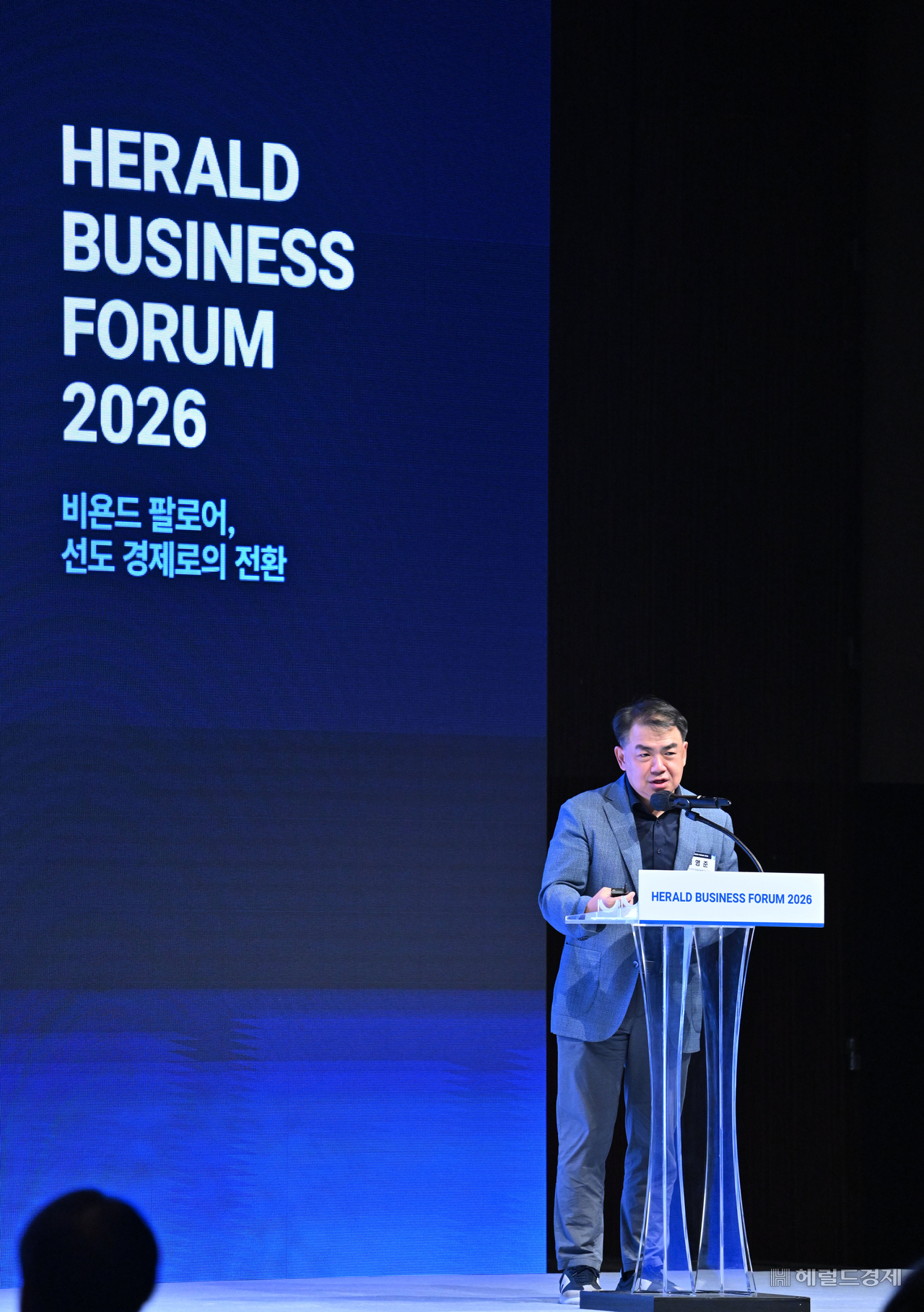
Kim illustrated the limitation with a practical example. "If a robot is folding laundry and a towel is rolled up in a shape different from what it has seen in its training data, it simply cannot cope," he said. "That kind of problem is what gave rise to world models."
A world model simulates how the physical environment will change in response to a given action taken from the current state. In practice, a robot runs multiple trajectory simulations before reaching out in the real world, then selects the safest path.
Because the robot agent learns through trial and error inside the virtual environment generated by the world model, there is no risk of the real-world robot being damaged in the process.
"We need to build a world model that predicts the outcomes of robot actions across diverse industrial and home environments, assesses the likelihood of failure, replans and recovers when necessary, and converts those experiences back into training data," Kim said.
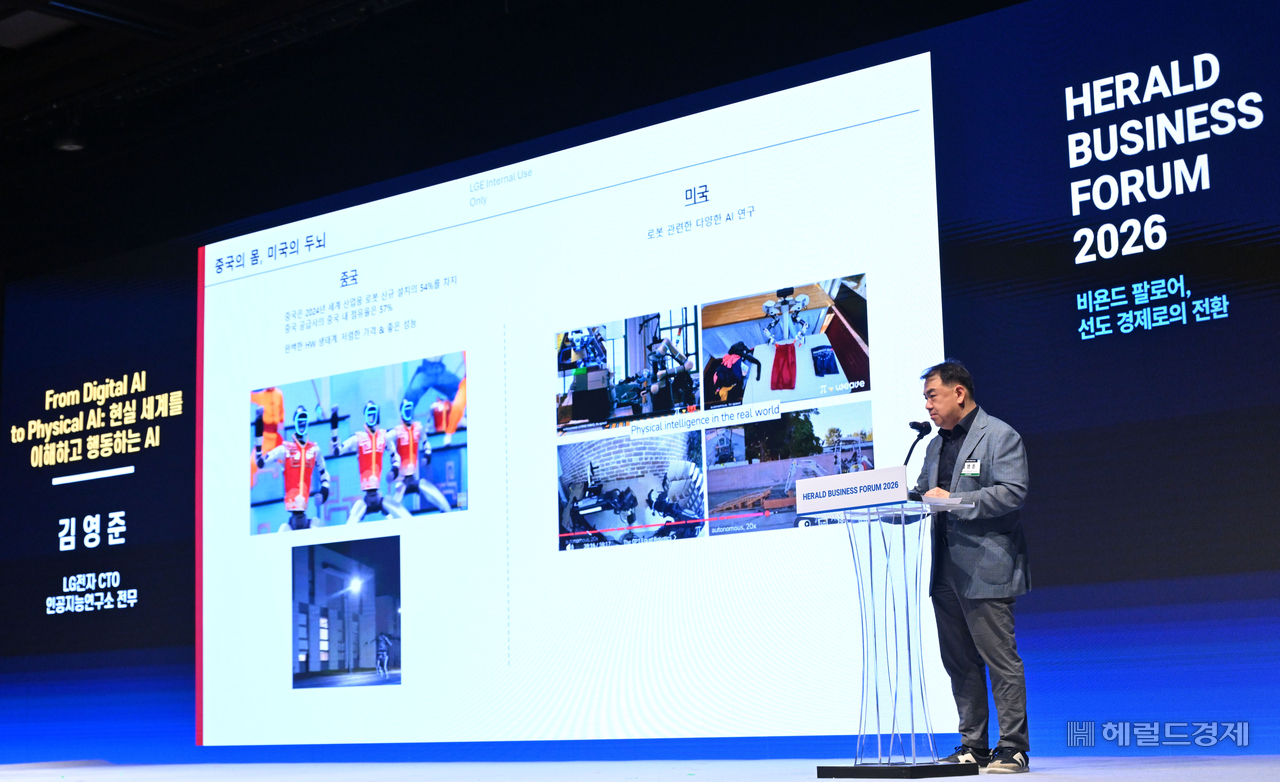
"The key is not collecting successful data but recovering from failure data," Kim said, advising that South Korea continuously gather mistake-and-recovery patterns from its manufacturing lines — the country's core strength — in forms that are genuinely useful.
He added that world models should not run continuously but be activated only when needed.
"We should not let the world model run all the time and slow the robot down," Kim said. "The goal should be a world model that the robot consults briefly, only at the moments it needs to."
joze@heraldcorp.com