Branding expert Noh Hee-young speaks at Herald Business Forum 2026
Those who buy Hermès also buy Uniqlo, she says
'Smart consumption' by taste demands a clear target
Taste is the baseline — your brand needs to make people reach for their cameras
Market O brownie's secret: winning over the sales floor
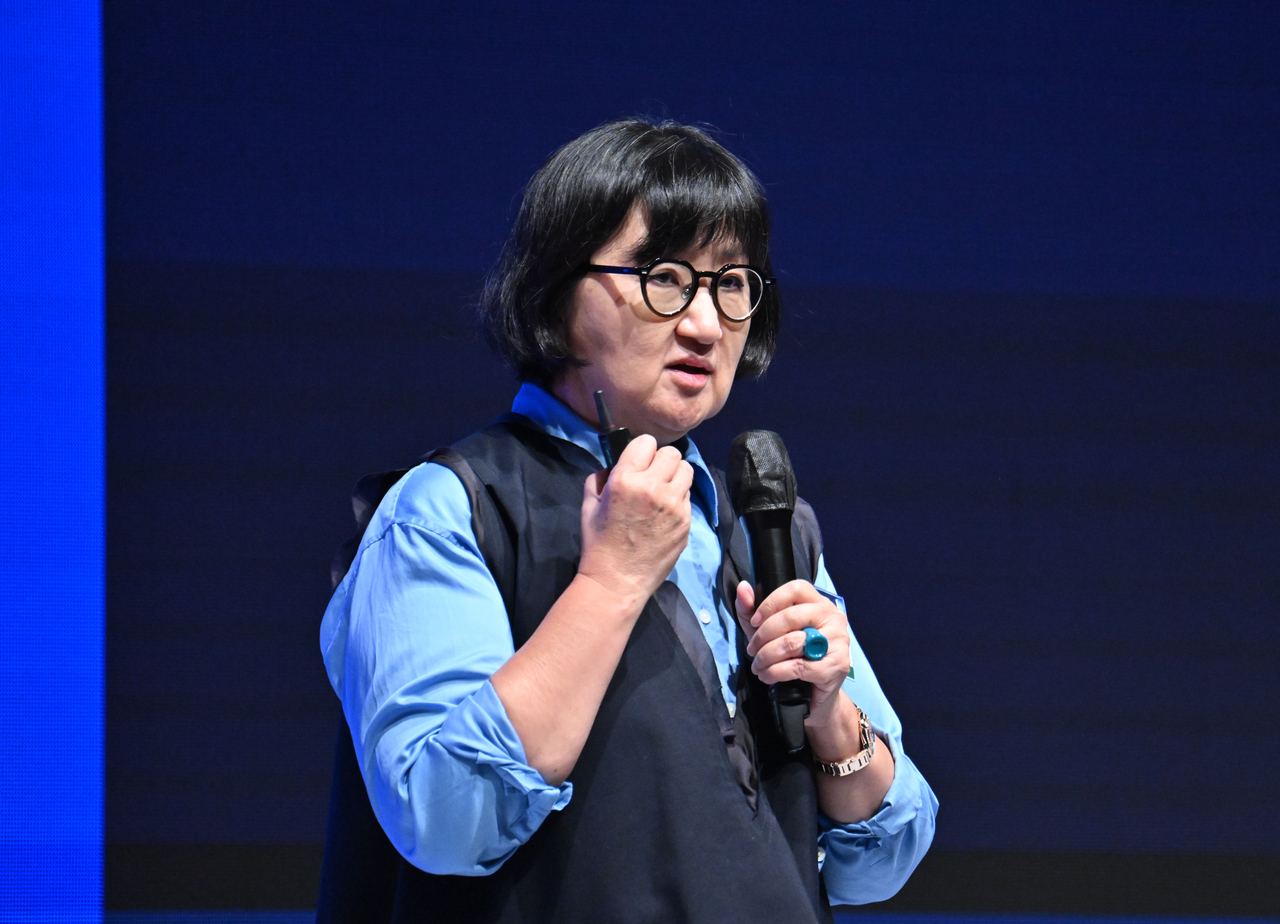
"If you trace the purchasing habits of South Korea's wealthiest consumers, you find that people who buy a lot of Hermès also buy a lot of Uniqlo. As AI advances, brands will split further toward opposite extremes, and brands that fall somewhere in the middle will not get recommended by AI."
Noh Hee-young, chief executive of Hino Consulting Firm, made the remarks Tuesday while delivering a presentation titled "Branding Rules in the AI Era" at the Herald Business Forum 2026, held at the Dynasty Hall of the Shilla Hotel in Jung-gu, Seoul. Noh is a branding specialist who previously served as vice president of Orion and as a brand strategy adviser at CJ Group.
Noh said she expects brand polarization to intensify in the AI era. In an environment where AI recommendations increasingly shape purchasing decisions, she said, brands with no clear strengths will find themselves with shrinking room to compete.
"Consumers are making smart choices by distinguishing between brands that offer value for money and brands that signal their status," she said. "You need to think carefully about what kind of person your brand's persona is and what lifestyle that person leads."
To set a brand's direction, Noh said, companies must first rethink how they define their target consumers. The old approach of segmenting by gender or age, she said, has become outdated.
"There are teenagers who are trot music fans, and there are people in their 70s and 80s who are BTS Army," she said. "Observing people — what clothes they wear, what Netflix and YouTube content they consume — has become enormously important."
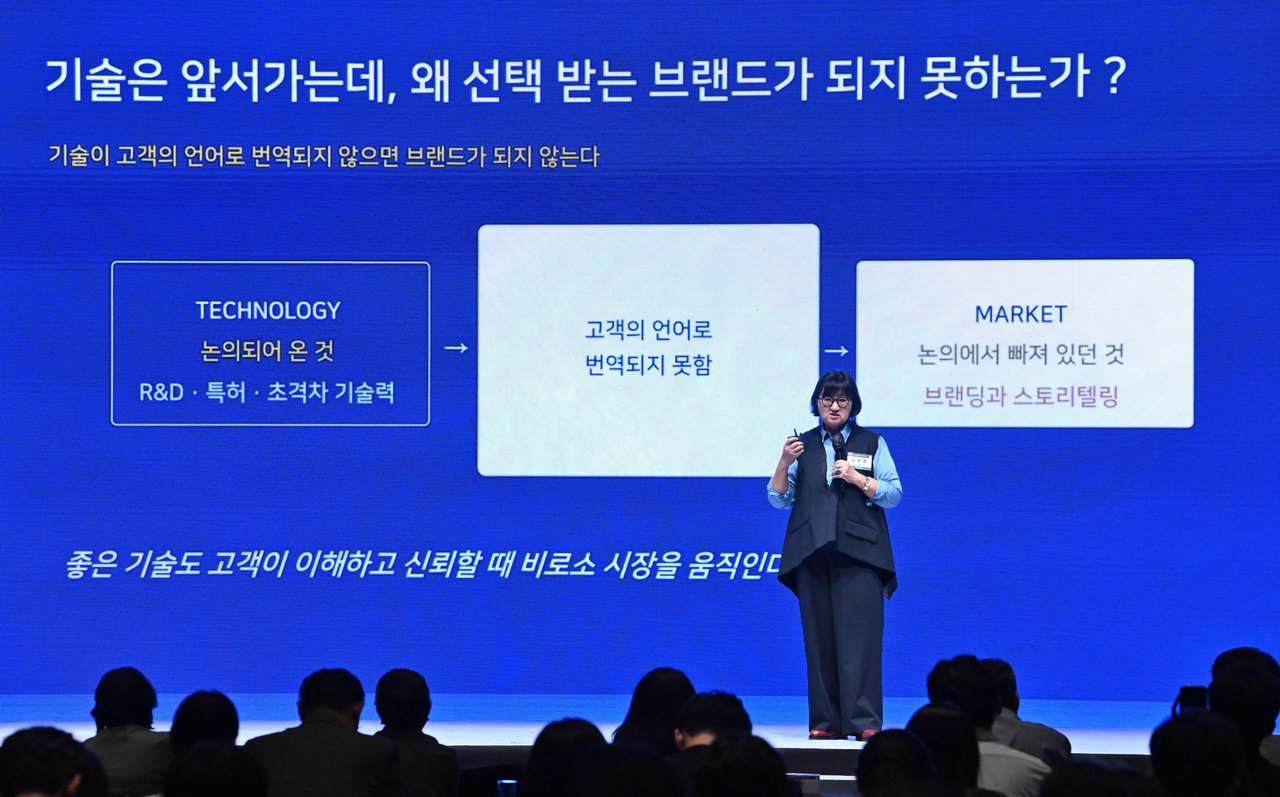
Noh also called for a shift away from supplier-driven messaging that leads with product performance and efficacy, arguing that AI already has the upper hand when it comes to product descriptions. "What matters to consumers is not 'do I want to buy this' but 'do I want to have this,'" she said. "Wanting to buy something means thinking about value and function, but wanting to have something goes beyond money — it's something you want no matter how expensive it is."
She used the restaurant experience as an example. A dish has to make guests want to photograph it before it can win in a competitive market, she said. Simply leading with taste is not enough to build a brand — restaurants must also consider who customers want to bring with them and what kind of experience they want to share with others.
Noh also highlighted how consumers are using AI in their purchasing process. She said consumers now ask AI for recommendations, then verify those recommendations on SNS before making a final choice, making the real experiences that customers share online more important than ever.
"Brands need to speak in the language of consumers," she said. "Those accumulated experiences add up, and their sum total is what becomes the brand." She added that brands stuck in the middle ground "will not get recommended by AI."
Understanding consumers also applies to identifying the right competition, she said. Noh shared an anecdote from her time at CJ Group, when she was involved in developing a frozen pasta product.
"I asked an R&D employee what the last pasta they had eaten was, and they said it was a competitor's frozen pasta," she said. "But customers who buy frozen pasta are people who enjoy pasta at restaurants too, so the right approach is to eat pasta at a Michelin-starred restaurant and raise the quality to that level — that is what increases the odds of success."
She added that "people who build brands need to think like screenwriters," saying they "need to understand a great many things — how our brand is used, what food goes with it, even who the customer's boyfriend might be."
Noh also offered different prescriptions for established brands and new ones when it comes to building a brand strategy in the AI era, cautioning that reflexively overhauling an old brand is not always the answer.
"When people think about brand renovation, the first question they ask is always 'what do we fix first,'" she said. "An established brand has accumulated time on its side, so you need to think about why customers loved your brand and actively leverage that trust as an asset."
For new brands, she advised keeping the target customer and market narrow and clearly defined. After building product quality, she said, companies should concentrate their marketing through SNS and other channels to capture consumer attention from the very start.
Noh closed by saying the answers to branding strategy are found on the ground. No matter how far AI advances, she said, it cannot answer questions about each individual's finely differentiated tastes.
She said the success of the Market O Real Brownie, which she developed during her time at Orion, also came down to fieldwork. "The best thing I did when we made the brownie a success was meeting the in-store sales assistants at supermarkets, giving them a briefing and sharing a meal with them," she recalled. "Sales assistants are the people who recommend snacks the most, so I focused on them."
"Observations like 'who will sell my product,' 'who will talk about my product,' and 'what forces are driving this society' — these are the most important things in branding, no matter what era comes," she said.
jeongwan@heraldcorp.com