[Part 1: The lives of old, poor women] ③
'Bacchus grandmas' haunting the streets of Jongno 3-ga
Surviving on illicit encounters
The 'last resort' for elderly women with no career to fall back on
Expert: 'Just a way to endure poverty'
[Editor's note] South Korea's elderly poverty rate is 2.7 times the OECD average. Older women, in particular, face harsher conditions than their male counterparts. For decades, they were expected to devote themselves to family caregiving and step away from careers outside the home. That break from the workforce eroded their professional identity and made financial independence difficult. In old age, they are left worrying about daily survival. This series examines how the sacrifices women made in their youth are now being "billed back" to them in the form of poverty and insecurity.
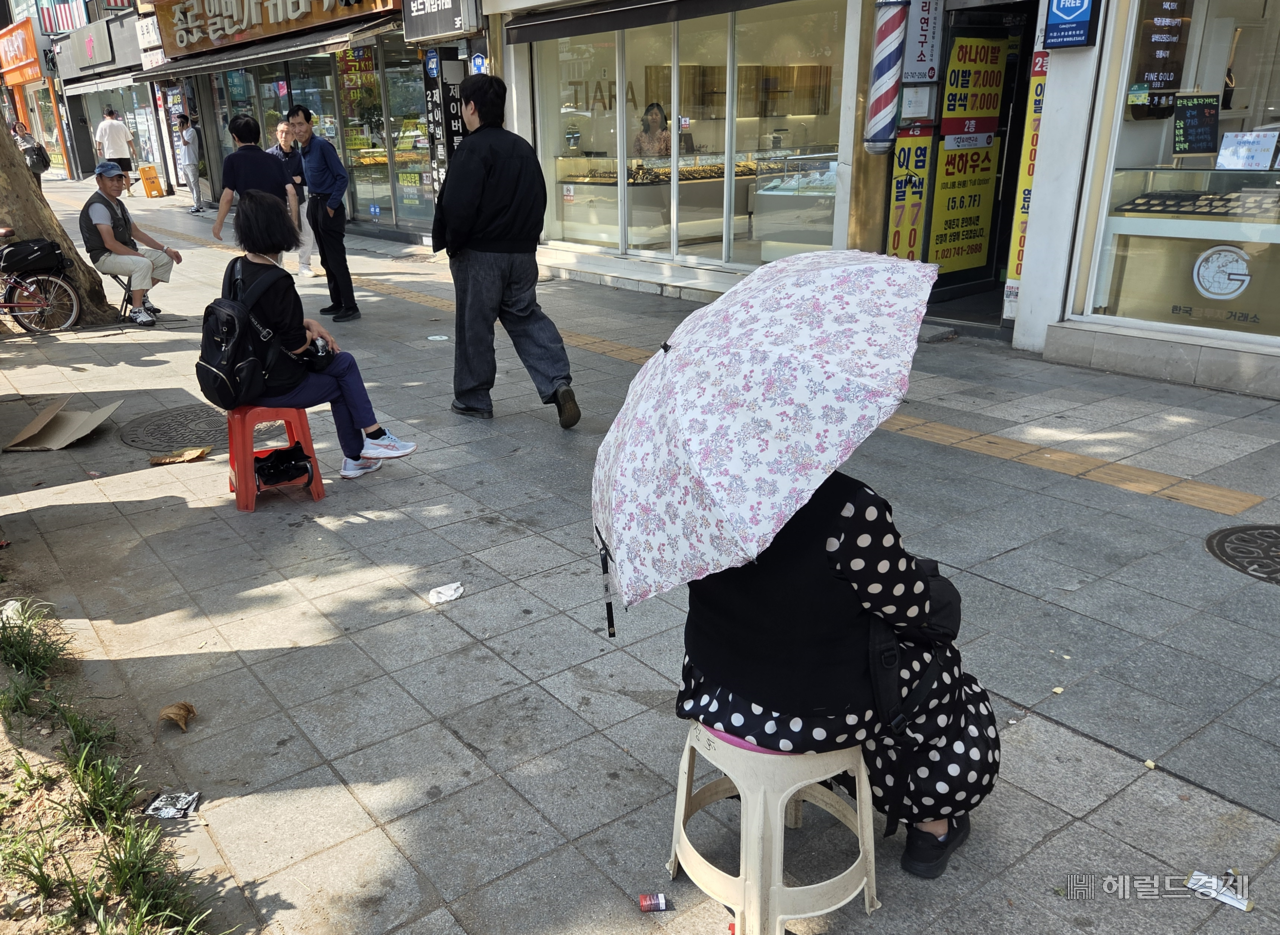
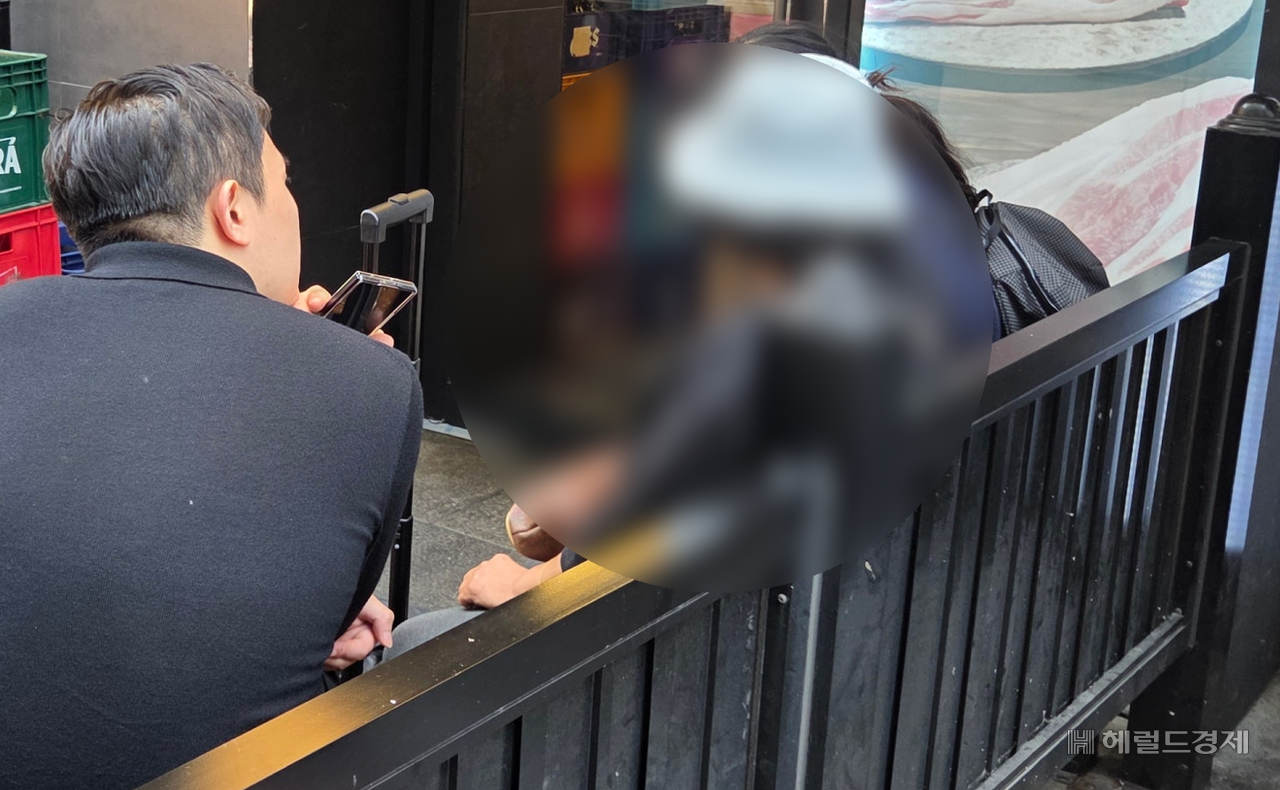
At Jongno 3-ga Station in Jongno-gu, Seoul, on the morning of Sept. 22, a reporter stepped out of Exit 1 to find elderly women seated in plastic chairs at intervals along a 50-to-70-meter stretch of pavement. They watched passing men with fixed stares. Beneath wide-brimmed hats and parasols, their faces were heavily made up.
These women are known as "Bacchus grandmas" — a term for middle-aged and elderly women who sell sex to older men, primarily in the Jongno area of Seoul. The name traces back to the 1970s, when women in places like Sajik Park would approach elderly men by offering them Bacchus energy drinks and similar beverages.
When reporters approached and asked what they were doing, the women replied in near-unison that they were "waiting for someone." When pressed — "Who are you waiting for?" and "Are you working here?" — one woman snapped, "Bad luck from the moment I woke up," picked up her chair and walked away.
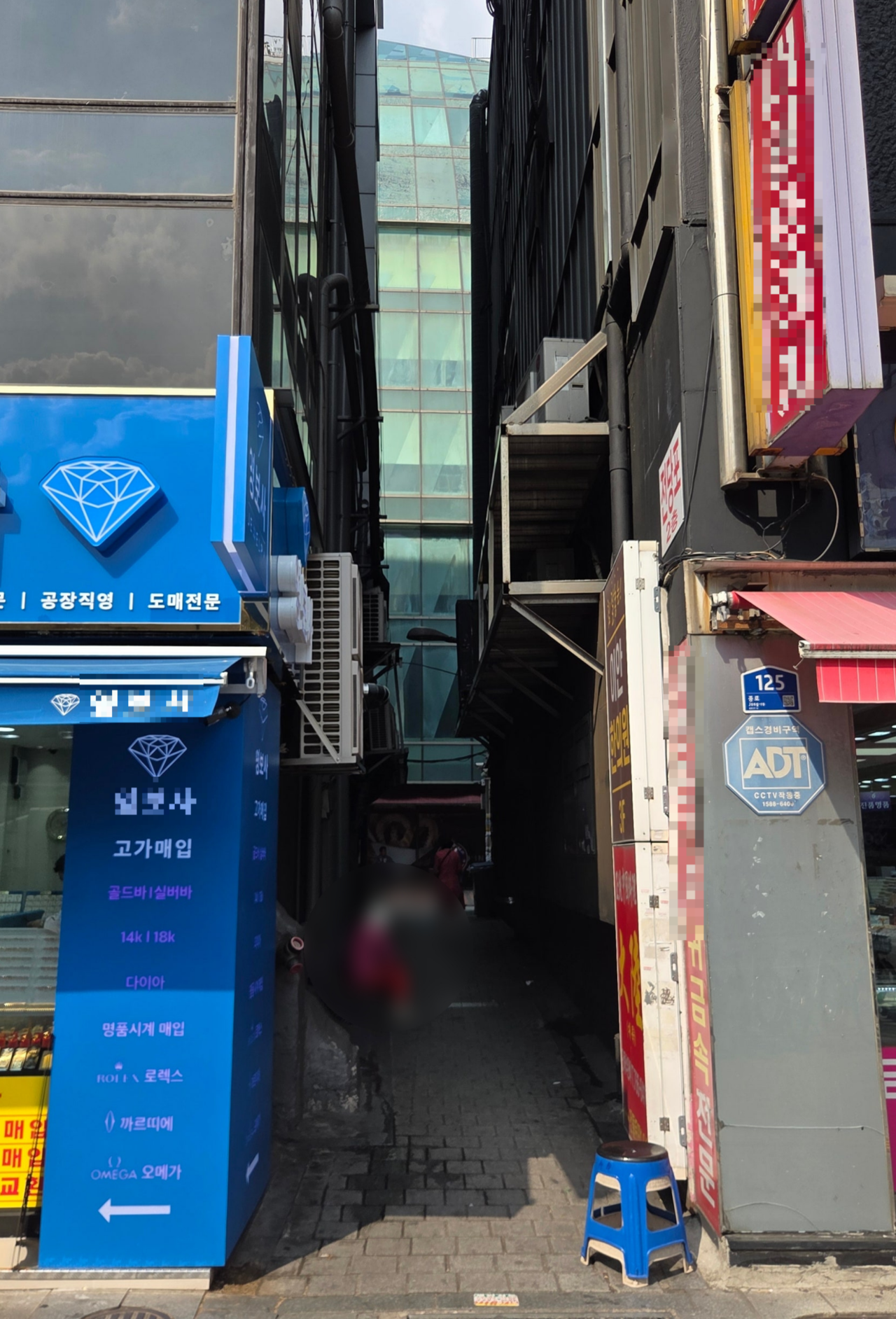
Over two days beginning Sept. 22, reporters encountered about 10 Bacchus grandmas in the area. One woman, identified only as A, said she comes to Jongno every day and that others around her have been doing the same thing there for years. She described her work as "dealing with old men" and said the women come from all over — Seoul, Paju, Suwon. "We earn just enough to eat for the day," she said.
The minimum charge for a single encounter is 50,000 won ($37). Recently, however, some men have been offering as little as 30,000 or 20,000 won, as women competing for fewer clients have begun lowering their prices. After deducting 10,000 won for a motel room, a woman is left with roughly 10,000 to 20,000 won.
Merchants at the jewelry shops lining the surrounding streets have filed repeated complaints about the illegal prostitution. A Jongno Police Station official said the station conducted one crackdown this year, adding that officers check the scene when complaints come in and take action if illegal activity is confirmed.
Moon Chun-hee, who has 'done it all'
Moon Chun-hee (pseudonym, 55) told reporters she did not start out doing this kind of work. She finished middle school and married at 25, but divorced four years later after her husband became consumed by gambling and horse racing. Since then she has supported herself alone, taking whatever work she could find — factory assembly, dog-meat restaurants, bread sales, fruit and vegetable vending. There was almost nothing she had not tried.
Her last job was cleaning a guesthouse. A serious traffic accident in 2024 left her unable to work. She spent about a month in hospital and continued rehabilitation treatment for some time afterward. When she rolled up her right sleeve, a vivid red surgical scar ran along the stitched flesh of her arm.
After the accident, she chose Jongno 3-ga as her new workplace. She earns money there one day at a time. Asked about her monthly income, she said simply, "Less than 600,000 won. Business is bad right now." Some days she earns nothing at all. On the day reporters visited, she had been at her spot since 10 a.m. and had not seen a single client by 5 p.m.
Moon's largest source of income is the roughly 800,000 won ($589) she receives each month as a basic livelihood security recipient. When asked whether she turned to off-the-books work to avoid losing that benefit, she nodded and said, "Everyone here is on basic livelihood support." Years of irregular, informal employment left her with only one or two years of contributions to the national pension. She has no savings. Her only real asset is the 25 million won ($18,400) jeonse deposit on her apartment in Cheongnyangni, Seoul.
Her street earnings combined with the government benefit come to about 1.4 million won a month. Most of that goes to her elderly mother, who is in her 70s and lives alone. Moon sends her about 600,000 won a month to cover hospital visits for her mother's failing eyesight and general living expenses. After deducting 62,000 won in transportation costs, the rest goes toward her own daily needs.
"I have no money. Nothing saved," she repeated. "My body hurts so much — I want to do this a few more years and then stop. Getting old makes it hard." When reporters returned to Jongno 3-ga the following day, Tuesday, Moon was back at her usual spot, dressed exactly as she had been the day before.
![A reconstructed breakdown of Moon Chun-hee's (pseudonym) income and expenses. [Created with AI]](https://wimg.heraldcorp.com/news/cms/2026/09/30/9/news-p.v1.20260929.168ba88056c8452893d2d7f769e6da0d_P1.png)
Moon is in her mid-50s, yet she is already far removed from the formal job market. She has had to support herself since she was young, but her options were always narrow — factories, restaurants, street stalls, whatever she could get her hands on at the time. None of it built a career or offered stability.
Women who leave the labor market and try to return often find they cannot draw on their previous experience and end up in low-wage, part-time work. They rarely have the opportunity to enroll in public pension schemes such as the national pension. The poverty they face now was not the result of any single decision. Experts say elderly women who scavenge for scrap cardboard and those who sit on Jongno's streets waiting for clients are caught in the same trap.
Kim Nan-ju, a research fellow at the Korean Women's Development Institute, said the poverty of elderly women should not be viewed simply as a present-day employment problem. "We need to look at their labor market experience across their entire lives, alongside the retirement income security system," she said.
So Jun-cheol, an academic research professor at Chonnam National University, said the work elderly women do "is not so much a path out of poverty as a way of merely enduring it."
newday@heraldcorp.com
20ki@heraldcorp.com
jookapooka@heraldcorp.com
kido@heraldcorp.com