President Lee's mention of insurrection special task force raises prospect of remaining insurrection cases as first target; others see economic crimes taking center stage
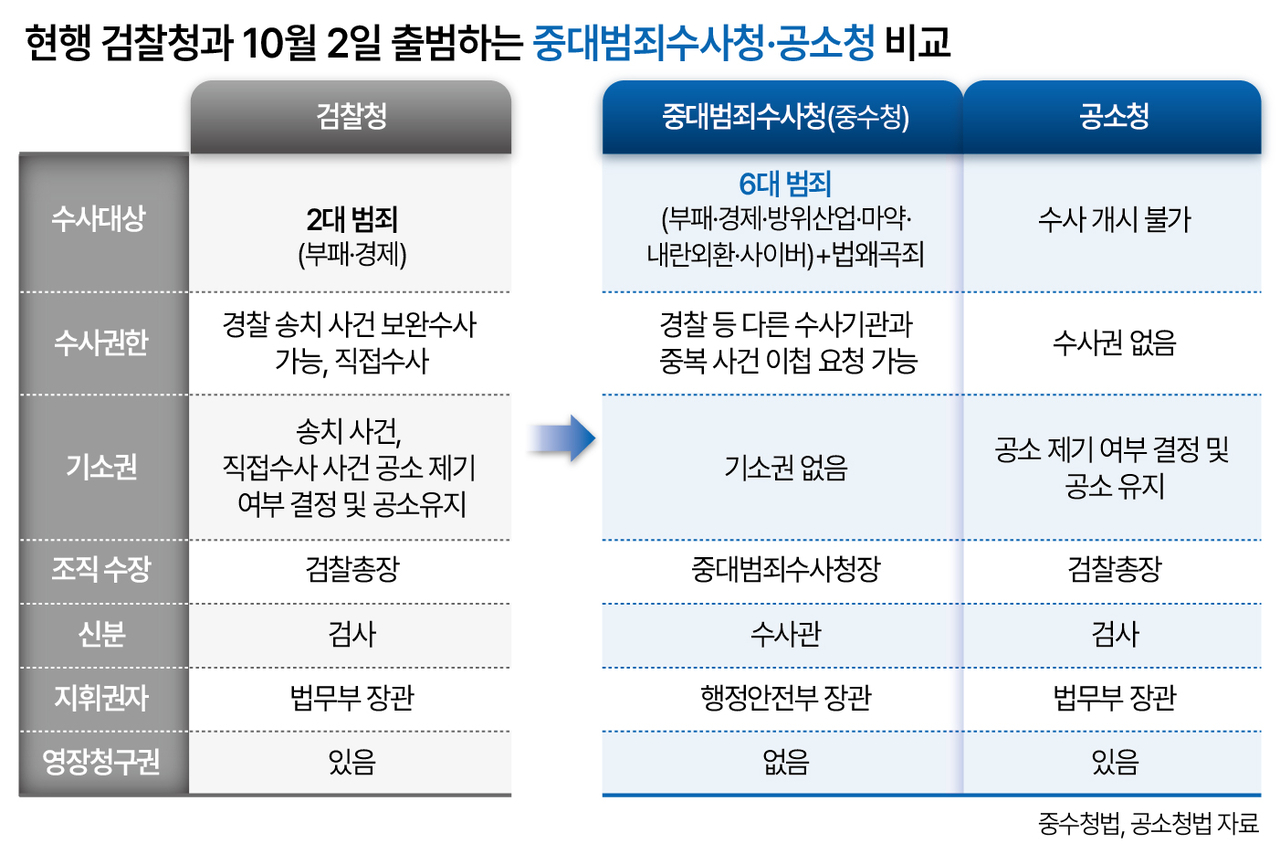
The Prosecution Service will be dissolved Friday, with its powers split between two successor bodies, as the newly created Serious Crime Investigation Agency takes over the investigation of major crimes. The Prosecution Service, which opened in 1948, will disappear after 78 years.
Because the agency is being established to fill the void left by the Prosecution Service's abolition, the central question is whether it can build sufficient investigative capacity to handle serious crime. The reality, however, is that the legal community is more worried than hopeful: the agency must launch without a permanent director and with a shortage of experienced investigators. There are also voices warning it could become a second iteration of the Corruption Investigation Office for High-ranking Officials — a body that, more than five years after its own launch, is still widely seen as having produced little tangible results.
With performance pressure inevitable, the legal community expects the agency's first case to serve as the true measure of how it will operate going forward. Some observers predict it will make its mark in economic and corporate cases, including price-fixing and other unfair-trade matters.
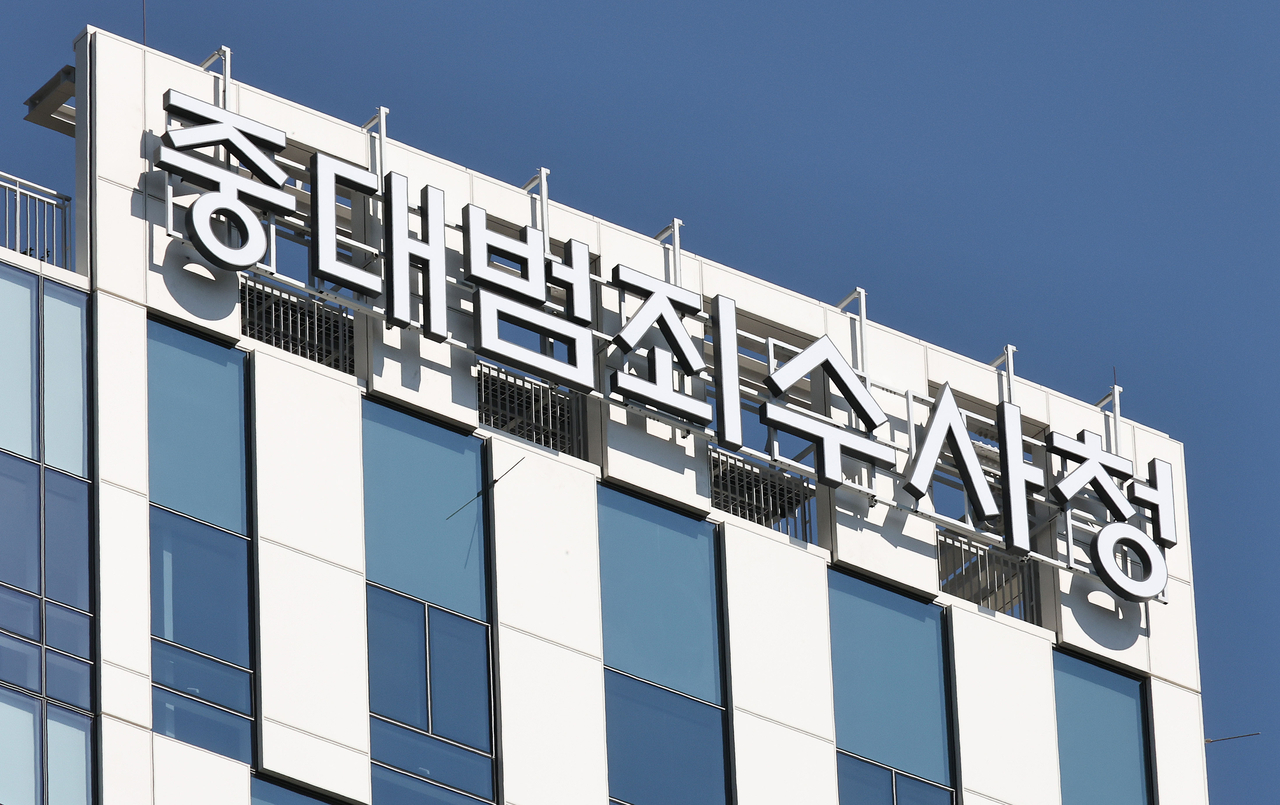
According to the Ministry of Interior and Safety, the Serious Crime Investigation Agency and the Seoul Metropolitan Serious Crime Investigation Agency are set to launch Friday at the Renaissance Square building on Euljiro in Jung-gu, Seoul. The agency will operate under a six-regional-office structure alongside the Seoul office — which covers Seoul, Incheon, northern Gyeonggi Province and Gangwon Province — with additional offices in Suwon (southern Gyeonggi Province), Daejeon (South and North Chungcheong provinces, Daejeon and Sejong), Daegu (Daegu and North Gyeongsang Province), Busan (Busan, Ulsan and South Gyeongsang Province) and Gwangju (South Jeolla Province, Gwangju, North Jeolla Province and Jeju).
After its launch, the agency will handle investigations into six categories of crime — corruption, economic offenses, narcotics, defense industry violations, insurrection and cybercrimes — as well as the crime of perverting the law. Three bureaus will be established at headquarters: an Economic Crime Investigation Bureau, an Anti-Corruption Investigation Bureau and a Forensic Science Bureau. The Economic Crime Investigation Bureau will house units covering economic crimes, financial crimes, antitrust and criminal proceeds, while the Anti-Corruption Investigation Bureau will include units for anti-corruption and narcotics. The Forensic Science Bureau will feature a digital investigation unit alongside a new AI and Virtual Assets Analysis Division. As AI-assisted crime continues to spread, the division will handle matters related to AI-enabled offenses and the tracking and analysis of virtual assets.
Among the regional offices, the Seoul office — set to play the same central role in serious-crime investigation that the Seoul Central District Prosecutors' Office currently plays — will have six investigative bureaus covering economic crimes, finance, antitrust, narcotics, anti-corruption and advanced technology. The Seoul office will also establish a special investigations unit for crimes against vulnerable members of society, which will handle supplementary investigations requested by the Prosecution Agency in cases initially investigated by other agencies. Other regional offices will run equivalent functions at the team level.
Inside and outside the legal community, attention is focused on the first case the agency will actively pursue. While it will administratively inherit unresolved cases from the old system, the nature of the first case it takes up under its own structure is seen as a bellwether for the institution's future. Some observers suggest that because President Lee Jae-myung recently mentioned a special investigation task force for the insurrection case, the remaining insurrection matters could become the agency's first case.
Others, however, expect a relatively apolitical matter to take that role. The reasoning is that, given the controversy surrounding the agency's launch alongside the Prosecution Service's abolition, demonstrating raw investigative credibility should come first. Economic and financial cases are most frequently cited as the likely candidate. The joint financial and securities crime investigation unit and the virtual assets crime investigation unit of the Seoul Southern District Prosecutors' Office — long nicknamed the "Grim Reaper of Yeouido" — are expected to have their roles taken over by the Seoul office's joint financial crime investigation unit and virtual assets crime investigation unit. Personnel from related agencies, including the Financial Services Commission, are also expected to be seconded in a joint task force arrangement. However, prosecutors from the Prosecution Agency, which launches alongside the new agency, will not be permitted to intervene in investigations.
There is also a view that unfair-trade cases the Seoul Central District Prosecutors' Office has continued to pursue could become the first case — or at least a core investigation — for the new agency. The fair trade division of the Seoul Central District Prosecutors' Office has been investigating price-fixing cases involving sugar, flour, starch syrup, oil and petrochemical products. President Lee has on occasion offered rare praise for prosecutors over their work on those investigations.
Still, observers expect the shape of the first case to remain unclear for some time, as staffing and infrastructure are not yet in place. Kim Ji-yong, a former prosecutor turned attorney, has been nominated as the inaugural director, but no confirmation hearing has been scheduled. The agency's total authorized headcount is 2,874; a first and second round of special appointments for investigators drew 1,761 and 201 applicants respectively. Several figures are transferring to the new agency, including Shin Jun-ho, who heads the confirmation hearing preparation team and previously served in the Prosecution Service, and Im Eun-jeong, chief of the Seoul Eastern District Prosecutors' Office. Even if all applicants are appointed, the agency will launch at just 68.3 percent of its authorized strength.
Because building its own criminal justice information system from scratch is not feasible in the time available, the agency plans to use the Korean National Police Agency's system initially. Core functions for operations and case management will be prioritized at launch, with additional case-processing capabilities to be rolled out in stages through the end of the year.
Physical conditions are also not yet fully in place. The Ministry of Interior and Safety's agency launch preparation team issued emergency procurement notices from Sept. 18 through Monday for electrical, fire safety, architectural and mechanical works at headquarters, the Seoul office and each of the regional offices. Infrastructure construction is expected to begin in earnest after the agency opens Friday.
bell@heraldcorp.com