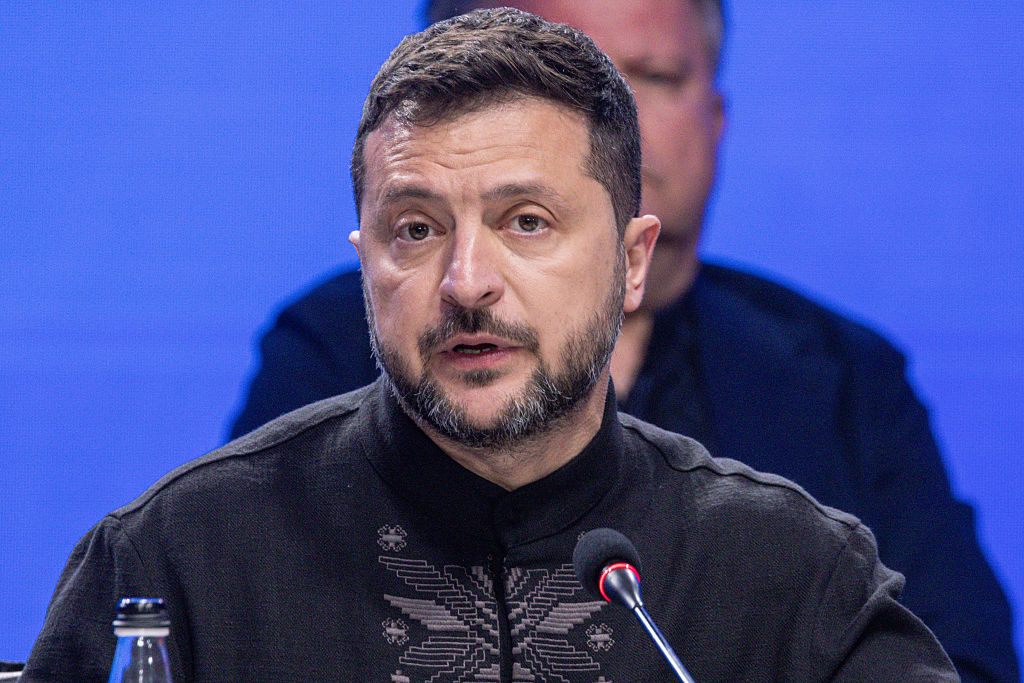
Kang Ryun-kwon, head of management planning, holds press briefing in Darwin
Investment decision in Ganwei LNG terminal disclosed
China facility set to become company's third overseas LNG terminal after North America and Australia
Strategy aims to build value chain spanning upstream to downstream
'Economy of options' cited as core LNG business approach
'Global LNG market at 400 million tons — projected to double'
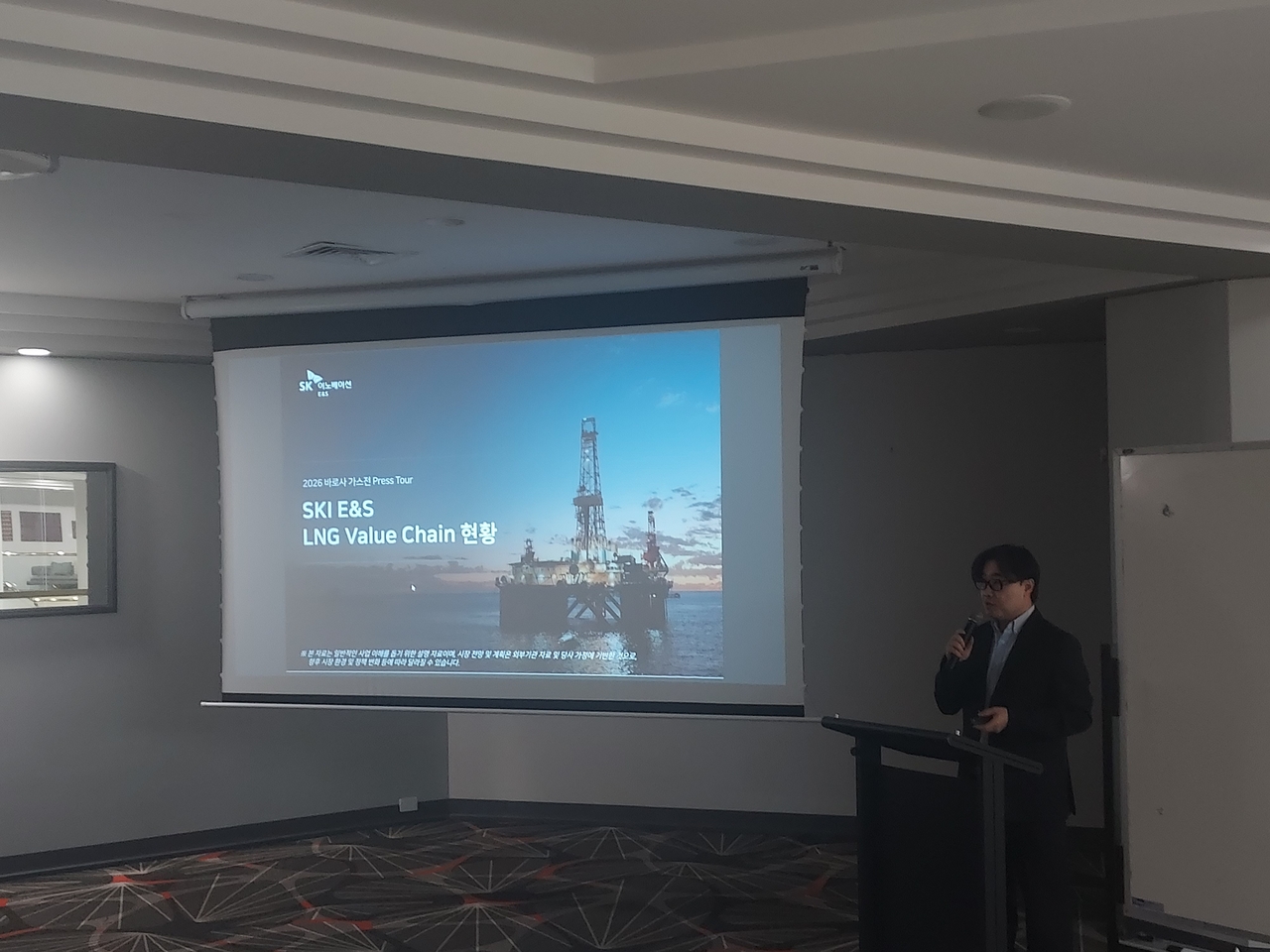
SK Innovation E&S is pursuing a stake in a Chinese liquefied natural gas terminal expected to begin commercial operations next year, the company's head of management planning said.
Kang Ryun-kwon made the announcement Tuesday (local time) at a press briefing at the Hilton Darwin hotel in Darwin, Australia, where he outlined the company's LNG business plans. The terminal in question is the Ganwei LNG Terminal, a joint project with Japan's JERA and China's Huadian Jiangsu.
SK Innovation E&S currently operates the Freeport LNG Terminal in North America and the Darwin LNG Terminal in Australia. Once the Ganwei terminal comes online, the company will hold three overseas LNG terminals in total. LNG terminals sit at the upstream end of the LNG business portfolio, liquefying natural gas produced from gas fields. Strengthening the upstream segment allows the company to secure a stable LNG supply.
Beyond upstream, SK Innovation E&S is also building out its midstream (trading and transportation) and downstream (power generation) capabilities across the LNG value chain.
On the downstream Yongin project, Kang described it as a district energy venture in which electricity is supplied to Korea Electric Power Corporation and heat is provided to SK hynix. He said extending the supply network from the existing Wirye and Hanam new towns to the Wangseok district in Namyangju would generate regional synergies, and added that the current supply capacity of 150,000 households is expected to roughly double going forward.
Kang said the company's LNG strategy is guided by what he called an "economy of options." "Holding multiple options across LNG procurement, transportation and downstream means the number of possible combinations grows exponentially, and our ability to respond to market shifts improves accordingly," he said.
SK Innovation E&S is expanding its LNG business because the market is growing rapidly. With power demand surging amid the expansion of AI infrastructure, LNG offers reliable power generation and lower carbon emissions compared with conventional fossil fuels.
"The global LNG market stood at around 200 million tons in 2013 and grew to 400 million tons in roughly a decade," Kang said. "Forecasts suggest it will reach 800 million tons — doubling again — within the next 10 years." He added that South Korea, Japan and Taiwan drove the market's early growth, followed by rapid expansion in China and Europe, with Southeast Asia expected to lead demand going forward.
Asked about the risk of a drop in LNG demand, Kang said a sharp decline would most likely amplify volatility in spot market prices, but cautioned that falling spot prices are not necessarily a disadvantage for LNG operators. "SK Innovation E&S holds downstream assets in the form of power plants, and a price decline would translate into lower input costs," he said.
yeongdai@heraldcorp.com