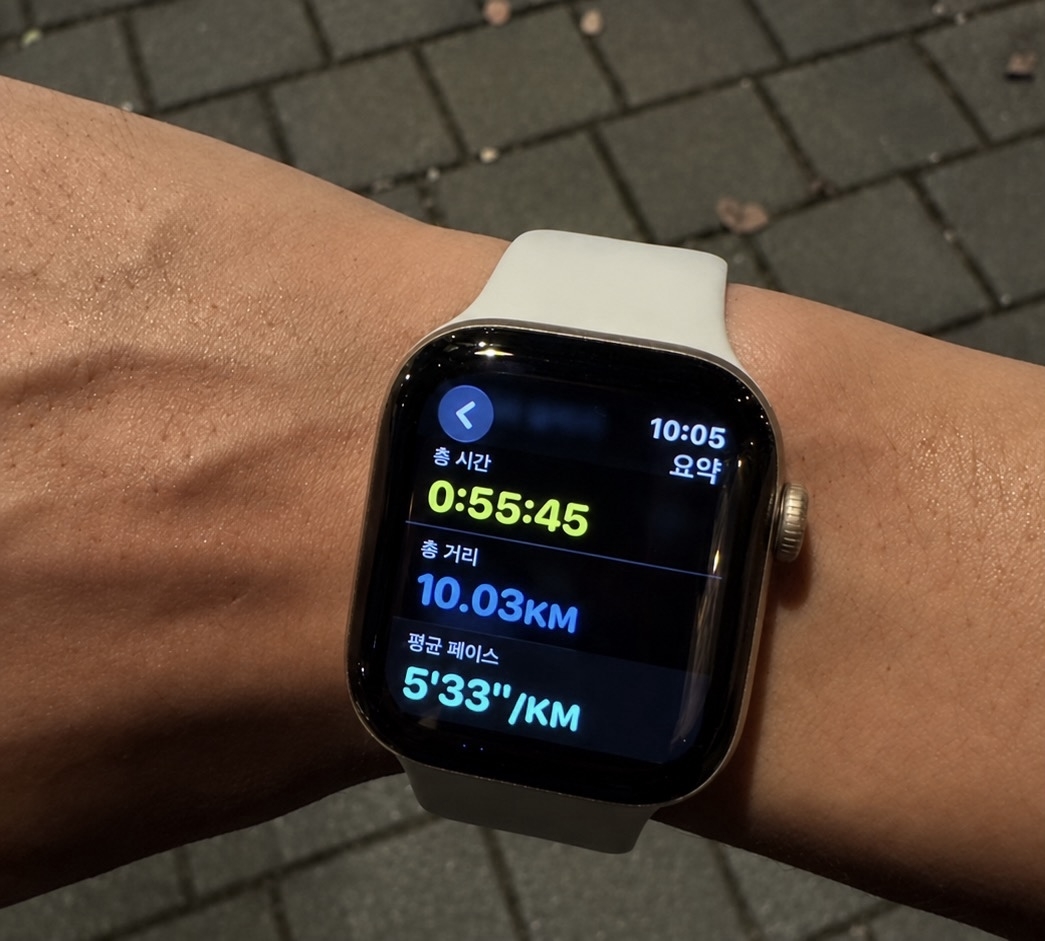
At Ilsan Lake Park in Goyang, Gyeonggi Province, on Tuesday, the Apple Watch 12 rated this reporter's condition an 8 out of 10. Ready to run. As the pace gradually picked up past the 2-kilometer mark, the watch chimed: "Second split. Split pace. Five minutes per kilometer." After 10 kilometers, the display read 181 beats per minute. Breathing was labored.
Time spent with the Apple Watch 12, which officially launched Friday, was full of surprises — and a chance to feel firsthand what outlets including CNN have called "the most impressive wearable device." The standout feature is a readiness score that synthesizes multiple health indicators into a single daily metric.
The readiness score is a daily assessment of the body's condition. The Apple Watch 12 analyzes a user's recent activity, training load, vital signs and sleep score to provide an outlook on how the body is likely to feel the following day.
The score draws on training load, sleep score and vital signs — including heart rate, heart rate variability (HRV), respiratory rate, wrist temperature and blood oxygen levels — to give an overall picture of the day's condition. After at least seven days of wear to establish a personal baseline, the watch delivers a daily score on a scale of 0 to 10.
The scale breaks down into four bands: 0–1 signals "recovery needed," 2–4 means "ease up," 5–7 indicates "ready," and 8–10 marks "peak."
The score lets users calibrate workout intensity for the day. A low score suggests rest or a lighter session; a high score is a cue to push harder than usual. Drilling into the sub-categories also reveals which factors — sleep, activity levels or others — are driving the day's condition, making routine health management genuinely practical.
With a score of 8, this reporter had no reason to hold back. At the 2-kilometer mark, the watch delivered a per-kilometer pace alert. After the full 10 kilometers, syncing with the iPhone's Fitness app pulled up a detailed breakdown: total workout time, distance, calories, average heart rate and pace.
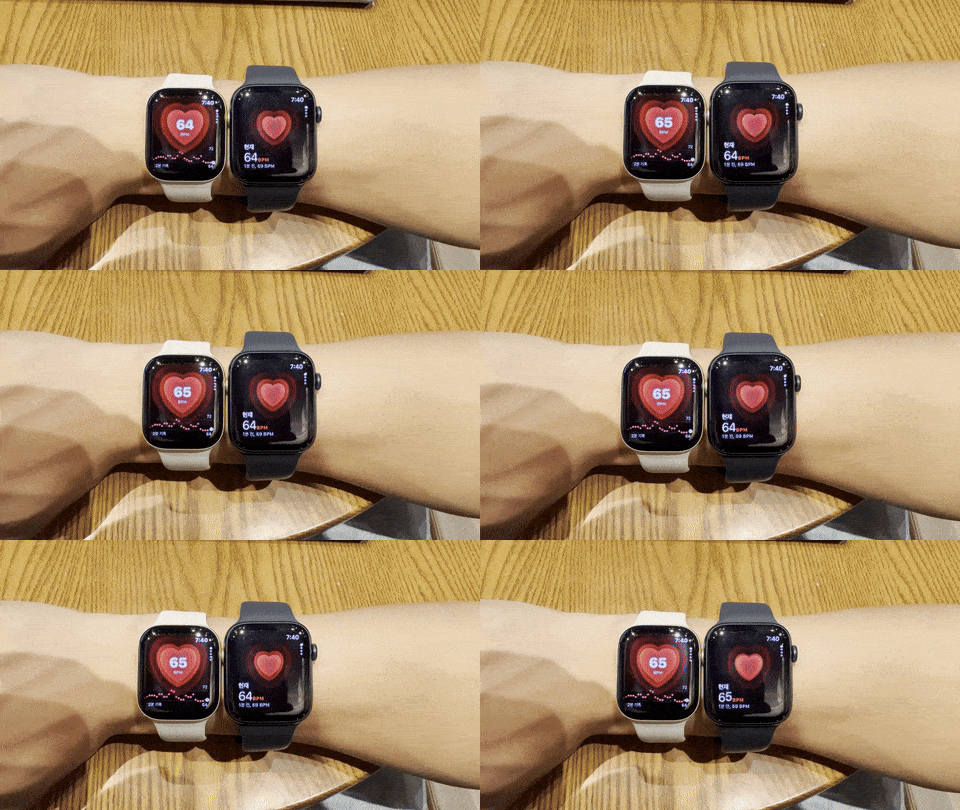
Particularly notable is the Apple Watch 12's heart rate measurement frequency — readings every five seconds, a 60-fold increase over the previous model. HRV, which captures the tiny time differences between heartbeats, is now measured 24 times more often as well. This reporter's heart rate climbed from an average of 132 BPM over the first kilometer to a peak of 180 BPM in the final stretch, then gradually settled over three minutes after the run ended — the entire arc visible at a glance.
Starting with the Series 12, Apple has also introduced "Recovery HRV," a new metric that uses HRV data to show short-term recovery status.
ko@heraldcorp.com