Staff transferring to the serious-crimes agency say they still don't know their assignments; the prosecution office prioritizes continuity with minimal personnel changes
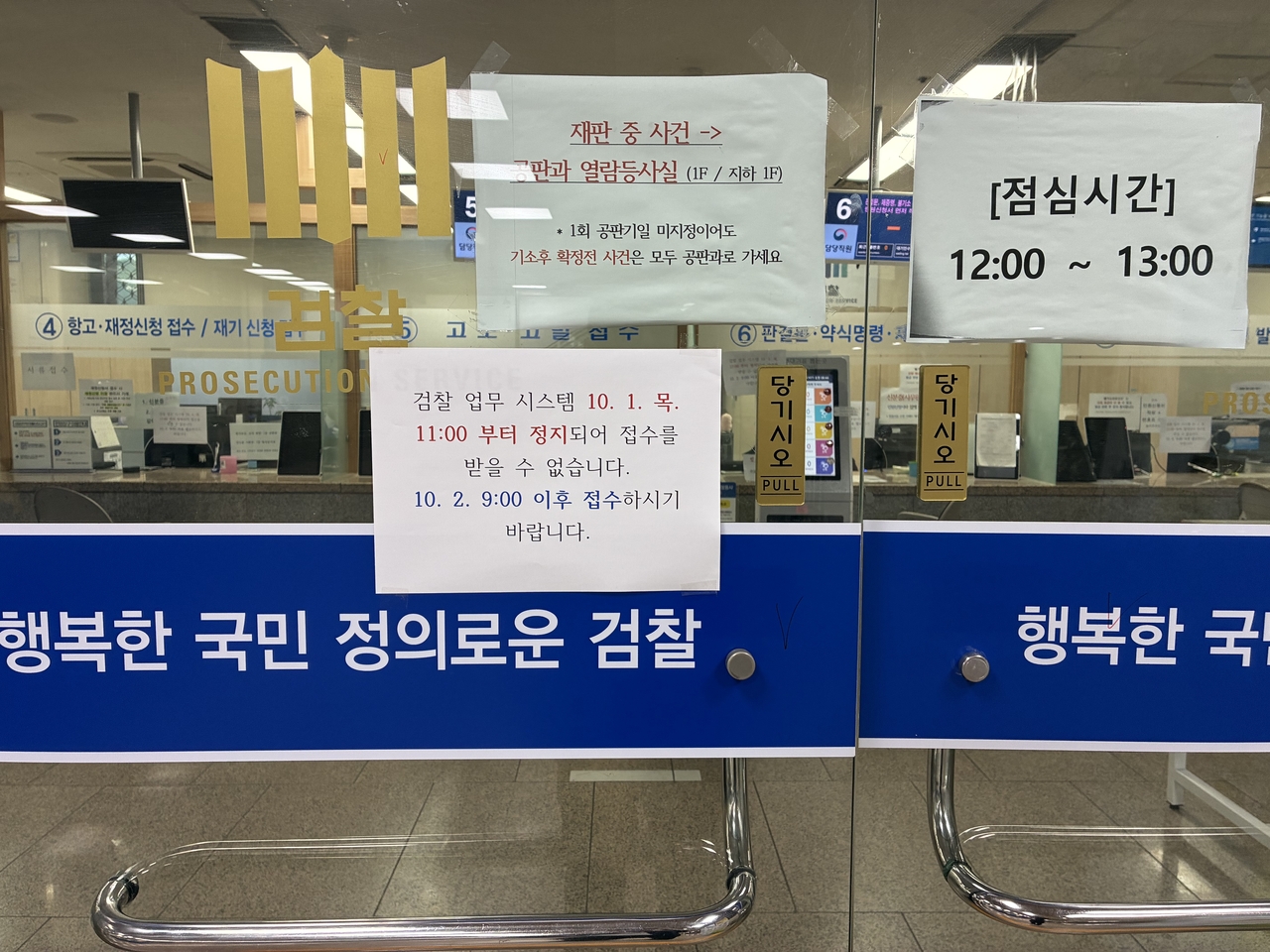
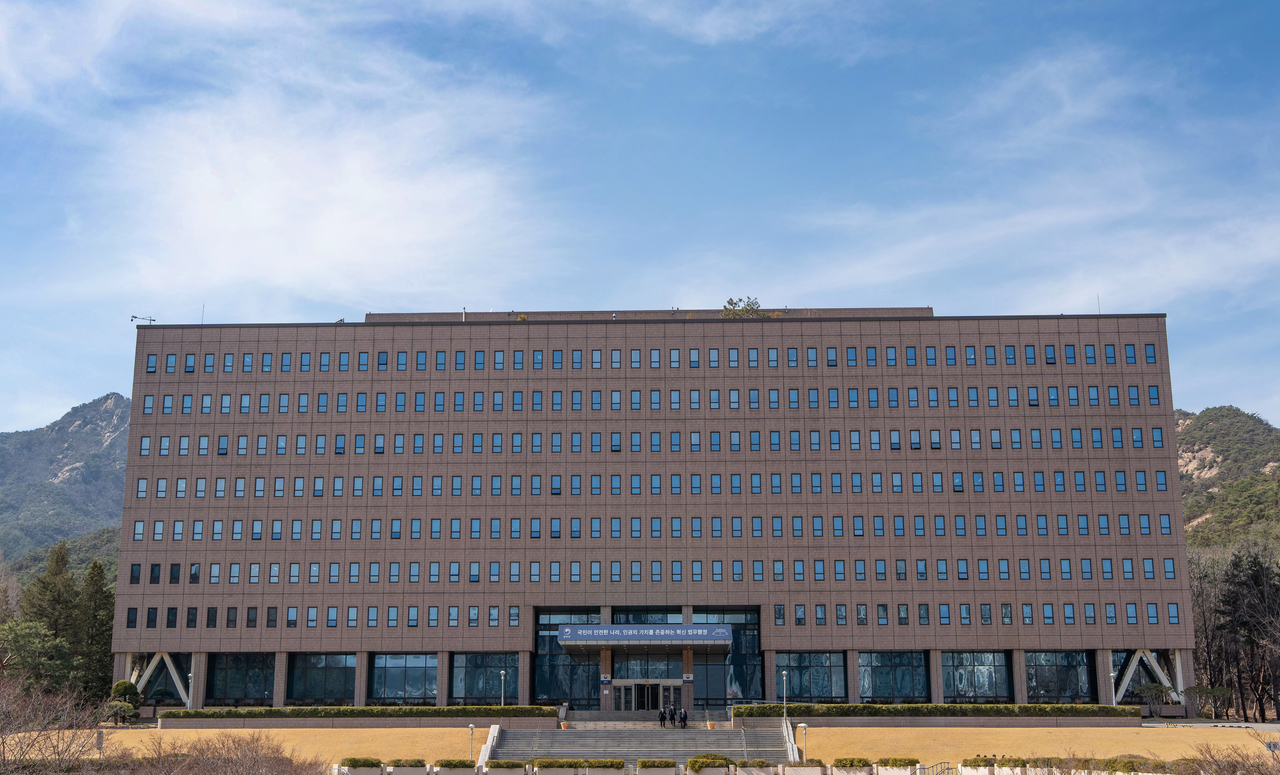
Starting Friday, the prosecution service will be abolished and replaced by two new bodies: the Serious Crimes Investigation Agency, known by its Korean acronym Jungsucheong, and a separate prosecution office responsible solely for indictments and trial proceedings. The Ministry of Justice has already issued personnel assignments for the new prosecution office, which will carry on the work of prosecutors without investigative powers, underscoring stability as its top priority. "Personnel changes have been kept to a minimum to ensure uninterrupted operations and organizational stability from the outset," the ministry said. The serious-crimes agency, however, has yet to secure even basic office infrastructure, fueling growing anxiety ahead of its launch.
According to legal sources, the Ministry of Interior and Safety's preparatory committee for the new agency posted an emergency tender notice Wednesday for the purchase of individual heating and cooling units for the agency's offices — with just two days to go before its Friday launch. The committee had also been posting tenders for electrical work, fire-safety systems and other office-environment projects since Sept. 18.
Observers say the agency is unlikely to operate at full capacity for some time, given that its physical infrastructure is far from ready even as it is set to begin work Friday. The agency's main office and the Seoul Metropolitan Serious Crimes Investigation Bureau will be housed in the Renaissance Square building in Jung-gu, Seoul. Together with the Seoul bureau — which covers Seoul, Incheon, northern Gyeonggi Province and Gangwon Province — the agency will operate through six regional bureaus: Suwon (southern Gyeonggi Province), Daejeon (South and North Chungcheong provinces, Daejeon and Sejong), Daegu (Daegu and North Gyeongsang Province), Busan (Busan, Ulsan and South Gyeongsang Province) and Gwangju (Gwangju, South and North Jeolla provinces and Jeju). All offices will be located in privately owned buildings.
Beyond the office situation, investigators set to work at the agency say they still have no idea what cases they will be assigned, and no personnel announcements had been made as of Wednesday. The agency is also launching significantly understaffed, with 1,962 of its authorized 2,874 positions filled — roughly 68 percent of its full complement.
The agency's inaugural director will also be absent at launch. The Ministry of Interior and Safety nominated attorney Kim Ji-yong, a former prosecutor, for the post, but hardliners within the ruling camp pushed back, labeling him a "pro-Yoon" loyalist and a "prosecutorialist." Cheong Wa Dae then launched an additional vetting process. Nearly a month after the nomination, no confirmation hearing has been scheduled.
Some observers expect the nomination letter requesting a confirmation hearing to be submitted to the National Assembly soon, given that a prolonged vacancy cannot be left unaddressed. President Lee Jae Myung weighed in Wednesday on social media, responding to a user who urged him not to appoint Kim as the agency's director. "The fact that prosecutor Kim Ji-yong's record is not pro-Yoon — if anything, anti-Yoon — has already been confirmed through media coverage," Lee wrote.
The new prosecution office, which will absorb most sitting prosecutors, is pursuing organizational stability by filling key posts largely in line with the existing structure. The Ministry of Justice on Tuesday announced personnel assignments for 192 prosecutors, effective Friday when the office launches. Park Cheol-woo, the current chief of the Seoul Central District Prosecutors' Office, was named the inaugural chief of the Seoul Central District Prosecution Office, and most other senior posts were retained by their current holders. A senior prosecutor was appointed to head a new unit that will review cases police decline to refer for prosecution.
The prosecution office, however, will also launch without a permanent head, much like the serious-crimes agency. The prosecution service has been operating under an acting system since former Prosecutor General Shim Woo-hyun stepped down last year. Lee Jeong-hyeon, chief of the Suwon High Prosecutors' Office, was recently appointed deputy prosecutor general and is currently serving in an acting capacity.
Even after the prosecution office opens Friday, it plans to wrap up cases that can be handled within a 90-day transitional period. The Supreme Prosecutors' Office said Tuesday it had held a meeting with the Korean National Police Agency and the serious-crimes agency's preparatory committee to discuss the transfer of cases that prosecutors had directly initiated investigations into. Cases that can be resolved during the transition will be completed in full, while those requiring transfer will be handed over after prior consultation.
Within and around the prosecution community, however, deep uncertainty persists about how a prosecution office stripped of investigative powers will actually function. The organizational structure was finalized only after considerable turbulence driven by hardline opposition within the ruling camp, and the authorized number of prosecutors is set to fall to roughly 80 to 85 percent of the current 2,292 — leaving the new office in a difficult position from the start. Many are saying they will simply have to wait and see how things unfold after the launch.
bell@heraldcorp.com