Korea Institute of Construction Policy marks 20th anniversary
'The next 20 years will bring even faster change'
Cooperation among government, academia needed for AI transition
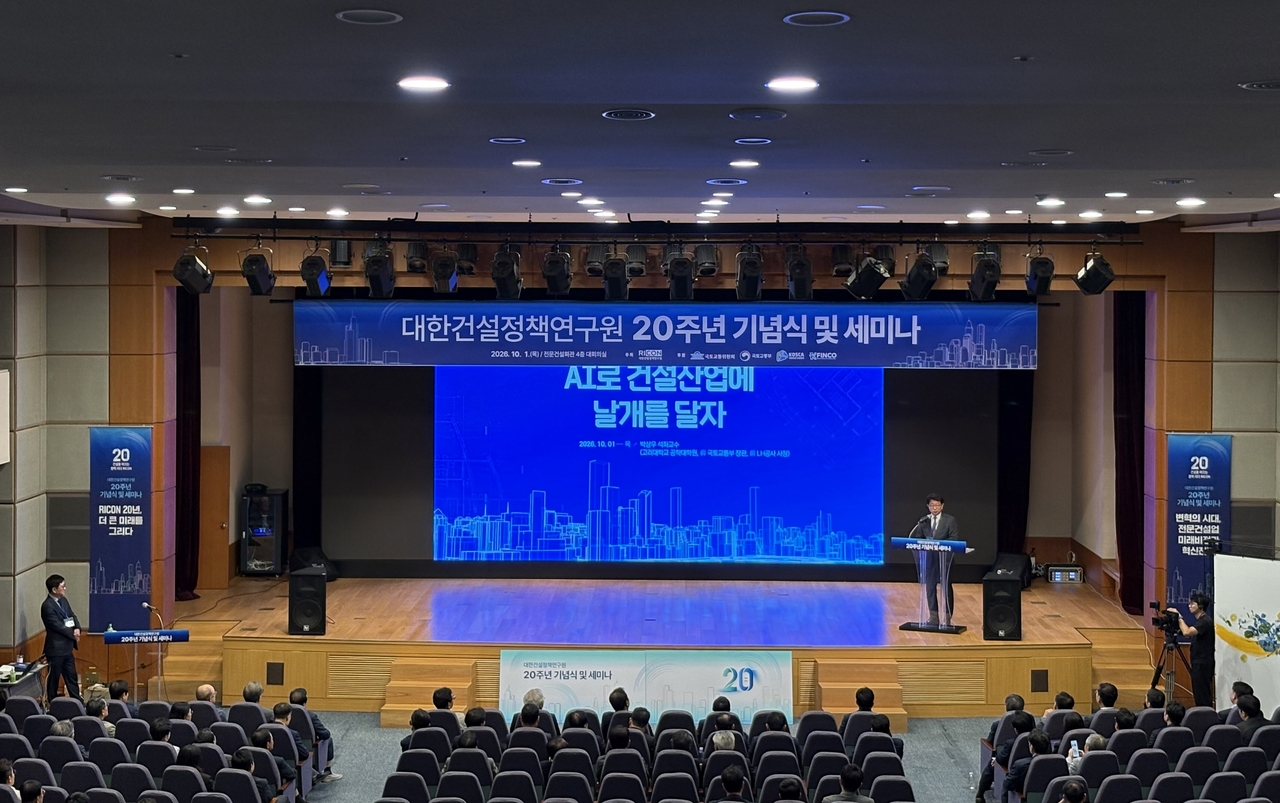
As AI and smart construction rapidly reshape the building industry, experts are urging the specialty construction sector to get ahead of the technological shift.
The Korea Institute of Construction Policy held a ceremony and seminar Thursday at the Specialized Construction Hall in Dongjak-gu, Seoul, to mark its 20th anniversary, discussing the structural changes facing the construction industry and the direction it should take. National Assembly Vice Speaker Park Deok-heum attended the event, along with officials from the Korea Specialty Contractors Association, the Specialty Construction Mutual Aid Association and other related organizations, as well as figures from academia and the research community.
In his opening remarks, institute President Kim Hee-su said the next two decades would bring change at a faster and more complex pace than the previous 20 years. "Digital transformation centered on AI and smart construction, structural shifts toward carbon neutrality, and a reorganization of production systems driven by demographic change will all accelerate," he said. He added that the institute would "proactively chart the direction for the industry, grounded in field-based expertise and objective, responsible research."
Former Minister of Land, Infrastructure and Transport Park Sang-woo, who delivered the keynote address, predicted that the spread of AI would generate new demand for the construction industry while also transforming production methods in design and construction.
"New demand on a scale we cannot even imagine today will emerge, and construction technology will advance alongside it," Park said. He drew a parallel with past innovations — fire, the wheel, the steam engine and the telephone — each of which found real-world application through the construction industry, arguing that AI would similarly present the sector with new demand and new challenges. He cited data centers and power infrastructure for large-scale computing as prime examples.
Park also pointed to the potential for AI to transform design and construction methods, noting that the technology could rapidly generate multiple design alternatives and expand its role in construction-phase applications such as unmanned site management.
He called for cooperation among the government, academia and research institutions to drive the AI transition. He urged the government to build a construction big data platform, streamline regulations and foster a construction technology ecosystem, while asking universities to develop interdisciplinary talent and establish technology verification frameworks.
Park also called on the institute to serve as a compass for the industry. "Take the lead in monitoring the changes brought by AI, digital transformation and the new world emerging around us," he said. "The institute must act as a future radar for the specialty construction sector, constantly alerting the industry to how the world is changing."
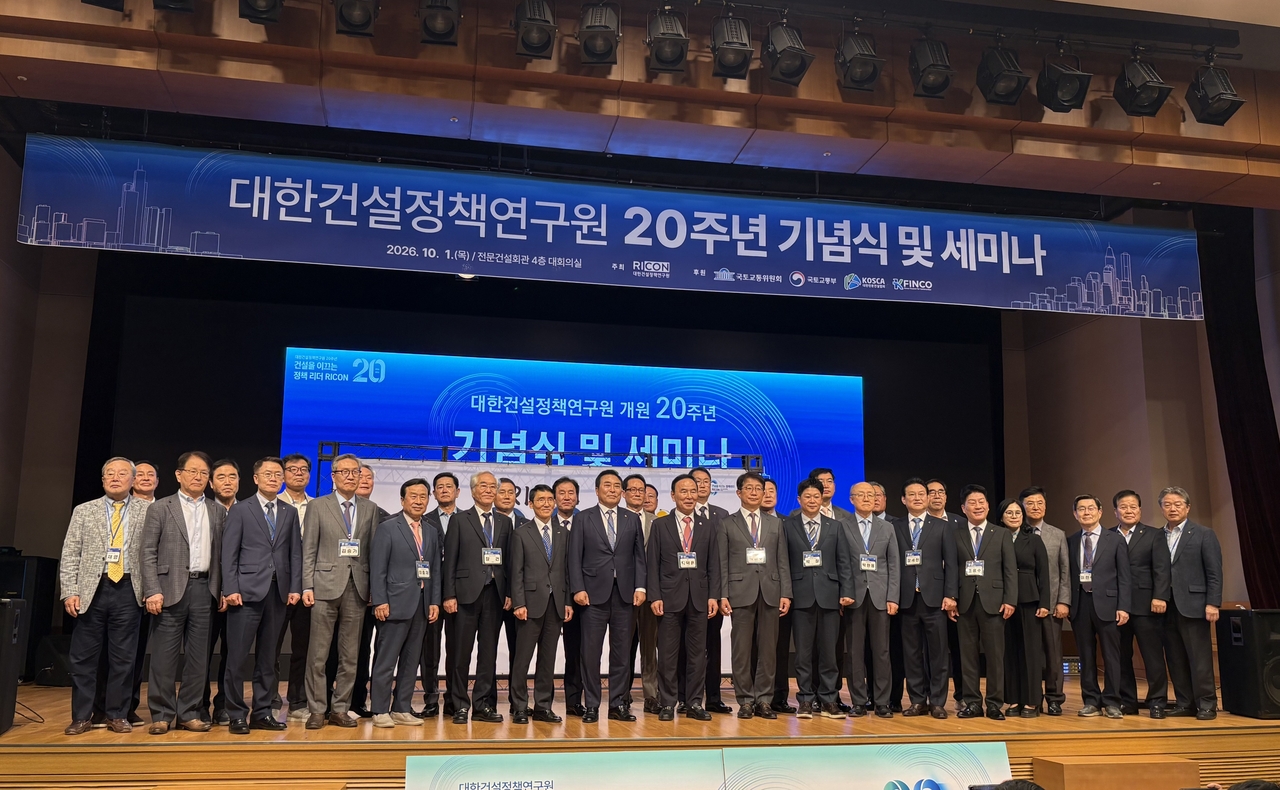
The seminar that followed featured presentations by Park Seon-gu, head of the institute's economic and financial research division, and Kim Tae-jun, head of its new growth strategy research division.
Park presented a paper titled "Innovation Strategies for the Specialty Construction Sector Amid Construction Market Changes," outlining structural shifts facing the industry — prolonged low growth, rising construction costs, project financing uncertainty and a contraction in regional construction markets. He then diagnosed pressing challenges including labor shortages and a widening digital transformation gap, and proposed five innovation strategies for sustainable growth in the specialty construction sector.
The second presentation, titled "How AI and Smart Construction Will Transform the Future of Specialty Construction," saw Kim define the advent of artificial general intelligence, industrial automation and demographic reversal as "irreversible changes" and lay out response strategies for the sector.
A panel discussion followed, moderated by Han Seung-heon, president of the Korean Society of Civil Engineers, under the theme "The Next 20 Years for Specialty Construction: What Must We Prepare For?" Experts from industry, academia and the research community exchanged a range of views on the future of specialty construction and the direction of policy responses.
The Korea Institute of Construction Policy was founded in 2006 with the goal of promoting the sustainable development of the construction industry and strengthening the competitiveness of the specialty construction sector. Over the past two decades, it has carried out research on institutional improvements and policy issues related to the construction and specialty construction industries, with a focus on field-based work.
shy@heraldcorp.com
quq@heraldcorp.com