Joint research targets AI computing efficiency through token optimization
Collaboration expands from on-device AI to server environments
Partners share findings at joint tech seminar
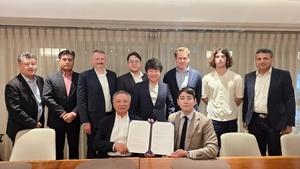
![Lee Sang-yeop (left), chief technology officer of LG Uplus, and Lee Jae-ho, chief executive of Opt AI, pose for a photo to mark their token optimization partnership. [LG Uplus]](https://wimg.heraldcorp.com/news/cms/2026/10/02/news-p.v1.20261002.305ec05575044b3a973b3a5e37ea2a81_P1.jpg)
LG Uplus has partnered with AI model optimization firm Opt AI to advance token optimization technology. Building on results that raised the volume of tokens processed by a GPU by up to four times, the two companies are expanding their joint research from on-device AI into server environments.
LG Uplus said Friday it is working with Opt AI to develop token optimization technology aimed at improving AI operational efficiency. A token is the basic unit of data that an AI model processes when interpreting a user's query and generating a response. Token optimization refers to streamlining an AI model's computation so that more requests can be handled with the same resources.
According to LG Uplus, technology that delivers high performance with minimal resources is emerging as a key competitive factor in the AI industry — a trend driven by rising GPU and power costs as AI services become more widespread.
The two companies plan to combine their respective strengths to cut the costs of running AI services while improving service quality. LG Uplus will draw on its experience operating AI services to verify and apply token optimization technology, while Opt AI will handle research and development to make AI models run lighter and faster.
The two companies had previously collaborated on on-device AI, which runs AI directly on devices such as smartphones. LG Uplus applied model compression technology to a small language model based on EXAONE, reducing its computational load and size so it could run on a smartphone's dedicated AI chip, the NPU. As a result, the model maintained performance comparable to the conventional CPU-based approach while cutting power consumption by 78 percent and model size by 82 percent.
The two companies also co-hosted the Efficient AI Tech Seminar on Thursday, sharing the latest research trends and industry use cases in AI operational efficiency. The event drew experts from across industry, academia and research institutions, including AI chipmaker Furiosa AI, AI platform company VESSL AI, the Korea Electronics Technology Institute and Hanyang University.
The companies will use the occasion to expand their joint research into server GPU environments, with plans to study technology that optimizes AI model computation so that more requests can be processed using the same GPU resources.
LG Uplus said early research results are already emerging. The two companies have improved the computation process by which AI models generate responses to better suit service environments, achieving up to a fourfold increase in the number of tokens a GPU can process compared with before.
The companies plan to apply the technology they develop to LG Uplus's AI services and large-scale AI infrastructure to improve overall operational efficiency.
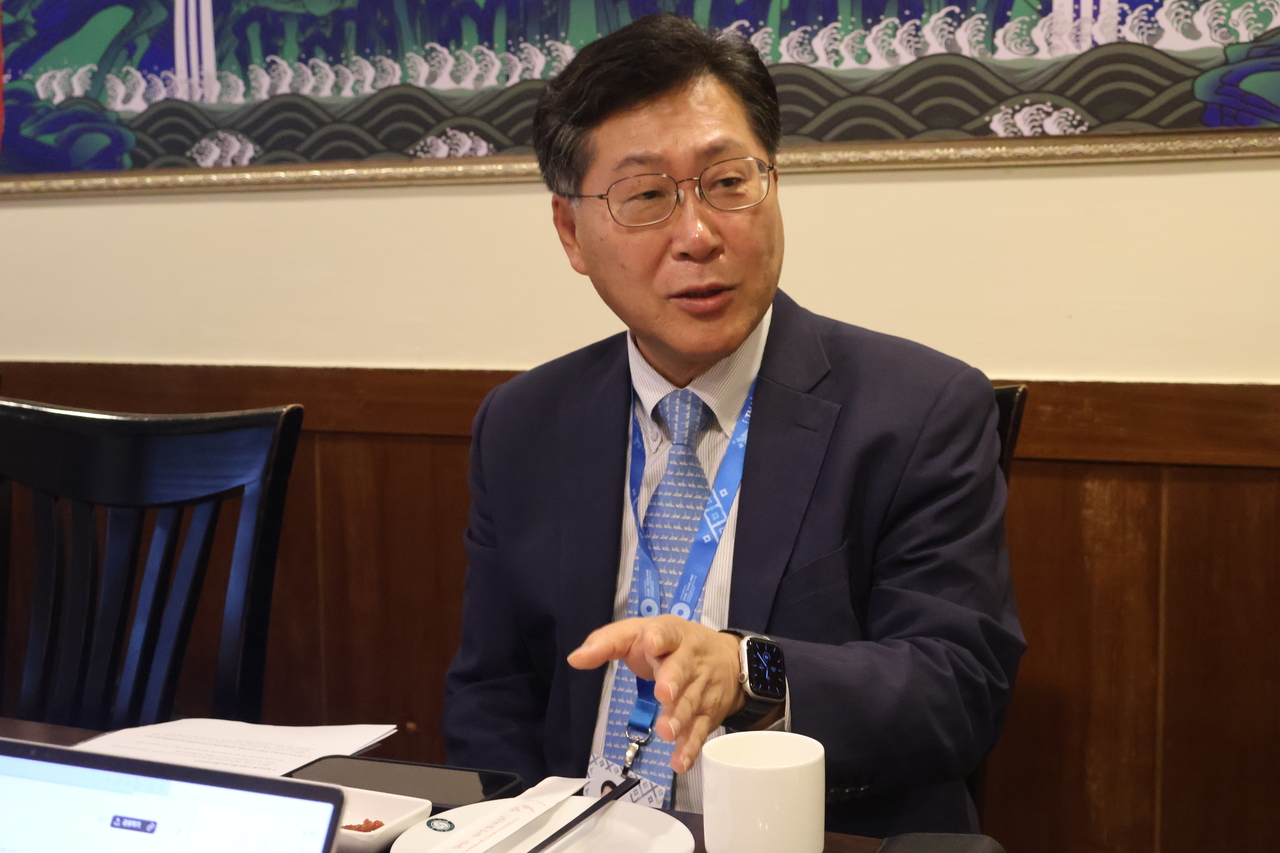
Lee Sang-yeop, chief technology officer of LG Uplus, said AI competitiveness goes beyond raw performance. "It comes down to how many tokens you can process with the same resources," he said. "We will expand token optimization research in collaboration with Opt AI and other partners, and deliver results that can be applied to real services."
Lee Jae-ho, chief executive of Opt AI, said operational efficiency is becoming just as important as high performance in the generative AI era. "We will work with LG Uplus to advance AI optimization technology that can be validated in real service environments and contribute to improving efficiency across the AI industry," he said.
chami@heraldcorp.com