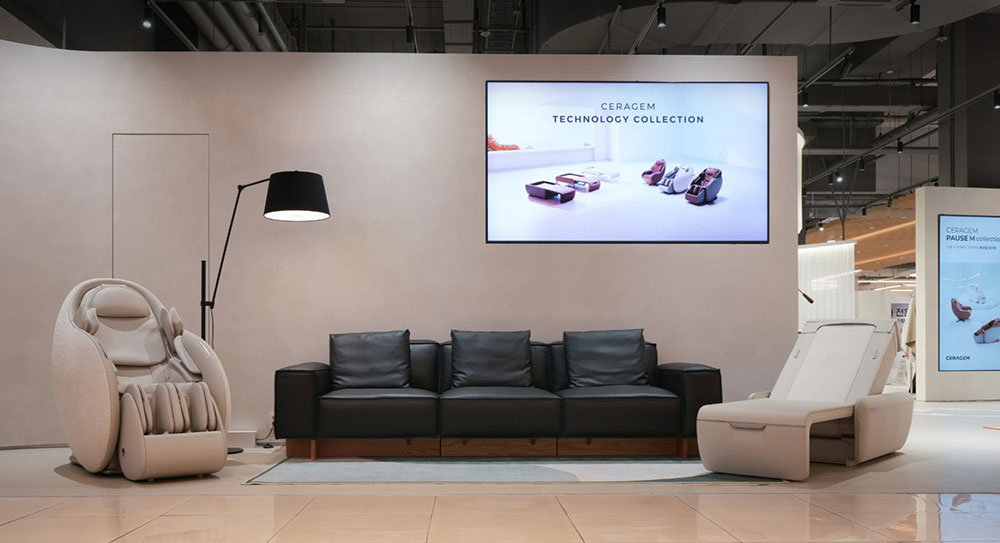
Ceragem, Bodyfriend, Coway expand experience hubs in southern Gyeonggi Province
Icheon-based Simmons sees sales rise after semiconductor bonuses
Government raises this year's national tax revenue forecast by 63.2 trillion won, citing semiconductor boom
Furniture, healthcare and home appliance companies are stepping up efforts to capture consumers in the "semiconductor belt" concentrated in southern Gyeonggi Province. The main battleground spans Yongin, Pyeongtaek, Giheung and Icheon — home to major production facilities operated by global chipmakers Samsung Electronics and SK hynix. With the semiconductor boom widely expected to last, many analysts believe the performance bonuses flowing to workers there will not be a one-time windfall. That prospect has made the southern Gyeonggi semiconductor belt one of the most closely watched sales territories for durable-goods retailers.
Ceragem renovated its Well Store in Giheung-gu, Yongin in July, adding a showroom developed in collaboration with furniture brand Carl Hansen & Søn to the store it had opened the previous year. The redesigned space recreates actual living environments — a living room, study and bedroom — so visitors can experience healthcare appliances and furniture together. The store has since served as an experiential and event hub, most recently displaying a massage chair, the Pause M8 Fit, autographed by national team athletes.
Bodyfriend opened a new lounge Sept. 17 at the Living Power Center in Giheung-gu, Yongin, where visitors can try out healthcare robots, medical devices and massage chairs. Coway also operates a "Coway Gallery" in the same complex, offering hands-on experience with water purifiers and air purifiers as well as mattresses and massage chairs.
Coway has been rapidly expanding its offline presence, opening 10 new Coway Gallery locations in the first half of this year alone. As of July, the chain had grown to 42 stores nationwide. The strategy is to let customers try higher-priced Berex products — including mattresses and massage chairs — before buying.
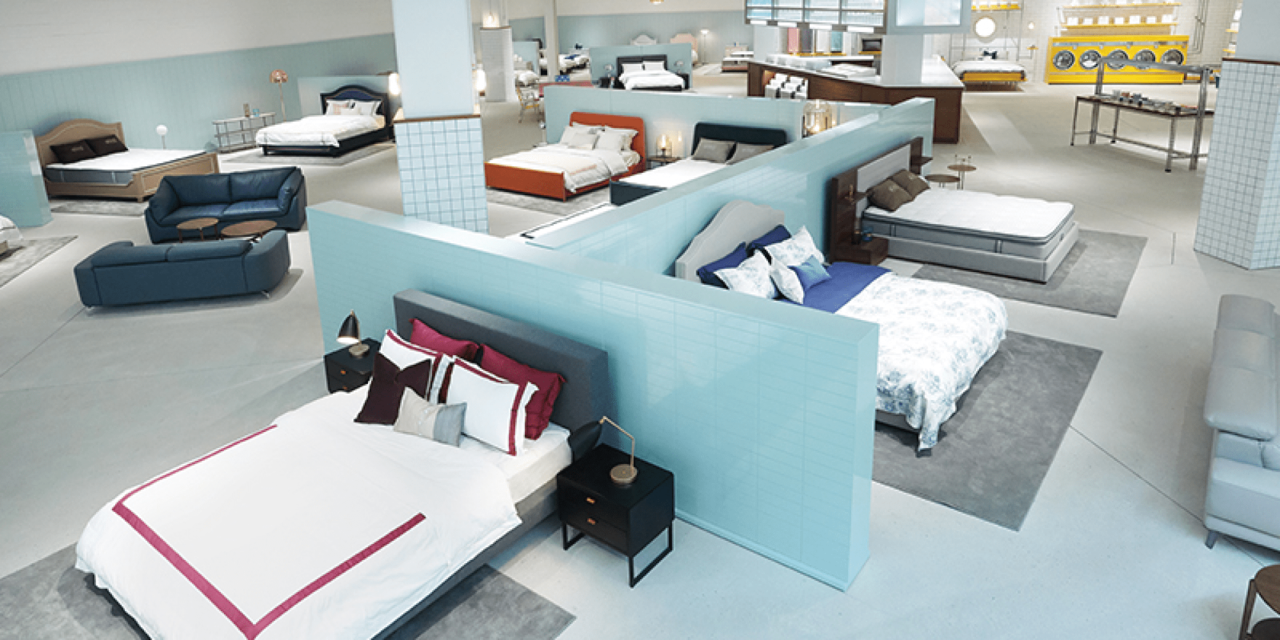
In Icheon, the semiconductor boom is already translating into measurable furniture sales. Simmons, which has its headquarters, production facilities and the Simmons Terrace cultural complex in Icheon, shares the city with SK hynix's headquarters. "When semiconductor bonuses pour in, sales in the Icheon area go up noticeably," a furniture industry official said. "The numbers there show a meaningful increase — it's clear."
The Bank of Korea has also documented the link between the semiconductor boom and spending on high-end durable goods. A report the central bank released in August, titled "How Will Consumption Change in Semiconductor-Benefiting Regions?", found that monthly consumer spending in Icheon, Hwaseong and Cheongju — cities with high concentrations of semiconductor workers — ran as much as 4 percent above other regions after bonus payouts, driven mainly by cars, home appliances, furniture and department store purchases.
The Bank of Korea estimated that Samsung Electronics and SK hynix bonuses generated a cumulative increase in consumer spending of about 1.7 trillion won ($1.25 billion). It calculated that 27 percent of after-tax bonuses last year and 21 percent this year flowed through to actual consumption growth. Spending capacity could expand further: the central bank projected that if Samsung Electronics and SK hynix bonuses reach roughly five times this year's level by 2027, the GDP boost from the semiconductor boom would grow accordingly.
The boom's reach is also visible in tax revenues. On Wednesday, the government revised its national tax revenue forecast for this year to 478.6 trillion won, up about 63 trillion won from the 415 trillion won projected when the supplementary budget was drawn up in March. The corporate tax forecast rose by 35 trillion won from the supplementary budget estimate to 136.4 trillion won. The government cited the semiconductor boom's contribution to improved corporate earnings and special dividends as key drivers of the revenue increase.
"Money flows to where demand follows," a home appliance industry official said. "Real estate drew attention first, then cars. When real estate transactions pick up, people also have more room to buy furniture, interior goods and appliances — there's a clear correlation. With many expecting the semiconductor boom to continue for now, we see these areas as prime targets."
hong@heraldcorp.com