- NRC, STEPI and KDI to hold joint research forum on Wednesday
- Equitable distribution of AI benefits and risks seen as key to sustaining innovation
AI is rapidly penetrating industrial workplaces and everyday life, but social systems governing labor, education and welfare are failing to keep pace with technological change, researchers have found.
Experts say South Korea needs new policy criteria — not just for strengthening AI competitiveness, but for determining how the benefits and risks of the technology are distributed across society.
The National Research Council for Economics, Humanities and Social Sciences (NRC) announced Friday that it will co-host a joint research dissemination forum with the Science and Technology Policy Institute (STEPI) and the Korea Development Institute (KDI) on Wednesday.
The forum will draw on collaborative research findings to examine how AI's spread is reshaping industrial structures and social systems. Discussions will focus particularly on how existing criteria in industrial and social policy need to change in order to secure inclusivity and social legitimacy during the AI transition.
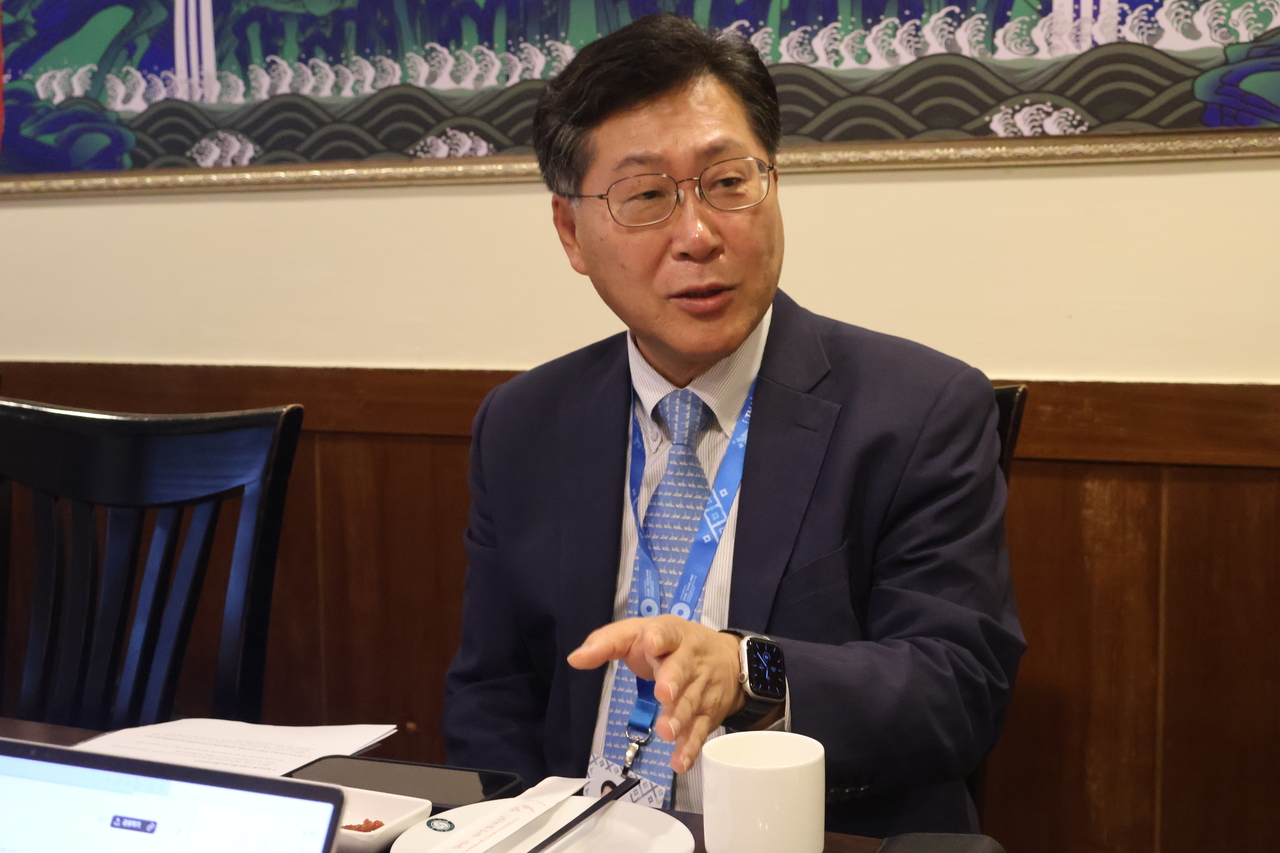
STEPI President Yoon Ji-woong characterizes South Korea's AI transition as one of "fast adoption, slow governance" — meaning that changes to labor, education and welfare systems, as well as democratic oversight mechanisms, have lagged far behind the pace of AI adoption.
"An inclusive and legitimate AI transition is not about slowing the pace of innovation — it is the condition that makes innovation last," Yoon is expected to say at the forum.
A session on industrial restructuring will examine sector-by-sector changes driven by AI and the strategies needed to respond. Researchers will argue that while traditional industrial policy has focused on technological capability and investment scale, future policy must also weigh who has access to core AI resources such as data, computing power and platforms.
On social policy, the forum will propose that a key criterion should be how the new capabilities and risks brought by AI are distributed across different social strata and groups. On AI governance, researchers will argue that policymakers must examine whether civic participation and rights-redress mechanisms are functioning in practice. Case studies from the mobility, space and AI startup sectors will also be used to analyze the different transition paths and conditions across industries.
Specialists in social security, government governance, the labor market and vocational education will discuss the direction of social system reform for the AI era.
The forum will also raise concerns that domestic AI discourse has concentrated on industrial and labor policy and risk regulation, while discussion of civic rights and biometric data protection has been comparatively thin. Researchers will call for an integrated AI regulatory framework that goes beyond sector-specific rules to connect policy enforcement with post-implementation oversight.
"For the benefits and risks of the AI transition to be distributed equitably, industrial policy, social policy and AI governance need to be examined in conjunction," said Kim Jong-rip, head of STEPI's research dissemination team and the lead researcher on the project. "We aim to propose new criteria for how markets and institutions should make choices in the AI era."
nbgkoo@heraldcorp.com