Resuming a flagship initiative from his first term, Yu Dong-gyun launches a 12-year plan to plant more than 5 million trees in Mapo-gu by 2038
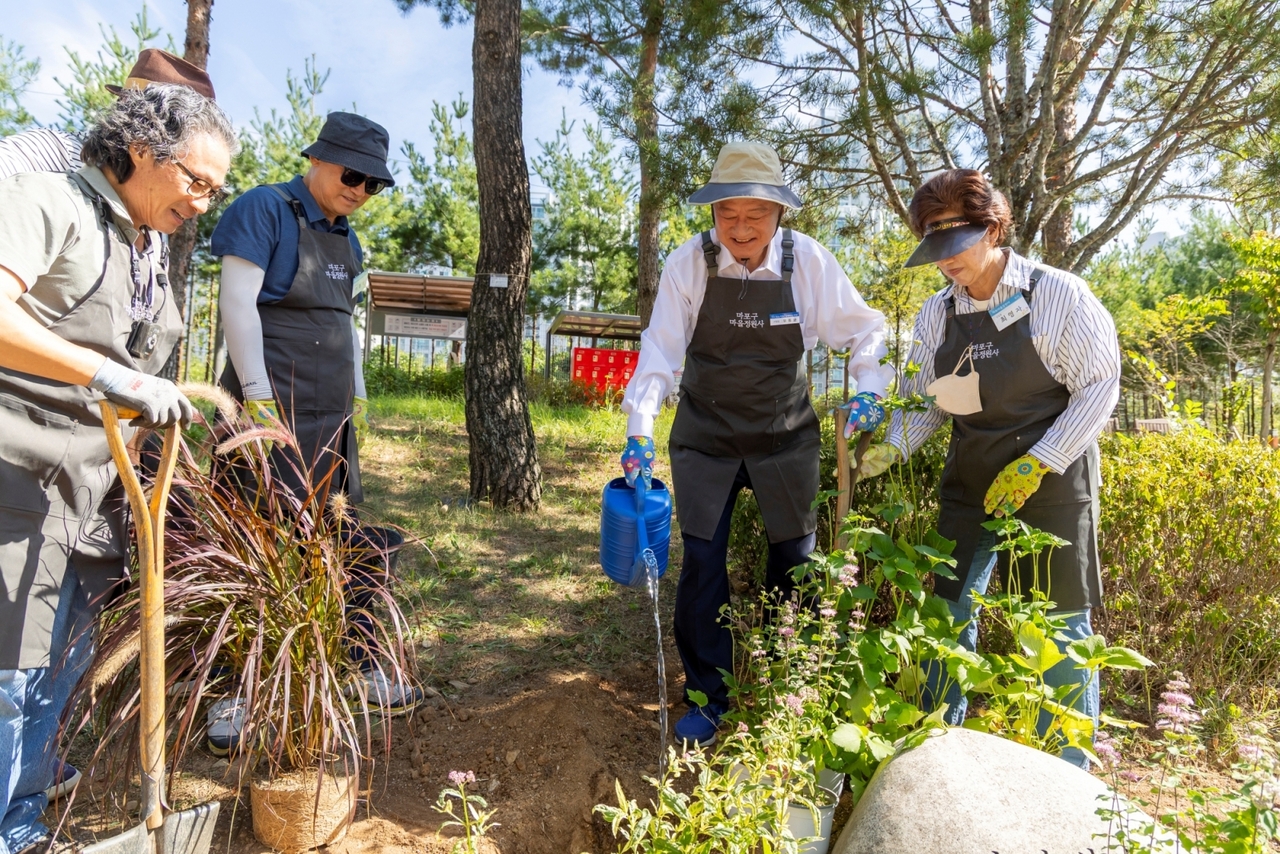
Mapo-gu District Mayor Yu Dong-gyun is relaunching his signature "5 million trees" initiative, kicking off a long-term project to green the district over the next 12 years.
Yu first pursued the "5 million trees" campaign during his seventh term as district mayor. Now in his ninth term, he is reviving it under the banner "5 million trees — again," with a plan to plant more than 5 million trees across Mapo-gu by June 2038. The 12-year timeline extends well beyond his current term, effectively laying out a green-space policy blueprint that could carry through his 10th and 11th terms.
Whether Yu will remain in office for the full 12 years is, of course, an open question. But observers say the project reflects his commitment to steadily expanding Mapo-gu's green space over the long haul.
Mapo-gu will hold a launch ceremony for the "5 million trees — again" project Wednesday at 2 p.m. at Mapo Saevit Culture Forest, formally resuming the initiative that was shelved after his seventh term ended.
The tree-planting drive had been one of the centerpiece projects of Yu's seventh term but was discontinued when the eighth-term administration took over. The district has now given the revived effort its new name and is moving ahead with a full-scale push to expand urban green space.
The initiative aims to counter the worsening effects of climate change — including more intense heat waves and heavy rainfall — by harnessing trees' heat-reduction properties to create green spaces that residents can feel in their daily lives.
To drive the project forward, the district has drawn up four core strategies, the first of which is expanding green space within residential areas.
Trees will be planted close to where residents live through large-scale improvements to neighborhood parks, a climate-response forest program run by the Korea Forest Service, upgrades to community parks and rest areas, and stream ecosystem restoration. Rooftop and wall greening will also be pursued on public buildings and other structures.
The second strategy focuses on creating street greenery to improve the pedestrian environment.
Street trees will be added along sidewalks with an effective width of 2 meters or more, and a shade-tree program from the seventh term will be revived. Known as "shade trees — again," the effort involves planting large trees at traffic islands and crosswalks to create natural shade. The first site was established at the Sinchon Rotary traffic island, the second in front of the Mapo-gu office crosswalk, and the third at Mapo Saevit Culture Forest.
The district is also investing in strip greenery connecting rows of street trees. In September, it created 141.5 square meters of pocket gardens and 184 square meters of green strips along the pedestrian paths on World Cup-ro and Yanghwa-ro, planting 1,414 trees and 4,605 flowering plants.
Where planting space is limited or sufficient soil depth is hard to secure, the district plans to use mobile planters and extend greenery into alleyway pockets as well.
The third strategy is community-participatory tree planting — going beyond simply planting large numbers of trees to raise residents' awareness of and engagement with the importance of trees and green space.
On Arbor Day, the district will hold relay tree-planting events with residents at locations across the neighborhood. It will also run a "one household, one tree" program, inviting families to mark life milestones — marriage, birth, school enrollment and graduation — by planting and tending a tree.
Residents will be trained as community garden managers, receiving instruction on plant characteristics and garden design, and will be invited to take part directly in managing local gardens after completing the program.
The fourth strategy is expanding tree planting in the private sector. The district will promote private green-space creation through ESG tree-planting partnerships with local businesses, the completion of Phase 2 of Mapo Saevit Culture Forest, tree planting tied to redevelopment and reconstruction projects, and consultations on landscaping for private construction.
To sharpen the project's quality, the district has also formed an advisory panel of specialists including professors, arborists and licensed engineers. The panel will advise on all aspects of the project, from species selection to planting and maintenance methods.
"The '5 million trees — again' project is not simply about planting a lot of trees," District Mayor Yu said. "It is a forward-looking, eco-friendly investment to address climate change and improve residents' living environment. We will keep planting trees and expanding green space with an eye toward 50 and 100 years from now."
The figure of 5 million trees — first introduced by Yu during his seventh term — has now returned in his ninth, this time backed by a 12-year roadmap. Whether "5 million trees — again" can take root not just as a green-space initiative but as the defining long-term policy vision of Yu's tenure remains to be seen.
seouldream01@heraldcorp.com