First reform-camp mayor marks 100 days in office
'Traffic Olympics' to draw 60,000 visitors, echoing 2018 Winter Games
Mayor pledges to reflect 80% of residents' voices in city policy
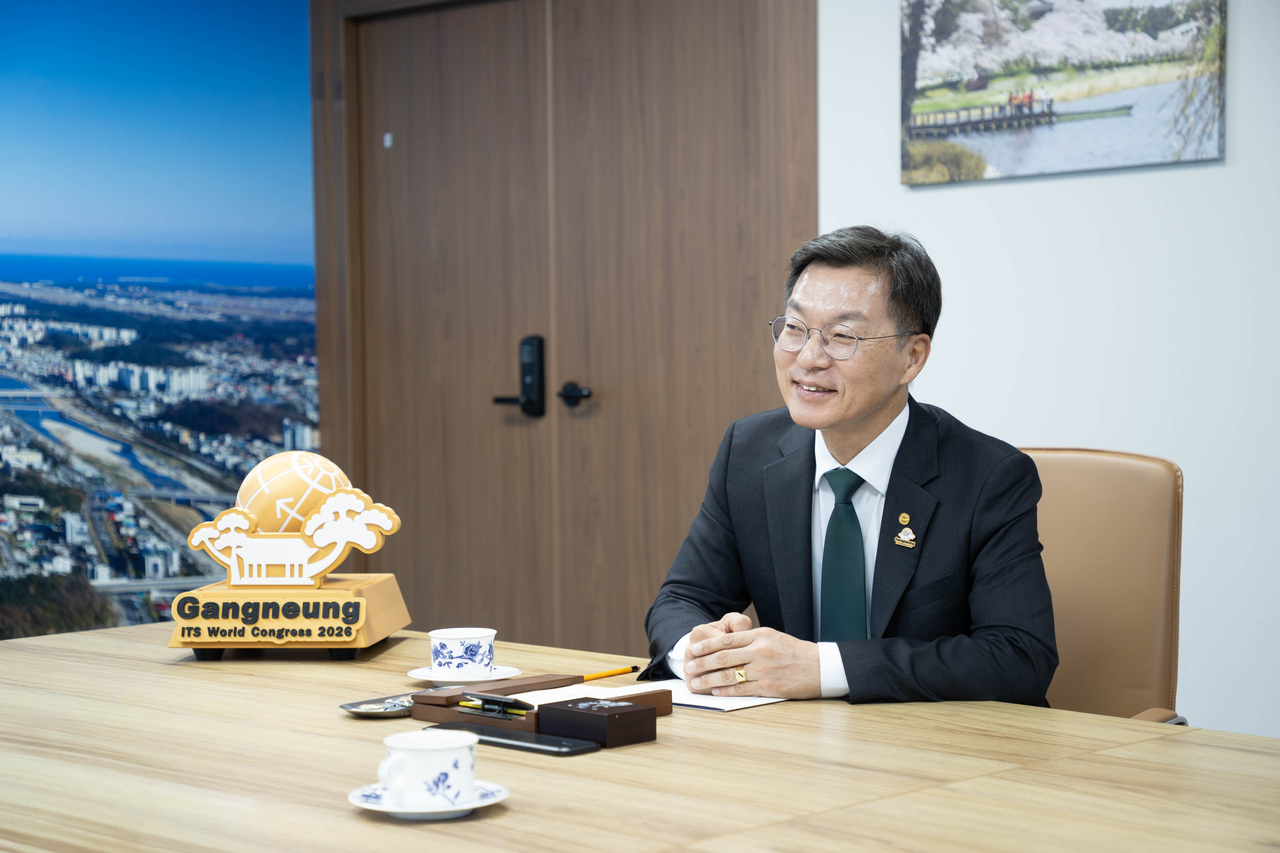
"The ITS World Congress — the 'Traffic Olympics' — opens Oct. 19 and will bring 60,000 people to Gangneung, making it the biggest event here since the 2018 Winter Olympics," said Gangneung Mayor Kim Jung-nam. "Through the successful hosting of this congress, which we have shaped into a global festival, I intend to make this a decisive turning point that firmly transforms Gangneung into a global MICE hub and a leading smart-mobility city. We have completed all preparations here in Gangneung, so just as at the 2018 Olympics, the support and visits of the Korean public will be the key to success."
Kim became the first mayor from the reform camp since the introduction of direct local elections in South Korea. He sat down with The Herald Business on Friday — six days before his 100th day in office — and opened the conversation with the ITS World Congress. While reflecting on his first 100 days was on the agenda, he was most eager to urge the public to rally behind Gangneung for the "Traffic Olympics," stressing that the event is a matter of national importance, not just a local one, and asking citizens to cheer the city on as they would a national team athlete at the Olympics.
Kim also made a striking declaration: because the six small cities along the East Sea coast, including Gangneung, face limits in pursuing development individually, he would join forces with Donghae and Yangyang-gun — and in doing so, Gangneung would set aside its own ambitions for the greater good.
On his governing philosophy, Kim said he has been incorporating more than 80 percent of residents' feedback gathered during on-site community engagement sessions into city policy. The following is an edited transcript of the interview.
— You are Gangneung's first directly elected mayor from the reform camp. What are your reflections after 100 days?
▶ One hundred days — long in some ways, short in others — but it has been a time when I went out to the field and confirmed firsthand what Gangneung needs right now and what needs to change first. I spent that time explaining our city governance goal of "A future we change together, a Gangneung where everyone is happy," listening to residents' voices and carrying out, one by one, the things Gangneung's future requires.
— Now that 100 days have passed, what weighs most on your mind?
▶ Explaining how our various blueprints are taking shape is important, but above all, the 2026 Gangneung ITS World Congress is my biggest focus. It will be held from Oct. 19 to Oct. 23 at the Gangneung Convention Center and the Olympic Park, with 60,000 participants from more than 90 countries. We opened the Gangneung Convention Center on Aug. 26, built a dedicated congress app, and have checked transportation, accommodation and the environment to ensure our guests can enjoy Gangneung to the fullest.
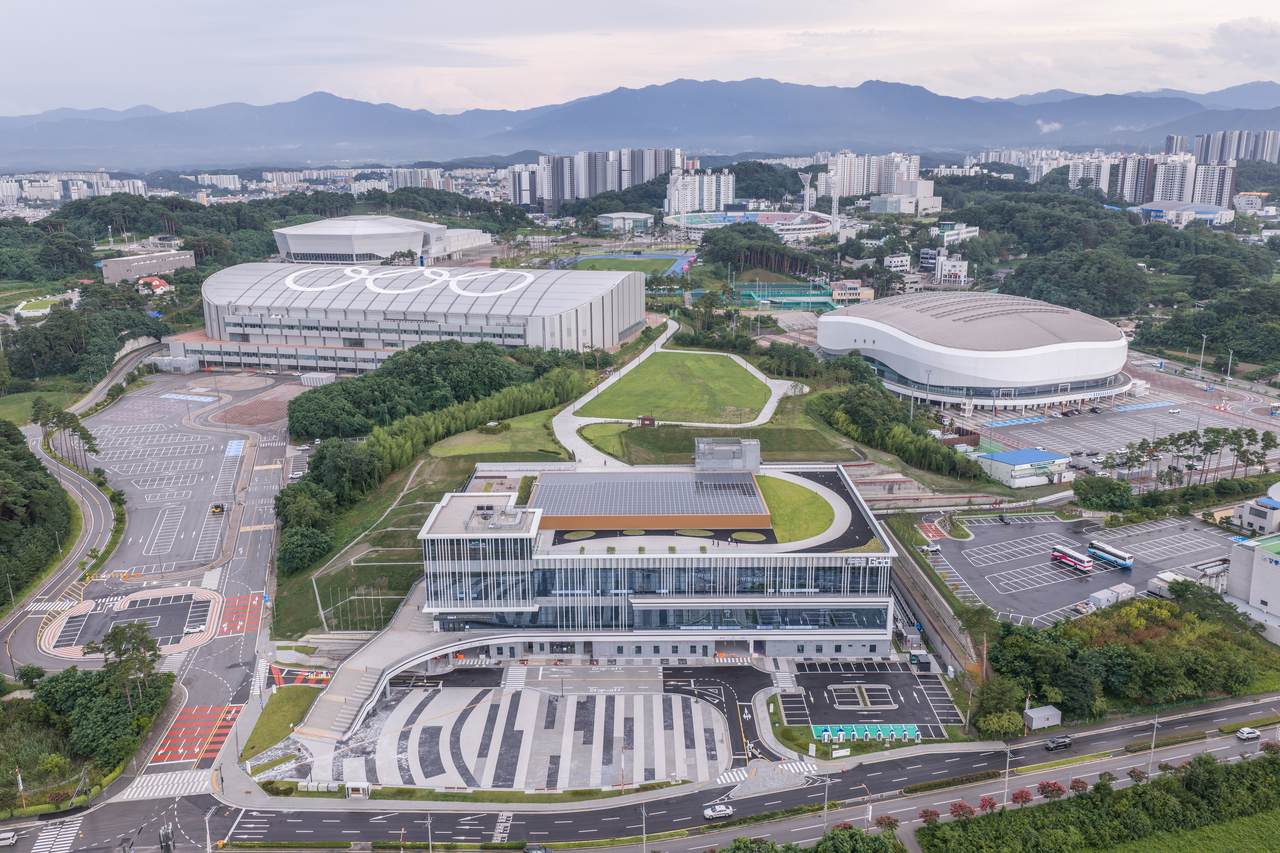
The congress is shaping up as a grand global festival. On the opening night of Oct. 19, a large-scale drone light show featuring 3,000 drones will light up the sky, and on Oct. 22 at the Gangneung Hockey Centre, top figure skating stars including Cha Jun-hwan and Lee Hae-in will perform in an ice show. The event will also feature self-driving car rides, a VR truck, drone delivery and drone soccer, a robot survival game, smart city and science-technology experience booths, and an outdoor plaza for cultural events and food.
With the ITS World Congress as the centerpiece, the event has been elevated into a large-scale festival Olympics, flanked by a bread festival, a noodle festival, a coffee festival, an arts festival, a drone festival, a live music festival and the Gangneung K-Gourmet Road.
Built on the outstanding legacy of the 2018 PyeongChang Winter Olympics — its Olympic Park and large-scale accommodation and transportation infrastructure — and now bolstered by the new Gangneung Convention Center, the city has laid the groundwork to emerge as a core MICE industry hub for the East Sea coastal region.
— Your new approach to communication between the mayor and residents has drawn attention. Can you elaborate?
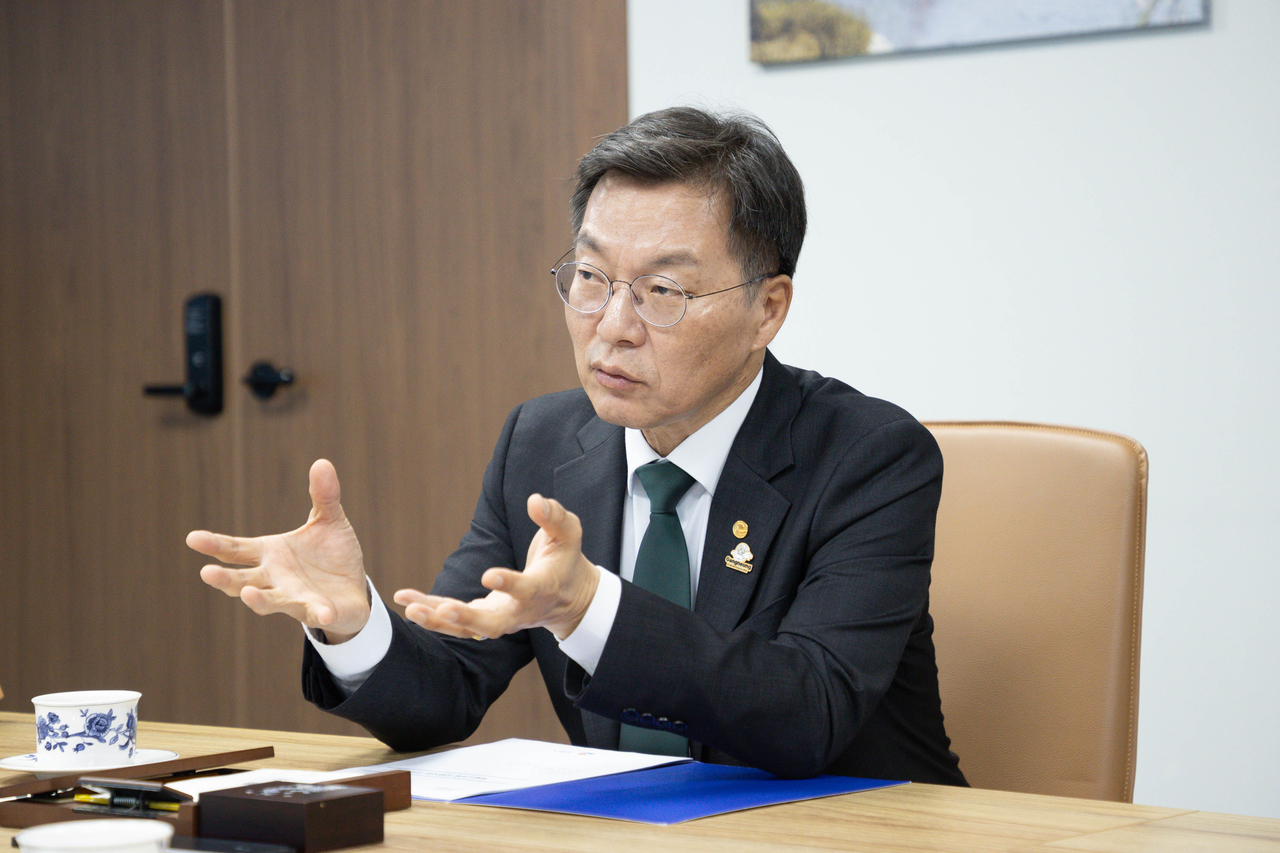
▶ Over the past 100 days, I have listened to residents through town hall meetings in each neighborhood, community listening sessions and various forums, refining Gangneung's future vision along the way. I prioritized policies that were urgent and would be felt immediately. Of the 294 suggestions received at the neighborhood town hall meetings, about 84 percent have been reflected in actual projects that are either underway or planned.
Of the cases received through the community listening sessions, I personally met with residents for nearly half — about 47 percent — hearing everything from small everyday inconveniences to concerns about the local economy, jobs, welfare, transportation and the future of Gangneung. Minor issues were resolved on the spot, and proposals are being reviewed thoroughly before being incorporated into policy.
— You put forward 86 campaign pledges across five areas. Among them, what are your priorities in the advanced industry sector, including the AI data center?
▶ My priorities are improving livelihoods, welfare and transportation in ways that change residents' daily lives, and building advanced industries and youth employment opportunities that will sustain Gangneung for the next 100 years. A citizens' campaign pledge evaluation committee is watching, and they will not hold back in offering me candid advice.
On attracting advanced industries, the site for Gangneung's AI data center has been set in Okgye-myeon, at the southernmost tip of the city. The original plan called for a 1-gigawatt facility, but grid constraints made that unfeasible, so the city decided to build a 400-megawatt facility — 40 percent of the original scale — on the Okgye Industrial Complex site, with additional construction to be considered once the power supply network is expanded. Korea Electric Power Corporation has agreed to provide active support, so I believe the project will move forward well despite the setbacks along the way. There have long been concerns that Okgye, far from the city center, has been left behind — but this area will develop into a leisure, tourism and logistics cluster going forward.
Since July, I have been told that a mayor who has barely taken office is traveling to Seoul, Sejong and Chuncheon far too often. On Wednesday and Thursday of last week, I was in Seoul again, just before this interview. I visited the National Assembly ahead of its budget review and met in turn with Budget and Accounts Committee Chairman Lee Gwang-jae — a former provincial governor — Rep. Kim Woo-young, who hails from Okgye, and Rep. Seo Young-seok, who is particularly strong on policy matters, to explain why budget support is needed for four priorities: a critical-minerals-based advanced physical AI specialty semiconductor materials and components project, the establishment of a semiconductor K-materials and components production hub, the construction of a Gangneung branch of the National Folk Museum of Korea, and the establishment of a National Gangneung Cultural Heritage Research Institute.
At the Ministry of Interior and Safety at Government Complex Seoul, Kim made a detailed case to Minister Yun Ho-jung for the feasibility of attracting public institutions to Gangneung. He also said the city plans to move boldly to attract private capital, as neighboring Goseong-gun has done.
— The Arctic shipping route and the broader East Sea rim are growing in strategic importance, yet the cities and counties of the Yeongdong region are each fighting their own battles. What is your approach?
▶ As the hub of the East Sea rim, Gangneung is the only city positioned to serve as a forward base for inter-Korean exchange, exports and culture — and our location is better than Busan's. We are the city that can reach the world most quickly.
Gangneung will work closely with Donghae, which has an international trade port, and Yangyang-gun, which has an international airport, so that the Yeongdong region can act as one team and leverage these strengths.
There is no path where Gangneung prospers alone. Gangneung will set aside its own ambitions. We will build solidarity — with Donghae and Yangyang-gun close by, and extending further to Sokcho, Samcheok and Goseong-gun — to generate greater synergy. A meeting of the mayors and county chiefs of all six municipalities is scheduled this month, and I intend to share my commitment to setting aside Gangneung's self-interest for shared prosperity, while actively supporting the initiatives that neighboring cities and counties are pursuing.
abc@heraldcorp.com