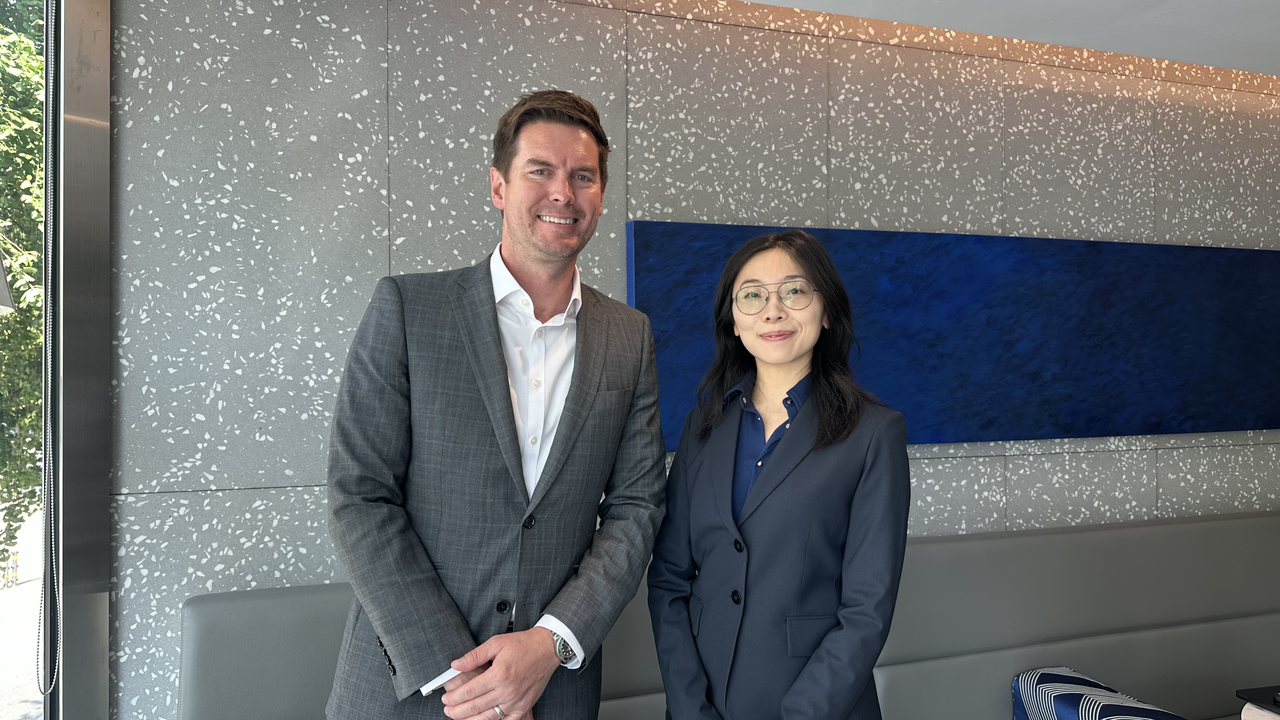
Seohaegu District Mayor Ku Jae-yong holds 100-day press conference
Accelerating old-town redevelopment, tightening oversight of Cheongna and Ruwon projects — one-stop administrative support unit activated
Youth employment, housing support expanded; education and childcare infrastructure to grow
District mayor vows 'people-centered administration'
![Seohaegu District Mayor Ku Jae-yong delivers remarks at a press conference marking 100 days since taking office in the ninth directly elected term, held Tuesday. [Seohaegu District Office]](https://wimg.heraldcorp.com/news/cms/2026/10/06/news-p.v1.20261006.986017bcf1a54592a4004560a31bca5c_P1.jpg)
Incheon's Seohaegu District is marking its 100th day since establishment by laying out a concrete governing agenda for the ninth directly elected term, with overcoming a fiscal crisis and achieving balanced development across the district as its two central pillars.
The district entered its early days already burdened by costs arising from administrative restructuring and unresolved budget settlements stemming from the district split. Rather than expanding programs outwardly, the strategy is to improve fiscal efficiency and concentrate administrative resources on areas that directly affect residents' daily lives.
District Mayor Ku Jae-yong said at Tuesday's 100-day press conference that Seohaegu "will relaunch as a ninth-term district that moves beyond crisis toward change," adding that the office had formed a fiscal stabilization TF to review revenue and expenditure structures and funding sources for major projects.
He said the district had set a course for expenditure restructuring — reassessing the necessity and urgency of individual projects to reprioritize them, and streamlining or eliminating programs with low impact or overlapping functions.
Ku also said the district would focus its administrative capacity on securing national and city government funding and competing for grants from public institutions. "Given our limited fiscal capacity, we will pull in as much external funding as possible — from the central government and the city — and direct it toward resolving local issues," he said.
Ku outlined differentiated development strategies by area. In older urban neighborhoods — Seoknam, Gajwa and Gajeong — the focus is on accelerating the redevelopment of aging residential areas.
The plan calls for strengthening administrative support throughout the redevelopment and reconstruction process, from drawing up improvement plans through review and permitting, to minimize delays and ensure that major projects actually break ground.
In practice, an area of approximately 78,000 square meters around 287-58 Sinhyeon-dong was designated a redevelopment zone in July. Five aging apartment complexes in the Gajeong-dong area also received a boost when a plan to rezone them from third-class general residential to quasi-residential passed an integrated review by Incheon city, improving conditions for redevelopment.
Cheongna International City and Ruwon City, by contrast, will see administrative energy directed at raising the quality and completeness of urban functions already in place.
For Cheongna, the plan goes beyond its residential and commercial core to reinforce gaps in daily infrastructure — transportation, healthcare and culture — while attracting businesses to create quality jobs.
Ruwon City's focus will be on supporting the infrastructure needed to complement the expansion of public and office functions, including a planned multipurpose civic complex.
Ku is also activating a dedicated unit to cut administrative delays in large, complex development projects.
Seohaegu plans to manage issues involving multiple departments and agencies simultaneously — including redevelopment, reconstruction, and the Cheongna and Ruwon projects — through a centralized one-stop administrative support unit.
The district will strengthen advance coordination between departments and collaboration with related agencies, and will systematize communication channels with Incheon city, Korea Land and Housing Corp. and iH.
The district is also stepping up policies to retain young residents. Seohaegu is pursuing the establishment of a dedicated youth affairs office to manage employment, housing and welfare for young people in an integrated way, rather than through separate, disconnected programs.
The district plans to expand youth employment at public institutions, while linking jobs, housing and independence through transit-oriented youth rental housing supply, monthly rent support and moving-cost assistance for those striking out on their own for the first time. Support for employment with local businesses and startup assistance will also be strengthened, and a program connecting AI education, internships and job placement will be rolled out in stages.
In education, the district will expand its education and childcare infrastructure, building on its selection for a school multipurpose facility grant at Cheonma Elementary School and its partnership with an education innovation district program.
Over the longer term, the district aims to raise its educational competitiveness by attracting an international school and expanding future-oriented education programs.
"Good administration is not loud or flashy — it is about helping residents go about their daily lives without worry," Ku said. "Even with difficult fiscal conditions, we will concentrate resources where they are needed and maintain the administrative services residents truly depend on without wavering."
He added that he would lead the district "with the resolve to put people at the center of every policy and to start Seohaegu anew."
Meanwhile, some observers note that the district's greatest challenge lies in how much tangible change it can deliver for residents within tight fiscal constraints.
Rather than pursuing large-scale development projects simultaneously, analysts say the district needs a strategy that sets different priorities by area — pushing the pace of redevelopment in older neighborhoods while raising the quality of urban functions in Cheongna and Ruwon — and concentrates fiscal resources on areas that most directly affect residents' lives.
gilbert@heraldcorp.com