Cabinet approves amendment to the Public Property and Goods Management Act
Designation of specialized institutions and information system development expected to boost expertise and efficiency
The government will conduct a comprehensive census of local governments' public assets every five years to identify unregistered or overlooked properties and bring them under systematic management. Procedures for waiving public asset usage fees will also be simplified to speed up support for disaster victims.
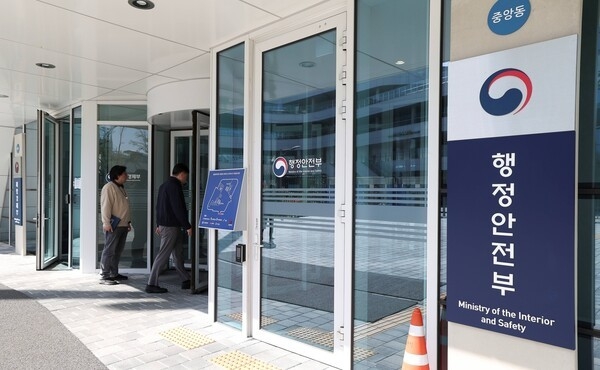
The Ministry of Interior and Safety said Tuesday that the Cabinet approved an amendment to the Public Property and Goods Management Act, designed to enable more systematic management and utilization of public assets.
Under the key revisions, the interior minister will have a legal basis to annually analyze and assess the state of public asset management across local governments.
To enhance the objectivity and expertise of such assessments, the work may be delegated to specialized institutions designated by presidential decree, and the results will be made public so that areas with inadequate management or room for improvement can be continuously addressed.
Alongside this, the amendment establishes a legal basis for a "public asset general survey" — a comprehensive census conducted every five years covering all public assets held and managed by local governments. The survey aims to provide a full picture of the current state of public assets, uncover overlooked properties, rectify unregistered assets and put idle assets to use, systematically addressing blind spots in asset management.
The amendment also provides for the designation of specialized public asset institutions and the development of an information system, while simplifying procedures for disaster-affected residents.
To improve the expertise and efficiency of public asset administration, the amendment creates a framework for designating qualified institutions as "public asset specialized institutions."
These institutions will carry out a comprehensive range of functions for the systematic management and utilization of public assets, including: research and investigation into the public asset regime; analysis and assessment of asset management and utilization; conducting the general survey; compiling, verifying and managing asset statistics; building and operating a public asset information system; and providing education, consultation and support for local government officials responsible for public assets.
The amendment also sets out accountability and oversight mechanisms for these institutions — including provisions for funding their operations and for revoking their designation or suspending their activities if they no longer meet the required standards.
A legal basis has been established for building and operating a "public asset information system" that will consolidate asset data previously managed in fragmented fashion across individual local governments, linking it with spatial data and other information for integrated management and enabling accurate, multidimensional oversight.
Alongside this, to support temporary housing and recovery and relief activities using public assets during disasters, the amendment streamlines the previously required procedures — including review by the public asset deliberation committee and approval by the local council — for waiving usage and lease fees for disaster recovery and relief purposes.
"Just as a pilot project uncovered hidden assets worth 20 trillion won ($14.7 billion), data-driven, scientific management is the key to public assets," Interior Minister Yun Ho-jung said. "We will continue to improve the systems and frameworks so that public assets sitting in blind spots can be systematically reorganized and actively utilized for the benefit of citizens and local communities."
thlee@heraldcorp.com