Jo Hee-dae, unable to leave audit hearing, delivers pointed remarks from the floor
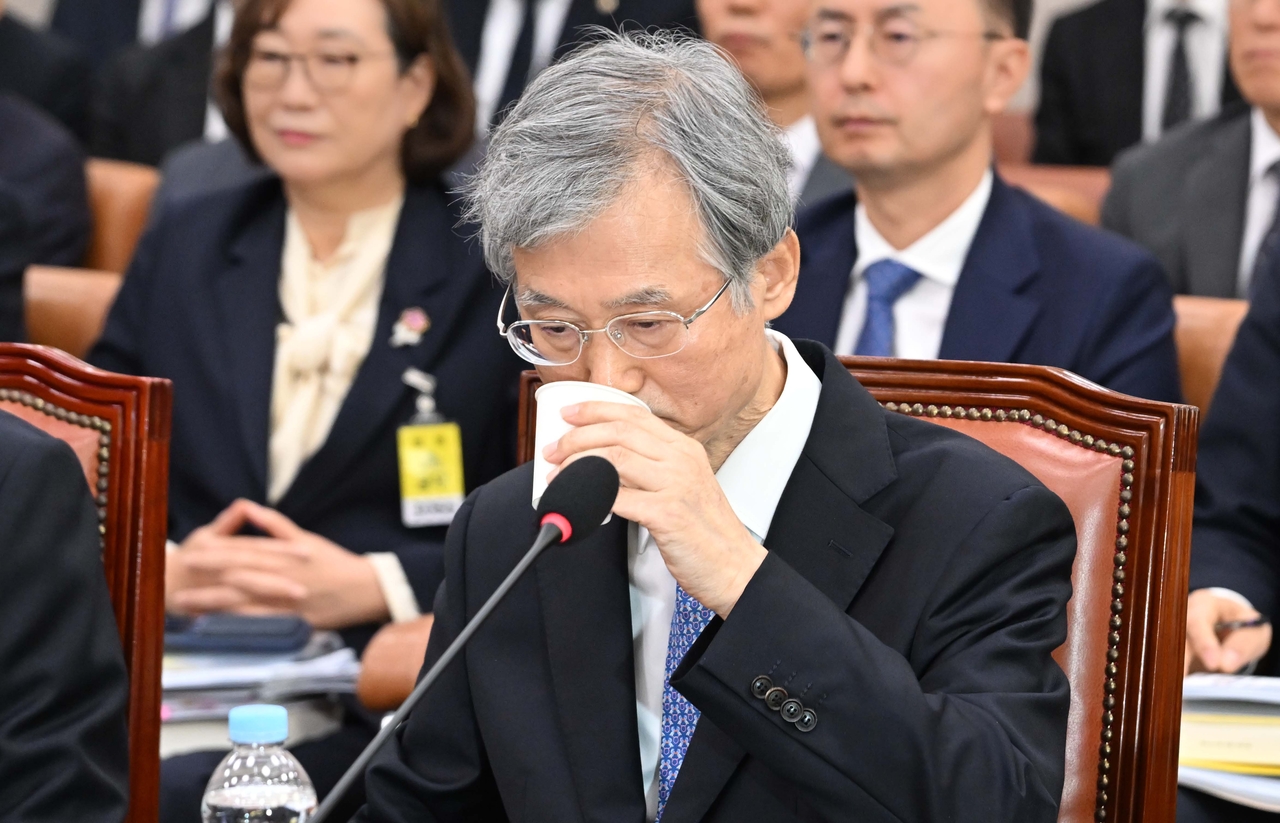
Chief Justice Jo Hee-dae said Tuesday that neither the National Assembly nor the president has any right to interfere with the chief justice's power to recommend Supreme Court justices for appointment, reiterating the position at a national audit of the Supreme Court held at the National Assembly.
Jo made the remarks at the Legislation and Judiciary Committee's audit after Democratic Party of Korea lawmaker Kim Ki-pyo pressed him on his refusal to take an oath as a general witness. Jo pulled out a prepared sheet of paper and asked to be given time to speak — an unusual step, as chief justices do not typically respond directly to lawmakers' questions during national audits.
"Since everyone seems to want to know, I will explain in specific terms why I refused to take the oath and testify," Jo said, citing Article 104 of the Constitution, which states that Supreme Court justices are appointed by the president upon the recommendation of the chief justice and with the consent of the National Assembly.
"Just as the chief justice cannot interfere at all in the National Assembly's consent process or the president's appointment process, neither the Assembly nor the president can interfere at all in the chief justice's power of recommendation," Jo said. "The Assembly's interference in the chief justice's recommendation power runs counter to the constitutionally mandated separation of powers between institutions and the independence of the judiciary — it is an unconstitutional act."
Jo also said there is no constitutional basis for consulting with the president over justice recommendations. "There is no constitutional basis for it, but the chief justice has voluntarily cooperated to ensure swift and smooth appointments," he said. "There is no constitutional problem whatsoever if the chief justice does not consult, and every president in history has ultimately respected this recommendation power. The Constitution places no restrictions on written recommendations either."
Jo added that once the chief justice submits a recommendation, his constitutional role is complete. "Once the chief justice makes the recommendation as provided by the Constitution, that is the end of it," he said. "The chief justice can be said to have fulfilled both the constitutional authority and the obligation through the act of recommendation. Because the Assembly cannot demand an accounting for something that has no basis in the Constitution, I hereby state specifically that I had no choice but to refuse the oath and testimony."
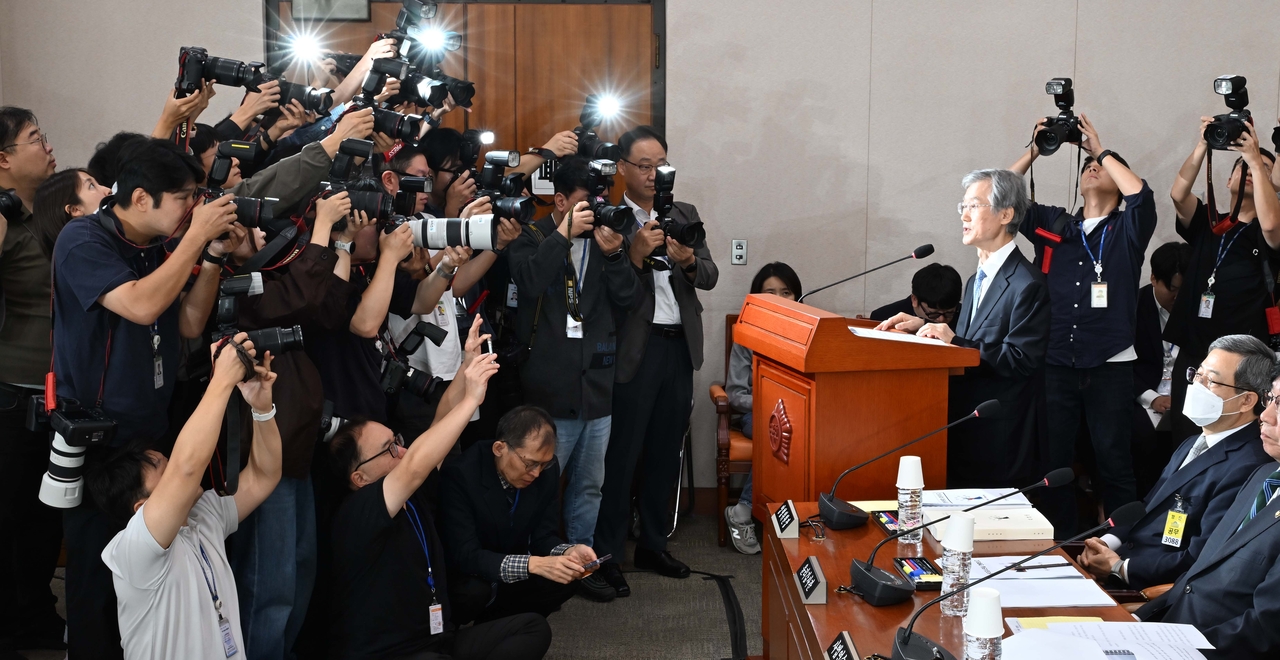
It is highly unusual for a chief justice to respond directly to lawmakers' questions at a national audit. At last year's audit, Jo remained in the chamber for an extended period after his opening remarks but did not answer any questions. This year he again refused to take the witness oath or testify, but he broke from last year's pattern by directly stating his position on the chief justice's recommendation power and judicial independence.
Jo also pushed back against some of the attacks from other pro-government-bloc lawmakers. When Progressive Party lawmaker Son Sol asked, in effect, whether he aspired to become "a second Yoon Suk Yeol," Jo said, "Those words are deeply insulting and saddening."
Jo also rebuffed criticism over the payment of bonuses to Supreme Court justices, which the Board of Audit and Inspection flagged in a regular audit. "The chief justice does not disburse the state's salary or bonus payments," he said, explaining that a separate official handles disbursements and that the chief justice plays no role in them.
Jo also responded to remarks by Democratic Party lawmaker Lee Sung-yoon, who said the Supreme Court under Jo had long since lost the public's trust — pointing to the court's silence in the face of the Dec. 3 martial law declaration and the destruction of the Constitution, and its decision to remand President Lee Jae Myung's case for retrial just before the presidential election. "We did not cooperate in any way," Jo said. "The Supreme Court was the first — ahead of anyone, ahead of any institution — to say it was unconstitutional. A security official came up to me several times saying the martial law command wanted us to dispatch personnel and send a list of names. I instructed him not to send anyone and not to provide any list, because it was an unconstitutional act."
Jo had planned to leave the hearing room after his opening remarks, as is customary, but Legislation and Judiciary Committee Chair Seo Yeong-gyo of the Democratic Party refused to allow him to do so. Seo repeatedly demanded that Jo take the witness oath, and Jo refused. He remained in the chamber throughout the morning session of the Supreme Court audit.
Jo had been designated as a general witness for this year's audit at the Democratic Party's initiative, but on Friday he submitted a written notice of non-attendance to the National Assembly. His stated reason was that compelling the chief justice to testify before the Assembly on the exercise of his constitutionally independent power to recommend Supreme Court justices would violate the separation of powers and judicial independence.
In the notice, Jo also said the demand was inconsistent with the intent of the National Assembly Act, which does not impose on the chief justice an obligation to appear before or respond to the Assembly. Article 121 of the National Assembly Act governs attendance requests and obligations for the prime minister, Cabinet members and government officials. In the case of the chief justice, the Assembly may request attendance, but the law does not specify whether the chief justice is subject to a mandatory obligation to appear and respond.
yg@heraldcorp.com