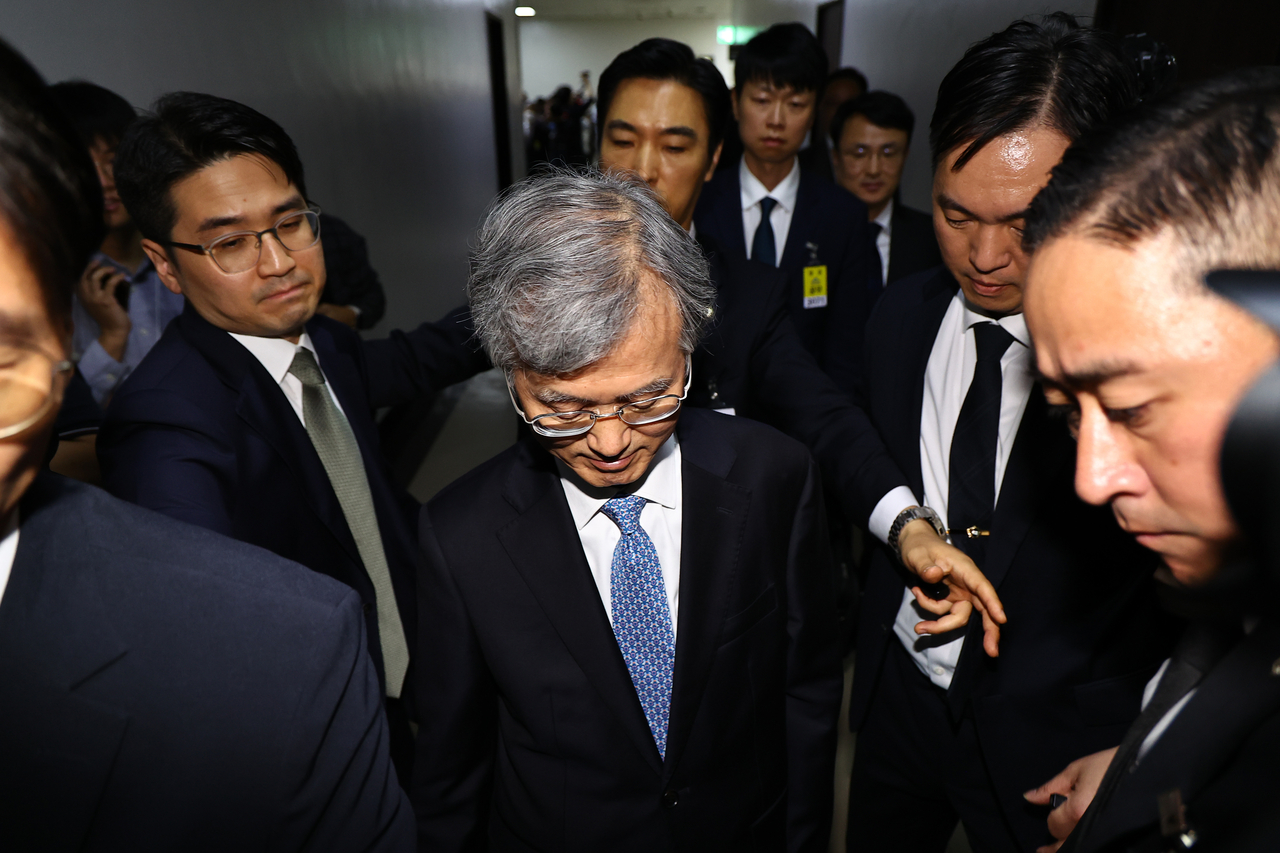
The National Assembly's national audit of the Lee Jae Myung government entered its second year Tuesday.
Eight standing committees, including the Policy Committee, launched their audits, but clashes erupted from the start at the Legislation and Judiciary Committee, where ruling and opposition lawmakers squared off over Chief Justice Jo Hee-dae for the second consecutive year. Last year's flashpoint was the Supreme Court ruling that sent President Lee's Public Official Election Act case back to a lower court with a guilty finding; Tuesday's dispute centered on what has been called the "refusal to re-nominate Supreme Court justices" controversy.
Under standard practice at the Legislation and Judiciary Committee, the chief justice delivers brief opening remarks and then leaves, with the court administrator remaining to answer lawmakers' questions on behalf of the institution. The Democratic Party of Korea demanded Tuesday that Jo stay as a witness to explain his refusal to re-nominate Supreme Court justice candidates, while the People Power Party pushed back sharply, insisting he should be allowed to leave as customary.
Once questioning began with Jo still in his seat, Democratic Party lawmakers pressed him directly on the re-nomination refusal. Rep. Park Gyun-taek of the Democratic Party argued that it would be "a grave misconception" to believe the chief justice's nomination authority supersedes the president's appointment power, adding that the refusal "constitutes a violation of the Constitution and is fully grounds for impeachment." People Power Party Rep. Ju Jin-woo countered that it was the president who was acting improperly — "insisting on nominating a specific individual until the chief justice complies, and threatening and pressuring him to recommend a particular justice" — and said such conduct amounted to hollowing out the chief justice's constitutional nomination authority.
Jo responded with evident resolve. "Just as the chief justice cannot interfere at all in the National Assembly's confirmation process or the president's appointment process, neither the Assembly nor the president can interfere at all in the chief justice's nomination," he said. The committee session was repeatedly disrupted throughout the day as the two sides traded shouting matches and heated exchanges.
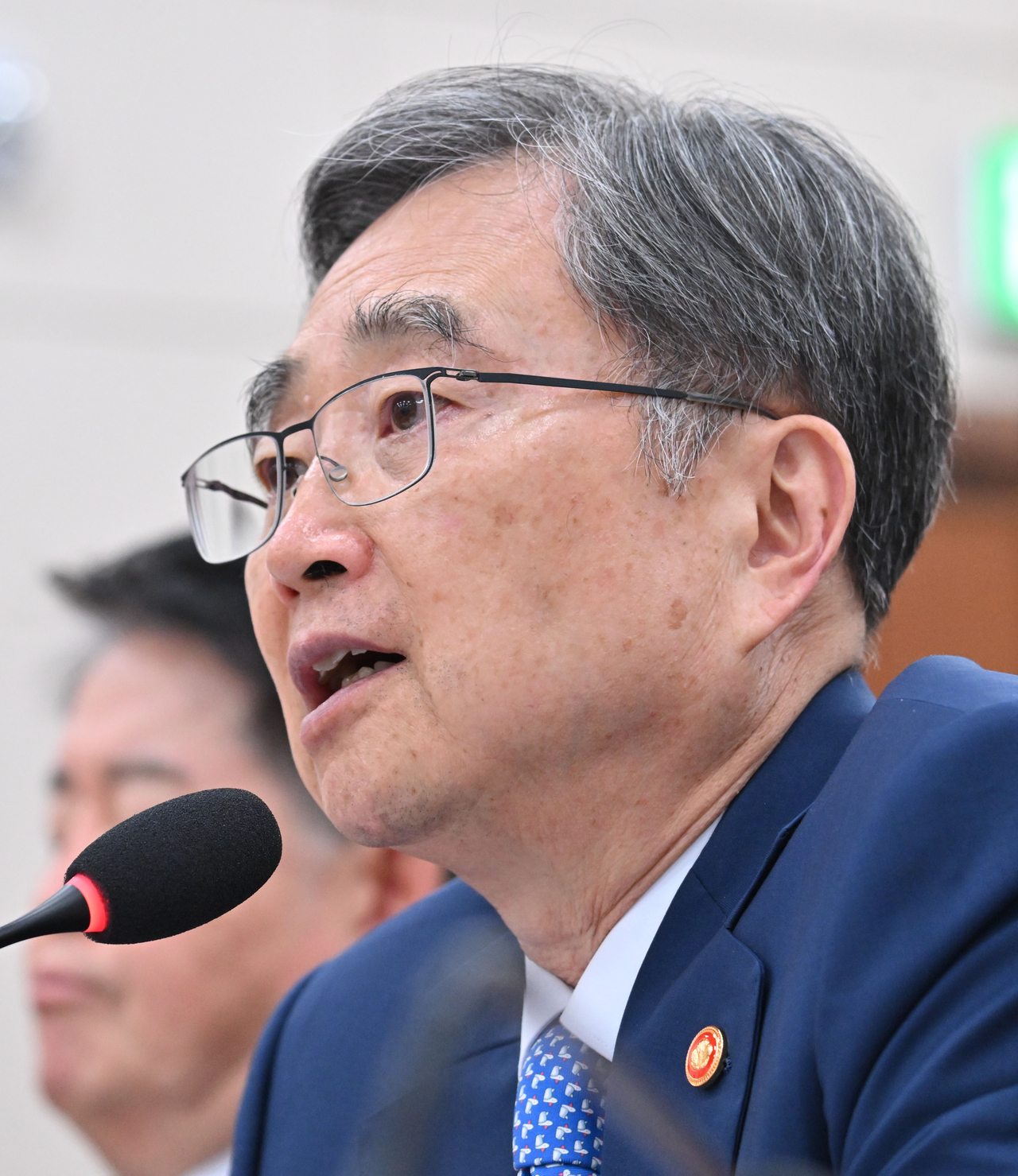
Disputes over key issues also flared in other committees. At the Foreign Affairs and Unification Committee audit, scrutiny fell on North Korea's land mine provocations in the demilitarized zone and the diplomatic situation surrounding Ukraine's repatriation of North Korean prisoners of war.
At the Finance and Economy Planning Committee's audit of the Ministry of Economy and Finance, a dispute broke out over the submission of documents needed to examine how single-stock leveraged ETFs were introduced. The People Power Party demanded the release of Cheong Wa Dae meeting minutes and other records, while the Democratic Party argued the matter fell outside the committee's jurisdiction.
At the Interior and Safety Committee's audit of the Ministry of Interior and Safety, the newly launched Central Investigation Agency — which began operations without a permanent head — drew attention. Interior Minister Yun Ho-jung bowed his head and said, "We did our best, but I am deeply sorry."
At the Science, Technology, Information, Broadcasting and Communications Committee's audit of the Ministry of Science and ICT and related agencies, a dispute over the eligibility of lawmakers from the opposing camp to participate broke out even before questioning began.
At the Climate, Energy and Environment Labor Committee's audit of the Ministry of Climate, Environment and Energy, attention focused on the Honam semiconductor industrial complex. The People Power Party also made the Honam semiconductor mega-project a point of contention at the Trade, Industry and Energy Committee's audit of the Ministry of Trade, Industry and Energy.
bigroot@heraldcorp.com