National audit of Land Ministry, Sejong city agency and Saemangeum agency held Wednesday
Hong Ji-sun pledges to 'firmly stabilize housing market, ease residential anxiety'
Second relocation of public institutions to be announced by year-end, minister says
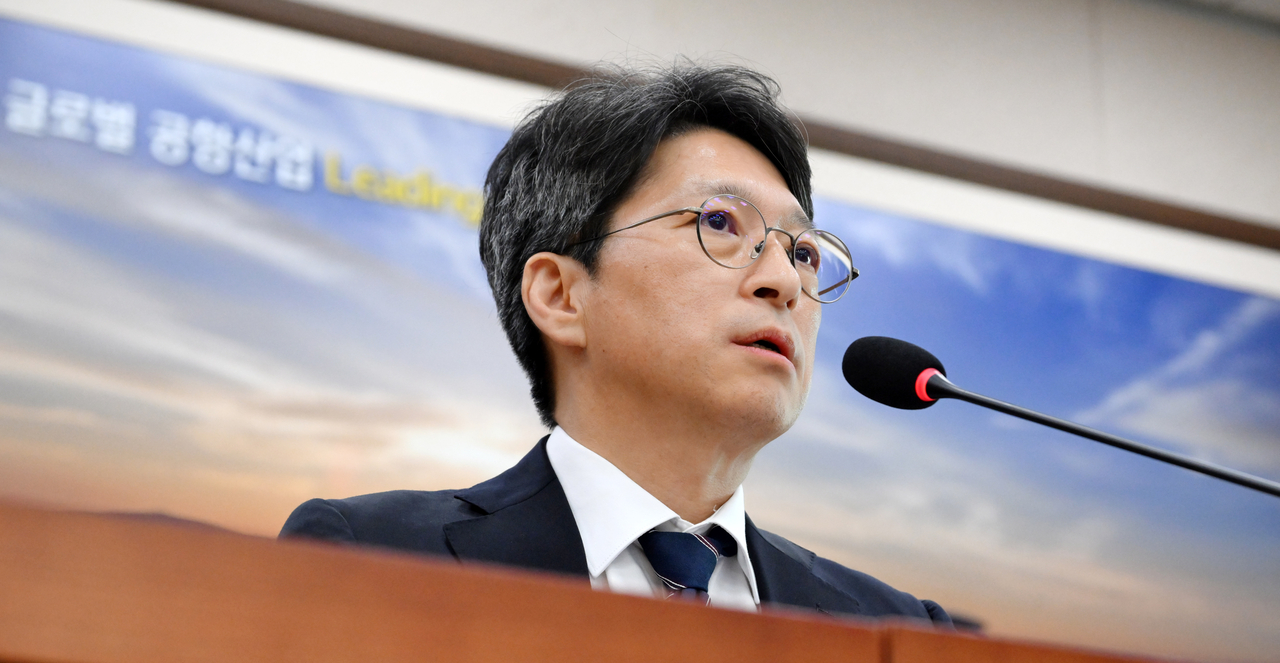
Minister of Land, Infrastructure and Transport Hong Ji-sun on Wednesday identified stabilizing the housing market through expanded supply in the Greater Seoul area and fostering region-led growth as the government's top priorities.
Hong made the remarks in an opening statement at the National Assembly's Land and Infrastructure Committee national audit of the ministry, held Wednesday morning.
"Above all, I will firmly lay the groundwork to ensure that housing needed in the Greater Seoul area is supplied sufficiently and swiftly," Hong said, citing three key measures: establishing a shortest-path ground-breaking model for public housing sites and securing new land; removing obstacles to urban supply through redevelopment and reconstruction projects; and pushing forward the residential stability plan, including public housing and universal public rental housing.
On urban renewal projects specifically, Hong said the government would offer incentives to projects that move quickly and take a more proactive role in mediating conflicts and disputes at project sites.
To strengthen the residential safety net, Hong said the government would also roll out jeonse fraud risk-assessment services and a minimum guarantee scheme alongside the residential stability plan to bolster protections against jeonse fraud.
Hong said the government would draw up effective reform measures to ensure Korea Land and Housing Corporation, which serves both as a housing supplier and a residential welfare provider, can fully carry out its core mission.
On balanced regional development, Hong emphasized a region-led growth model centered on the "5 poles and 3 special zones" framework. "We will build enterprise-type advanced cities that channel corporate investment into regional growth, creating areas that companies and young people want to come to," Hong said. "The second public institution relocation plan will be announced by year-end without delay, after gathering input from regions, institutions and their employees." The ministry also plans to accelerate the completion of Sejong as the administrative capital, the development of Saemangeum as an innovation and growth hub, and the expansion of transport infrastructure including roads, railways and airports.
Hong also expressed a strong commitment to improving construction site safety and industry practices. The ministry plans to build a pre-emptive risk prevention system by cracking down on shoddy construction and overhauling safety management for demolition work, while also addressing chronic unfair practices on construction sites such as illegal subcontracting and unpaid wages.
In transport and land service reform, the ministry plans to increase seat availability and expand fare reductions and mileage benefits following the integration of Korail and SR. Other priorities include lowering prices at highway rest stops through improved contract structures, expanding benefits under the "Modu's Card" public transit subsidy program, and introducing essential route guarantees for transportation-underserved areas.
For future growth engines, Hong pointed to the development of AI pilot cities and hydrogen cities, expanded autonomous driving demonstrations at the city level, early commercialization of urban air mobility, advancement of the drone industry, and laying the groundwork for commercial deployment of mobile robots.
Finally, Hong said the government would strengthen on-site inspections and penalties for illegal and fraudulent conduct — including false address registrations in real estate, improper fuel subsidy claims and excessive auto insurance treatment — to restore public trust. "We will pursue decisive administration that changes things starting from the small details of everyday life," he said.
The national audit of the Ministry of Land, Infrastructure and Transport, the Administrative City Construction Agency and the Saemangeum Development Agency that began Wednesday will extend to a total of 33 agencies under the Land and Infrastructure Committee through Oct. 23.
hwshin@heraldcorp.com