Over 60 works from the Gahoe Minhwa Museum's collection — including "Baeksbaekbokdo" and "Goeseok Morando" — are on display at the exhibition.
The show runs through Nov. 20 at the Naju Bitgaram Culture and Sports Complex; docent tours and an academic seminar are also planned.
Naju is staging a special exhibition that draws on the city's historical significance as the birthplace of munjado — a genre of Korean folk painting that blends calligraphy with imagery — to revisit the lives, aspirations and regional sensibility embedded in Jeolla Province's folk painting tradition.
The Naju Culture Foundation announced Wednesday that it has partnered with the Gahoe Minhwa Museum to present the exhibition "The Lyricism of Jeolla, Blooming in Minhwa" at the multipurpose hall on the first floor of the Naju Bitgaram Culture and Sports Complex. The show runs through Nov. 20.
The exhibition was organized after the Gahoe Minhwa Museum was selected for the "2026 Public, Private and University Museum K-Museum Regional Touring Exhibition and Tour Support Project," a program hosted and administered by the Ministry of Culture, Sports and Tourism and the Korea Museum Association.
Through more than 60 folk paintings from the Gahoe Minhwa Museum's collection, the foundation aims to highlight the historical value and regional character of Jeolla minhwa and introduce citizens to the lives and sensibilities of their ancestors as expressed through the art form.
Jeolla Province has long been recognized as a region where painting and calligraphy culture flourished, a tradition underpinned by a strong base of high-quality hanji — traditional Korean paper — production.
Naju had the foundations for a thriving painting and calligraphy culture from an early stage: "Imwon Gyeongjeji," an encyclopedia written by Seo Yu-gu in the late Joseon period, lists Jeonju, Namwon and Nampyeong — present-day Naju — among the principal hanji-producing areas of the time.
Naju also shares a deep connection with munjado.
Records show that in 1610, Nampyeong County Magistrate Jo Yu-han presented King Gwanghaegun with a "baeksudo" scroll he had obtained from a Ming dynasty official, giving Naju an important historical claim as the origin point of a munjado culture that has continued for more than 400 years.
Visitors can experience the essence of munjado through multiple "baeksbaekbokdo" works that showcase the distinctive characteristics and aesthetic of South Jeolla Province's munjado tradition, alongside a range of other traditional folk paintings including "goeseok morando." The baeksudo carries wishes for longevity, while the morando expresses hopes for wealth and prosperity.
The works carry the hopes of ancestors for health, long life, happiness and peace, as well as their perspectives on nature and daily life, and the traditional aesthetic sensibility and emotional world of the era.
The exhibition is organized to help visitors understand minhwa not merely as decorative art but as a living art form that captured the values, worldviews and everyday wishes of the people who created it.
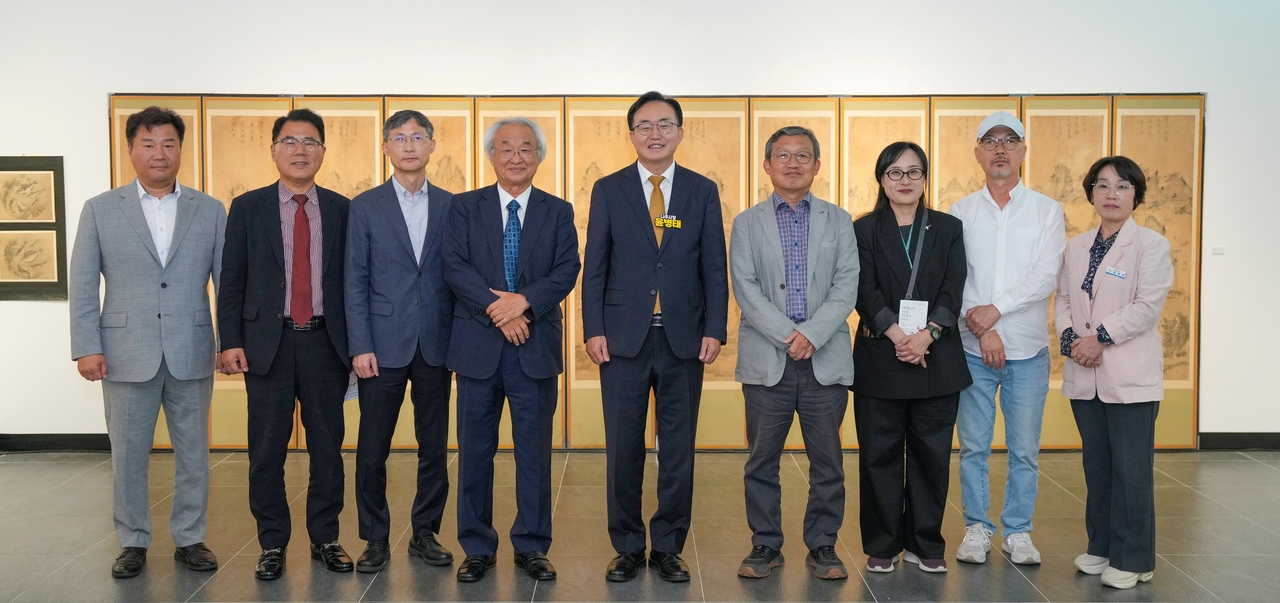
The opening ceremony, held Tuesday, drew about 100 attendees, including Yun Byeong-tae, chairman of the Naju Culture Foundation, Yun Yeol-su, director of the Gahoe Minhwa Museum, and figures from the local cultural and arts community.
Docent-guided tours will be offered throughout the exhibition period to help visitors engage more deeply with the works. On Oct. 17, an academic seminar tied to the exhibition will examine the history and cultural significance of Jeolla minhwa and munjado in greater depth.
"It is especially meaningful to be able to present the beauty and value of our minhwa to citizens right here in Naju, the birthplace of munjado," a Naju Culture Foundation official said. "We hope this exhibition gives citizens a chance to feel the lives and emotions of their ancestors as expressed in minhwa, and to rediscover the value and meaning of our traditional culture."
kkm9971@heraldcorp.com