790 of 1,766 registered delegates remain, falling short of quorum; online session under review as leadership election looms; union calls on government to present 'forward-looking' proposal
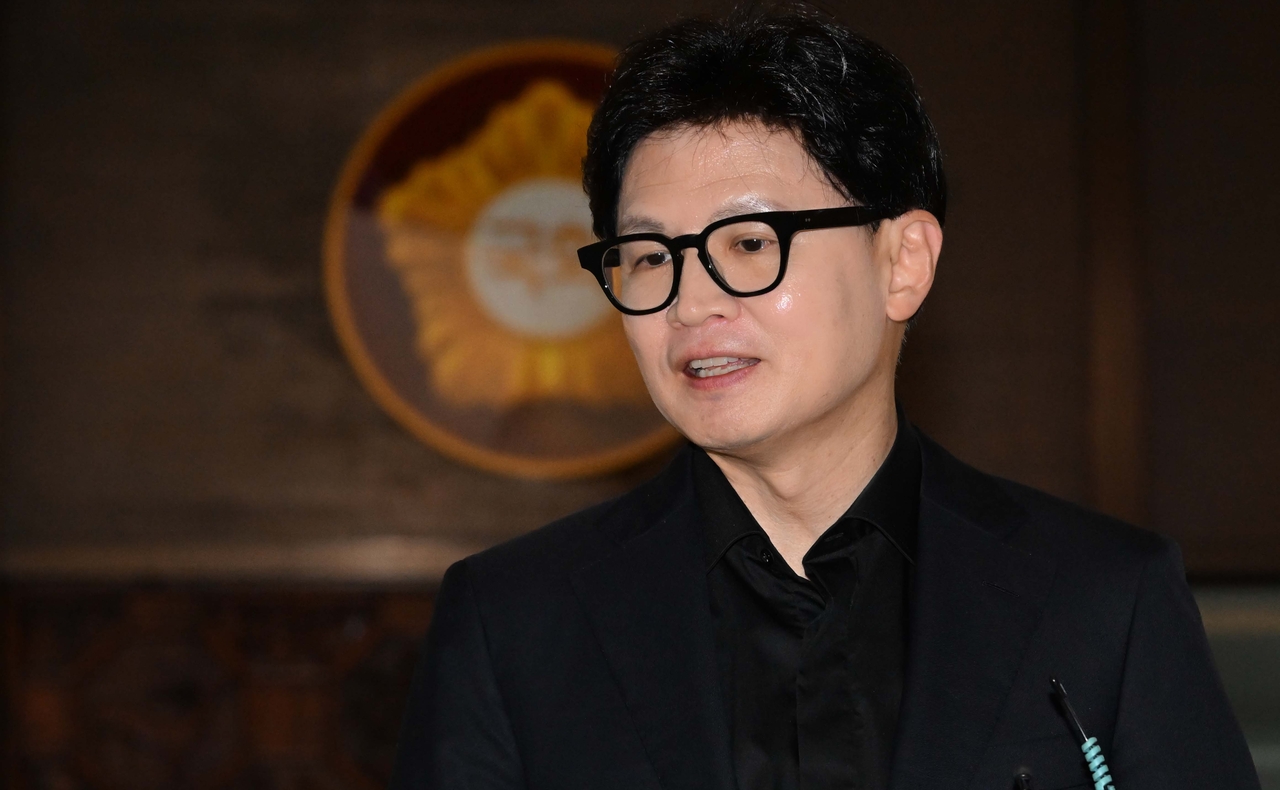
![Korean Confederation of Trade Unions Chairman Yang Gyeong-su (right) speaks at the 85th Extraordinary Delegates' Assembly of the KCTU held at Kintex in Goyang, Gyeonggi Province, on Wednesday afternoon. At left is KCTU acting Secretary-General Eom Mi-gyeong. [Yonhap]](https://wimg.heraldcorp.com/news/cms/2026/10/07/rcv.YNA.20261007.PYH2026100716480006000_P1.jpg)
A vote by the Korean Confederation of Trade Unions on returning to formal social dialogue collapsed Wednesday after delegates walked out of the assembly hall, leaving the session without a quorum. After nearly three hours of debate over whether to re-engage in official talks with the government and business community, too few delegates remained to proceed to a vote. KCTU Chairman Yang Gyeong-su said the union would continue discussions, but the timeline for another attempt has grown uncertain as a leadership election approaches.
The KCTU held its 85th Extraordinary Delegates' Assembly at Kintex in Goyang, Gyeonggi Province, on Wednesday to deliberate on a proposal to pursue social negotiations. After the debate concluded, a count of those present found only 790 of the 1,766 registered delegates still in their seats — short of the 884 needed for a majority quorum — and the assembly could not proceed to a vote.
Some 1,061 delegates had been present when the assembly opened, but a number left during the debate, citing what they said was insufficient discussion. The agenda item was left unresolved, neither passed nor rejected.
At a press briefing immediately after the assembly, Yang said he found the outcome "deeply regrettable," adding that he had believed it was time to reach a conclusion. He asked that the result be recorded as an adjournment due to lack of quorum, in line with the procedural rules that apply when attendance falls below the required threshold.
On the reasons for the collapse, Yang said, "This is my personal view, but I think colleagues who opposed the measure may have left their seats because they felt passage was likely if the proceedings had continued normally." He noted that many of the delegates who stayed until the end had spoken in favor of pursuing social negotiations.
Yang said the union would not abandon the social negotiations agenda as a result of the adjournment. He cited the spread of AI and industrial transformation — the issues that originally prompted the KCTU to consider social dialogue — as still unresolved, and said the union needed to "regroup, discuss and keep the conversation going."
Yang also left open the possibility of reconvening through an online extraordinary delegates' assembly. He said such a session could be called with seven days' notice, just like a regular extraordinary assembly, and that the union would announce a decision on whether to hold one after internal discussions as soon as possible. He stressed, however, that no decision had been made.
The upcoming leadership election complicates the schedule. The candidate registration deadline falls on Oct. 24. Yang said it would become harder to act once the election campaign begins, and that a decision on whether to hold an online assembly would need to be made before campaigning starts. He acknowledged that, given the tight timeline, the question of when the KCTU would actually join the Economic, Social and Labor Council may have to be passed on to the next leadership.
The union's negotiating conditions remain in place. The three principles set by the KCTU's Central Executive Committee — consensus-based operations, guaranteed participation by industrial unions, and a change to the council's name — are still in effect, Yang said. He called on the government to take a forward-looking stance and present a proposal that could "dispel concerns or misunderstandings," saying the union was approaching the matter with great care and difficulty.
Yang also disclosed the results of a recent member survey. Of about 4,500 members who participated, 87 percent said social negotiations were necessary. He cautioned, however, that it was difficult to say whether the assembly's outcome reflected the views of the broader membership or aligned with the survey results.
The KCTU withdrew from the Labor-Management-Government Commission — the predecessor of the Economic, Social and Labor Council — in February 1999. Wednesday's assembly was meant to chart a course for the union's return after 27 years, but with the vote failing to take place, any formal organizational decision has been deferred to a future session.
Meanwhile, separate from the discussions on joining the Economic, Social and Labor Council, the KCTU is participating in a single-issue social dialogue on labor exemptions in mega special economic zones. The government, the two major union federations and the business community held their first working-level meeting on Sept. 22 to discuss operating procedures and agenda items.
fact0514@heraldcorp.com