Seoul puts all road-classified land under permit regime
Move targets small-lot speculation ahead of development
Daelim Samgeori transit hub to get mixed-use redevelopment
![The Seoul Metropolitan Government has designated all land classified as roads across the city as land transaction permit zones. [Provided by Seoul Metropolitan Government]](https://wimg.heraldcorp.com/news/cms/2026/10/08/news-p.v1.20261008.991140f04a8f48cab9901ec30fad9ac8_P1.jpg)
The Seoul Metropolitan Government will designate all land classified as roads across the city as land transaction permit zones to curb speculative trading in which road shares are subdivided and sold in small parcels. Separately, a transit-oriented development project near Daelim Samgeori Station in Dongjak-gu has cleared an urban planning review, paving the way for mixed residential and commercial redevelopment.
The city announced Thursday that it held its 16th Urban Planning Committee meeting Wednesday and approved the new designation covering all land listed as roads in the city's land registry. The measure applies not to all real estate in Seoul but specifically to parcels whose official land-use classification is "road."
The designation takes effect Oct. 17 and runs through Oct. 16 next year. Under the new rules, transactions exceeding 6 square meters in residential zones, 15 square meters in commercial and industrial zones, and 20 square meters in green zones will require prior approval from the relevant district mayor.
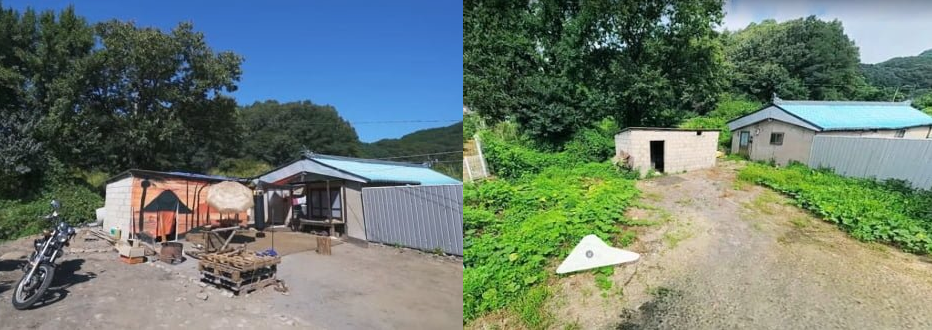
The city has managed private roads within designated development project sites — including "moa-town" redevelopment areas — under the land transaction permit regime since September 2024. More recently, cases of small-lot road-share trading have emerged even in areas with little direct connection to active development projects, prompting the city to extend the designation citywide.
Designation as a land transaction permit zone does not outright ban road sales. Transactions that demonstrate a genuine need for use and meet the relevant approval criteria will still be permitted. The city said it will screen buyers' stated acquisition purposes and usage plans before any transaction to filter out speculative share deals driven by development expectations.
The boundaries of land transaction permit zones covering three rapid-integrated-planning housing redevelopment sites will also be adjusted. The affected areas are around 3-191 Bukgajwa-dong in Seodaemun-gu, around 445 Bulgwang-dong in Eunpyeong-gu, and around 15 Yongdap-dong in Seongdong-gu. The boundaries will be redrawn to reflect changes to the designated improvement zones, while the existing designation periods and area thresholds for permit requirements remain unchanged.
![A rendering of the transit-oriented development project near Daelim Samgeori Station. [Provided by Seoul Metropolitan Government]](https://wimg.heraldcorp.com/news/cms/2026/10/08/news-p.v1.20261008.852fcac78ea84c8cb83cc07f9c2b9086_P1.jpg)
The committee also approved, with modifications, a plan to designate an urban renewal-type redevelopment improvement zone for the Daelim Samgeori Station transit-oriented development project in the area around 588-7 Sindaebang-dong, Dongjak-gu.
The project site covers 14,452.4 square meters. A mixed-use complex combining residential and commercial facilities is planned, with a floor-area ratio of up to 500 percent and a height limit of 124 meters. The site sits to the east of the planned Daelim Samgeori Station on the Sinansan Line, adjacent to the Sindaebang Woosung 1st and 2nd apartment complexes, the new wing of Hallym University Gangnam Sacred Heart Hospital, Daelim Sacred Heart Hospital and Sindaebang 1-dong Market.
Surrounding roads and pedestrian infrastructure will also be upgraded. Sindaebang-gil will be widened from 6 meters to 12 meters, and Sindaebang 16-gil from 6 meters to 9 meters, with a 3-meter setback secured along the frontage. A public open space is planned along Siheung-daero, which sees heavy foot traffic.
A senior care center will be built as a public contribution facility. The city expects the project, in conjunction with nearby developments including a long-term jeonse housing project between Daelim Samgeori Station and Sindaebang Station, to strengthen the residential and commercial functions of the broader transit-oriented area.
"We will operate the regime in a way that manages speculative demand for road-share transactions while avoiding unnecessary restrictions on legitimate end-user deals," a Seoul Metropolitan Government official said. "We will also push the transit-oriented development project through its follow-up procedures so that it translates into improved residential conditions and pedestrian environments for the area."
quq@heraldcorp.com