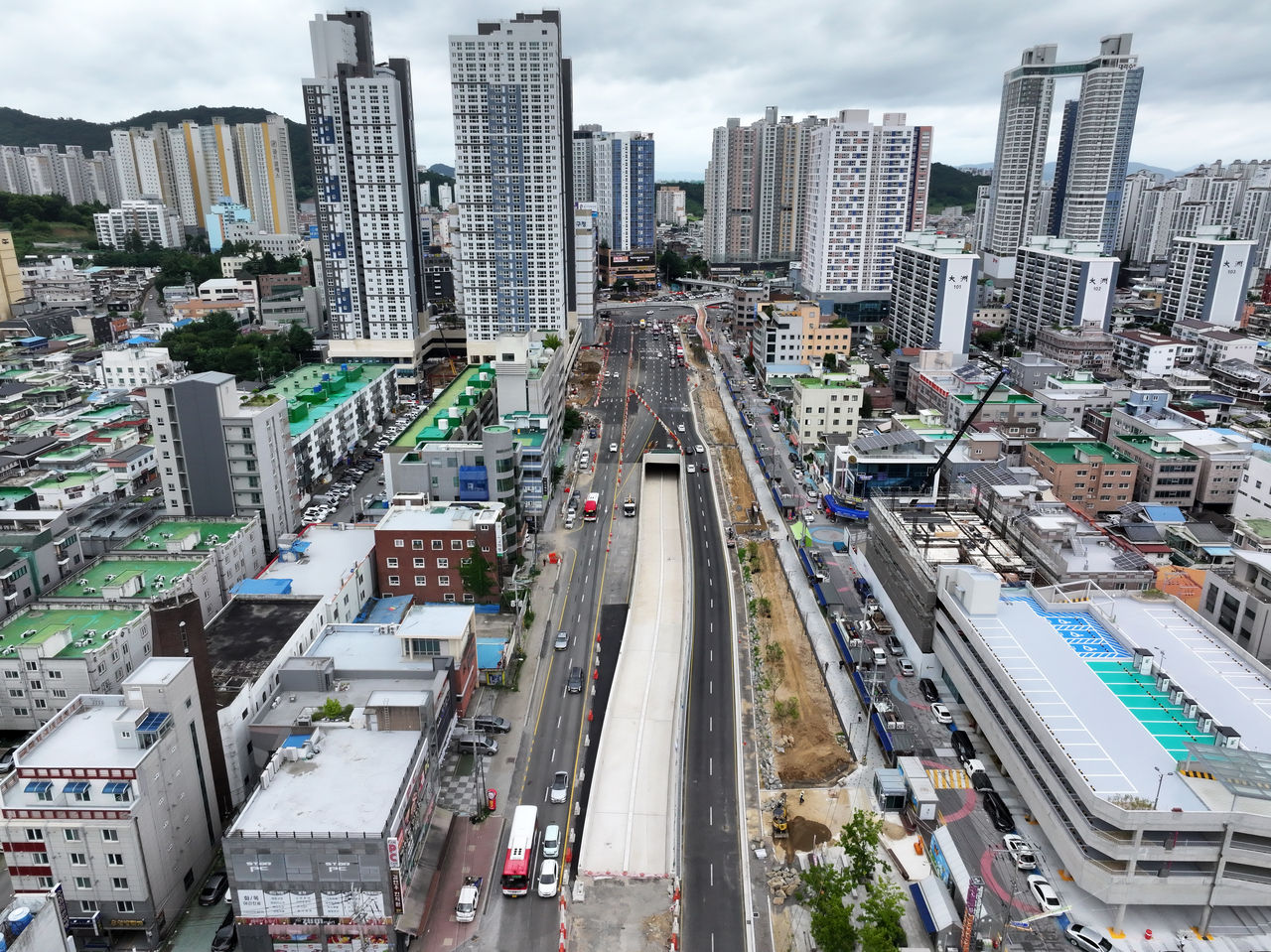
The construction progress of Gwangju Metro Line 2 will be made public every month.
South Jeolla-Gwangju Special Metropolitan City Mayor Min Hyeong-bae held a press conference at the Gwangju city hall Thursday and said the city would "periodically disclose construction updates — whether every three months, every six months or every month."
The city plans to overhaul its progress management system for the metro line project and publish monthly construction updates on its website and SNS channels, with step-by-step guidance on preparations for the line's opening.
The city will integrate management of all phases — from civil engineering through communications and test operations — with a focus on critical processes that directly affect the opening schedule.
Phase 1 of Metro Line 2 broke ground in 2019 with a target opening of 2023, but has been delayed four times, pushing the expected opening to December 2028.
Phase 2 has also been pushed back five years, from December 2030 to December 2035.
The city attributed the delays to unforeseen site conditions, including underground bedrock and buried obstacles, as well as a failure to properly integrate civil engineering, communications, signaling, vehicle and test-run schedules into a unified management framework.
Another problem identified was that scheduling decisions were driven primarily by civil engineering progress, leaving insufficient time in the overall plan for follow-on work and test operations.
Going forward, the city said it will manage the entire construction timeline — factoring in remaining work volumes, the time required for each phase and test operations — and closely monitor whether key milestones are being met on schedule.
sij@heraldcorp.com