Offshore wind companies in Spain's Basque Country aggressively recruit local talent
Kimua entrusts key business decisions to self-managed teams of young employees
Gluhal pairs automation with veteran craftspeople
'Local-to-local production and supply minimizes geopolitical risk,' CEO says
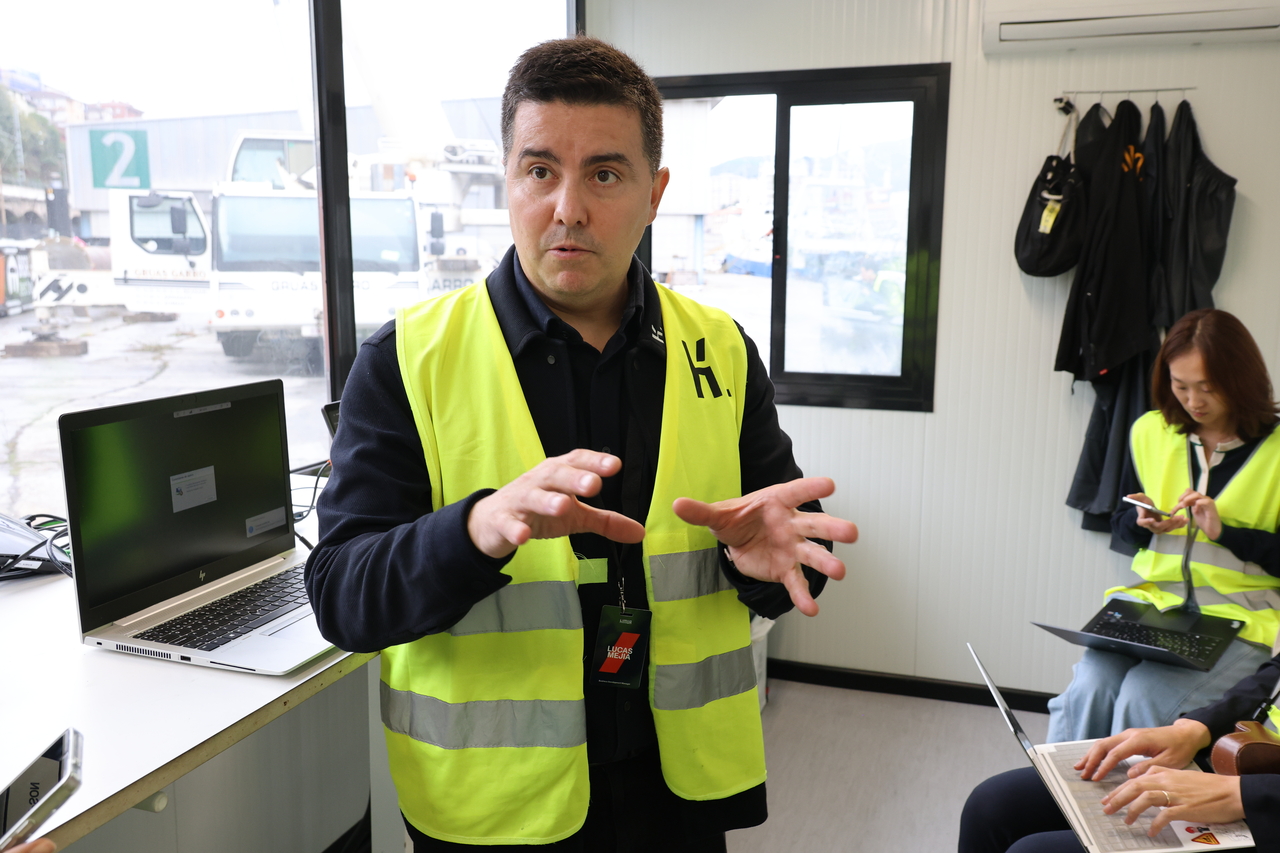
"Among ourselves, we say we 'hook' young people from the region."
Lucas Meiha, head of sales development at Kimua — a Basque Country company specializing in lifting solutions for offshore wind equipment — made the remark when he met with reporters on Friday. While companies around the world struggle to attract young workers to manufacturing roles, Kimua is an exception: the vast majority of its employees, including those on the production floor, are young people from universities in the Basque region.
Kimua credits a distinctive internal structure it calls the "self-managed team." These units place young employees at the center of major business decisions and grant them access to all internal company information, including confidential data. Decisions handled by these teams have ranged from whether to send a sales and trade team abroad to, more recently, whether to establish a subsidiary in Australia.
"The strategy is to give young people opportunities they cannot find anywhere else, so they feel they can grow on their own," Meiha said.
Kimua accelerates new technology development on the strength of young R&D talent
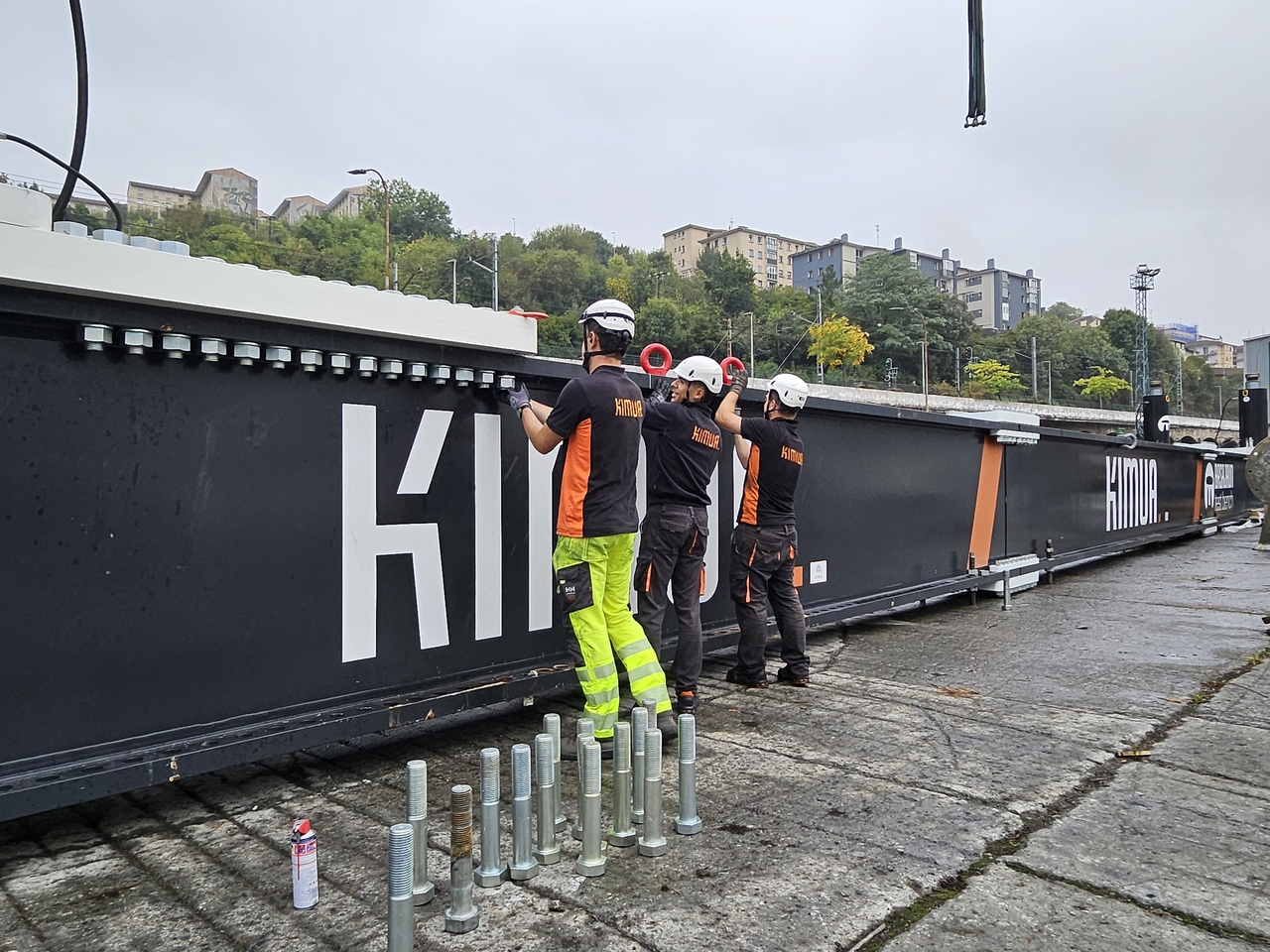
Backed by its young research and development workforce, Kimua is picking up the pace on new technology. At the company's headquarters on Friday, a demonstration test was underway for its latest equipment, capable of lifting offshore wind components weighing up to 5,100 metric tons. The machinery is designed to hoist heavy loads to the heights required when constructing ultra-tall wind towers and is slated for deployment at an offshore wind farm currently under development in Japan.
As offshore wind farms grow larger, the development cycle for components is also accelerating, Meiha said. Kimua is currently developing a new solution called HELDO — a name derived from the word "hold" — targeting commercial deployment within five years.
Where conventional cranes lift heavy equipment from above, HELDO works differently: the crane grips the wind tower column using powerful friction and climbs upward on its own. The approach dramatically reduces the size of the equipment needed and cuts transportation and assembly time.
"The most critical element in developing this equipment is controlling the friction," Meiha said. "If there is not enough friction, a crane weighing hundreds of tons could fall, causing a major accident."
At Gluhal, skilled craftspeople and automated systems work side by side
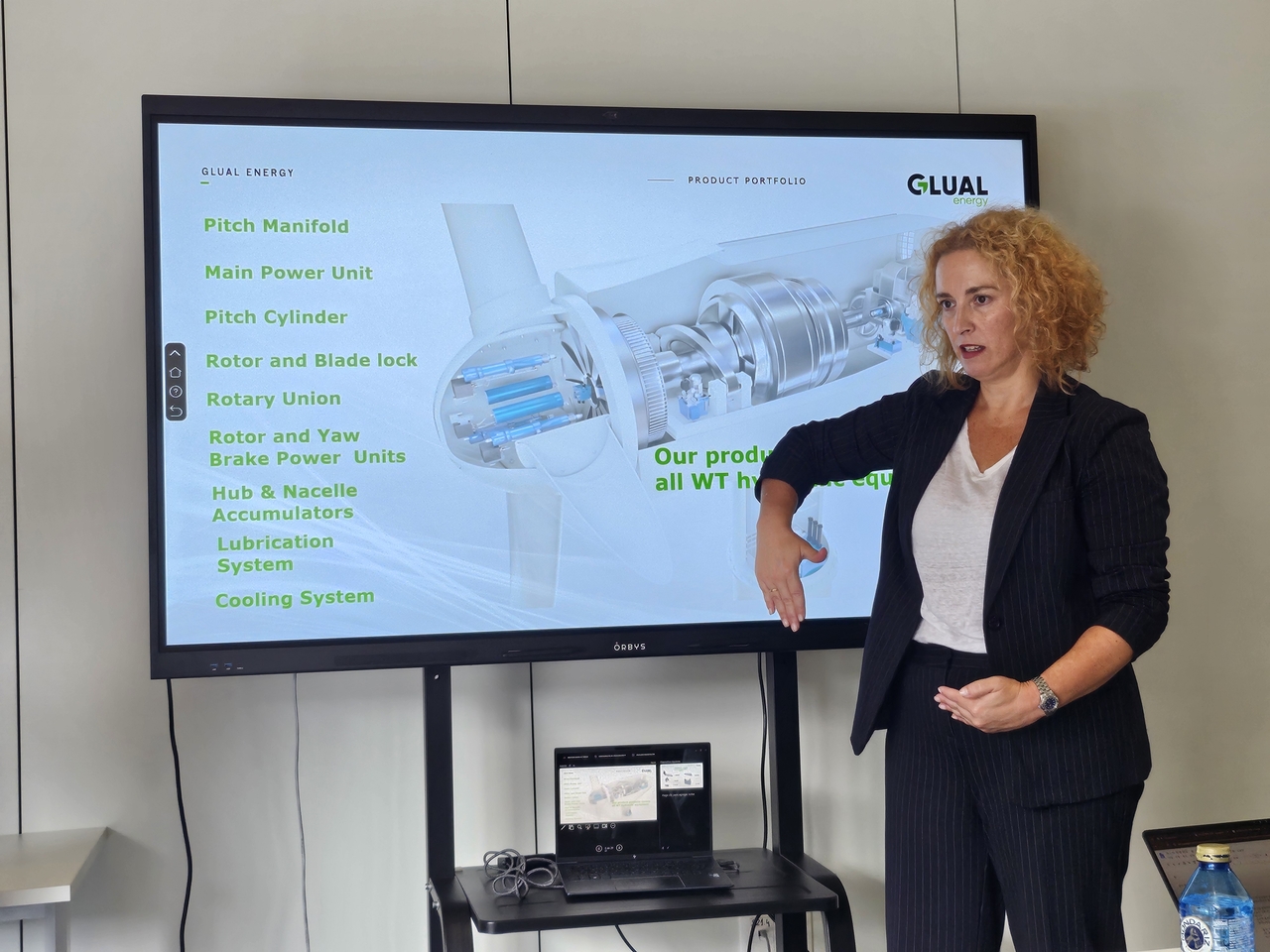
Gluhal, which supplies hydraulic systems for wind turbines, continues to hire skilled workers from the local area. Precise hydraulic control is essential for turbines to withstand the powerful winds at sea. The company supplies hydraulic solutions that regulate blade pitch angles and internal pressure inside turbines to global turbine manufacturers including Siemens Gamesa and Vestas.
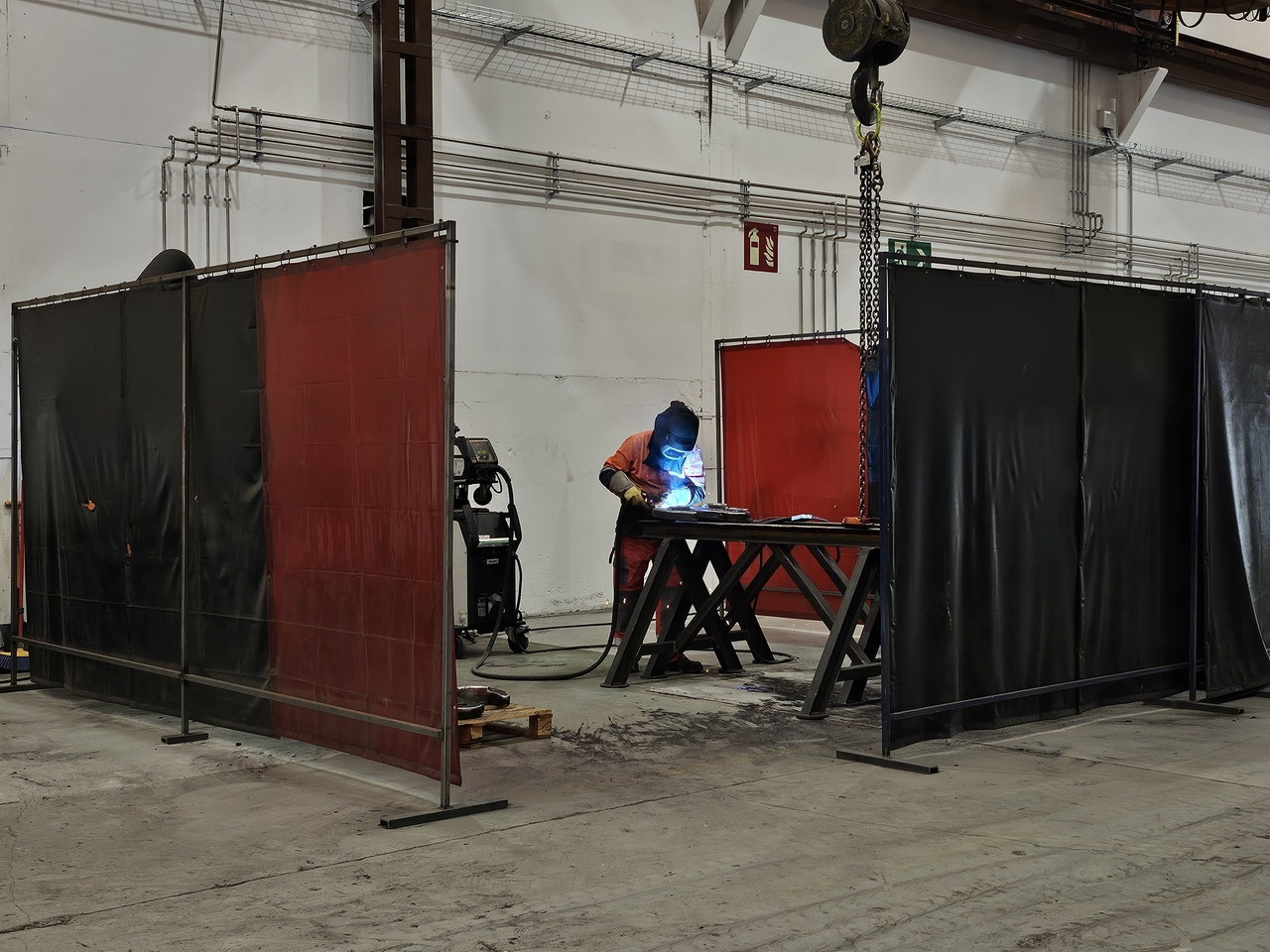
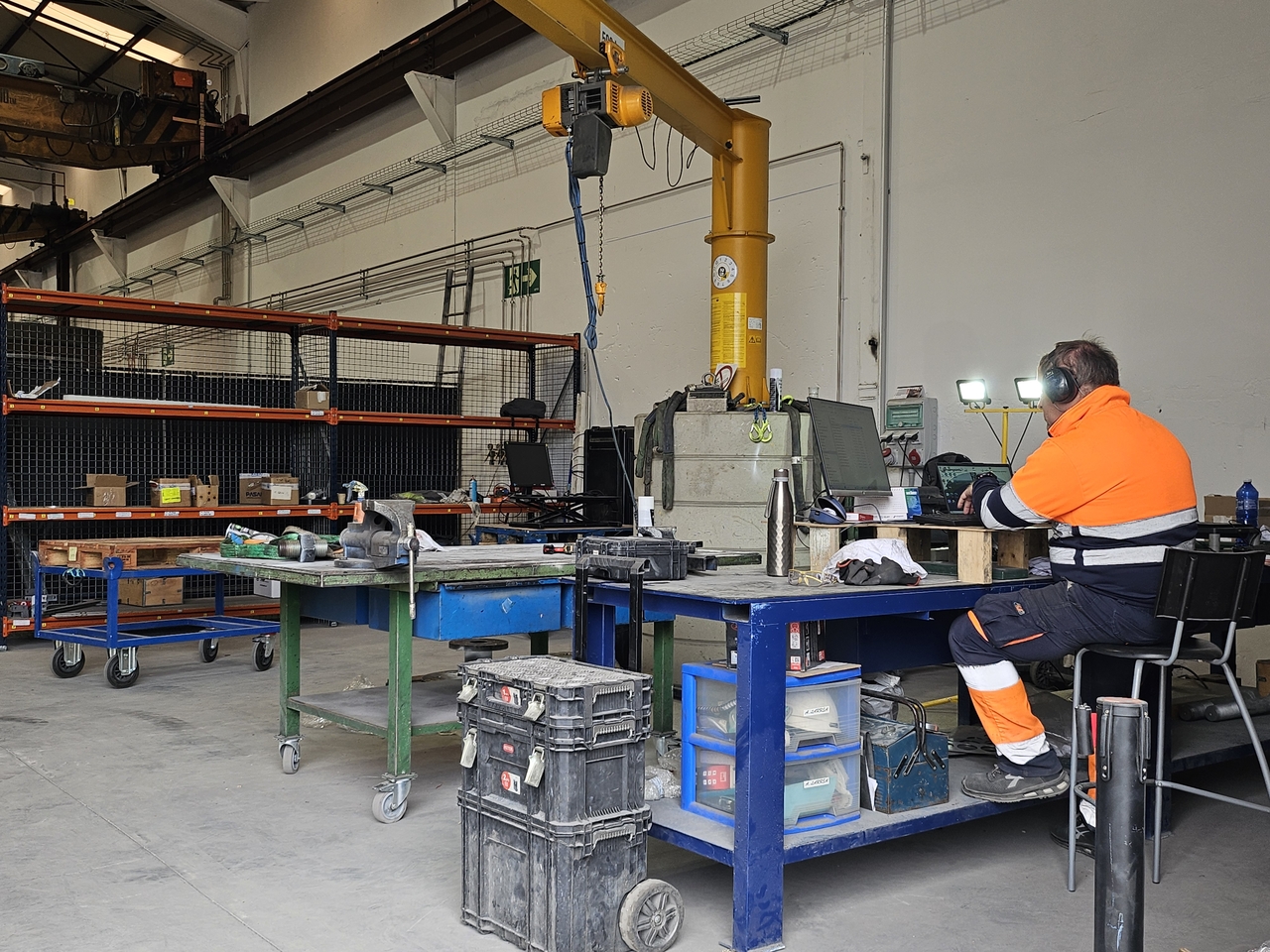
A visit to Gluhal's production factory on Friday revealed skilled craftspeople and automated systems operating in tandem. While workers focused intently on individual assembly processes, a separate employee managed a system that automatically tracked the assembly status of each component. Automated systems have also recently been introduced for component-level verification testing.
"Employees with more than 10 years of experience are each dedicated to their own process," said Ander Garmendia, Gluhal's head of energy business. "Because hundreds of thousands of different parts must be assembled one by one, full automation is simply not possible in this area."
'Pivoting to offshore wind has driven earnings growth'
While Kimua is a relatively young company, founded in 2011, Gluhal has a long history dating to 1966. Gluhal also began as a manufacturer of hydraulic systems for machinery and steel applications, but expanded into the energy sector in response to demand from major customers such as Siemens Gamesa — a shift that has translated into earnings growth.
"There is demand from newly installed wind turbines going up around the world, and on top of that, demand for replacement parts needed to maintain existing turbines," said Alasne Zabaleta, CEO of Gluhal Group. "Overall, our sales continue to grow."
The companies' locally rooted operations also serve as a strategy for strengthening business stability. "We are present in key regions around the world, but our principle is local-to-local — produce locally and supply locally," Zabaleta said. "This allows us to minimize the impact that various geopolitical situations have on our business."
klee@heraldcorp.com